Department of Physical Therapy, School of Rehabilitation Sciences, Health Sciences University of Hokkaido, Hokkaido, Japan.
Laboratory of Wildlife Biology and Medicine, Graduate School of Veterinary Medicine, Hokkaido University, Hokkaido, Japan.
PLoS One. 2019 Apr 18;14(4):e0215489. doi: 10.1371/journal.pone.0215489. eCollection 2019.
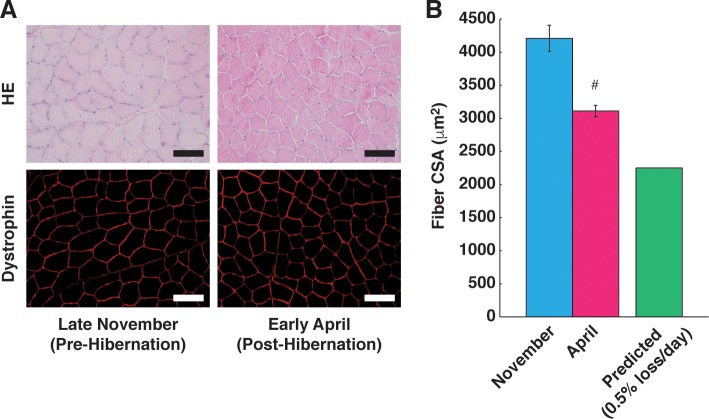
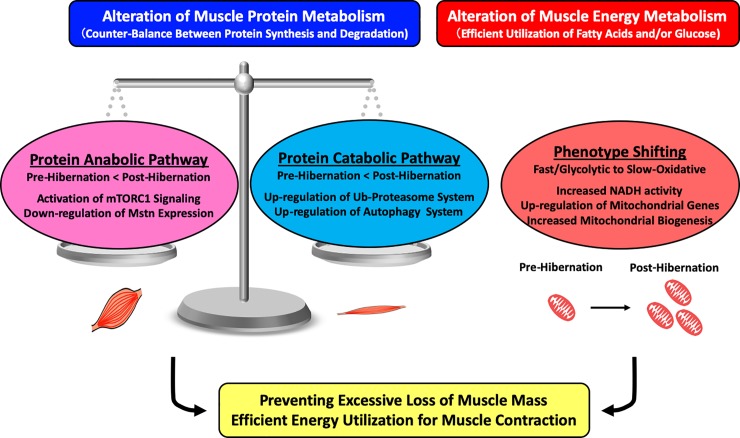
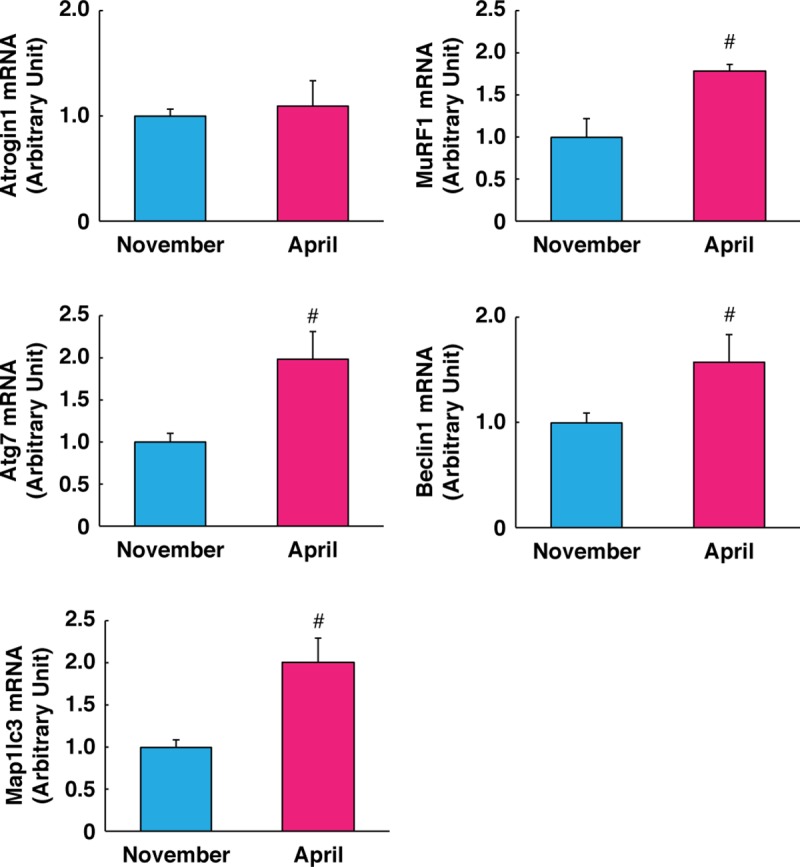
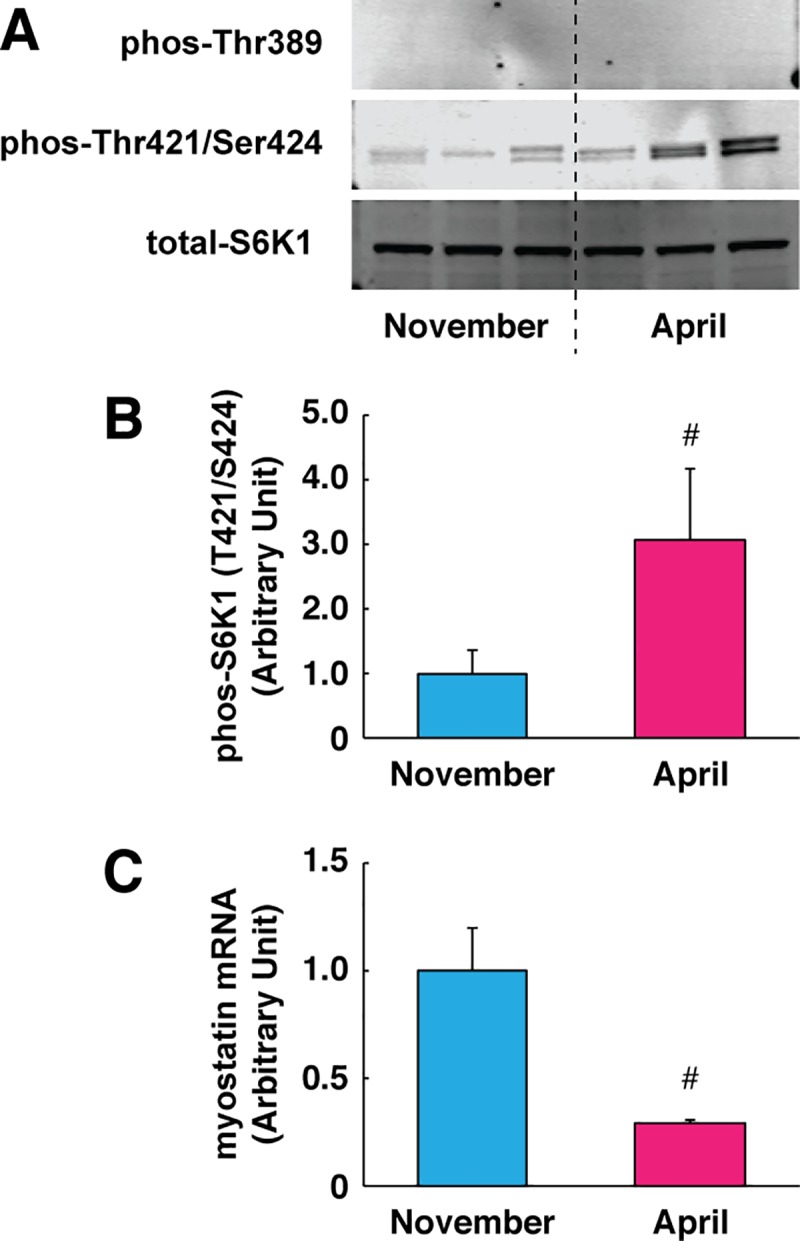
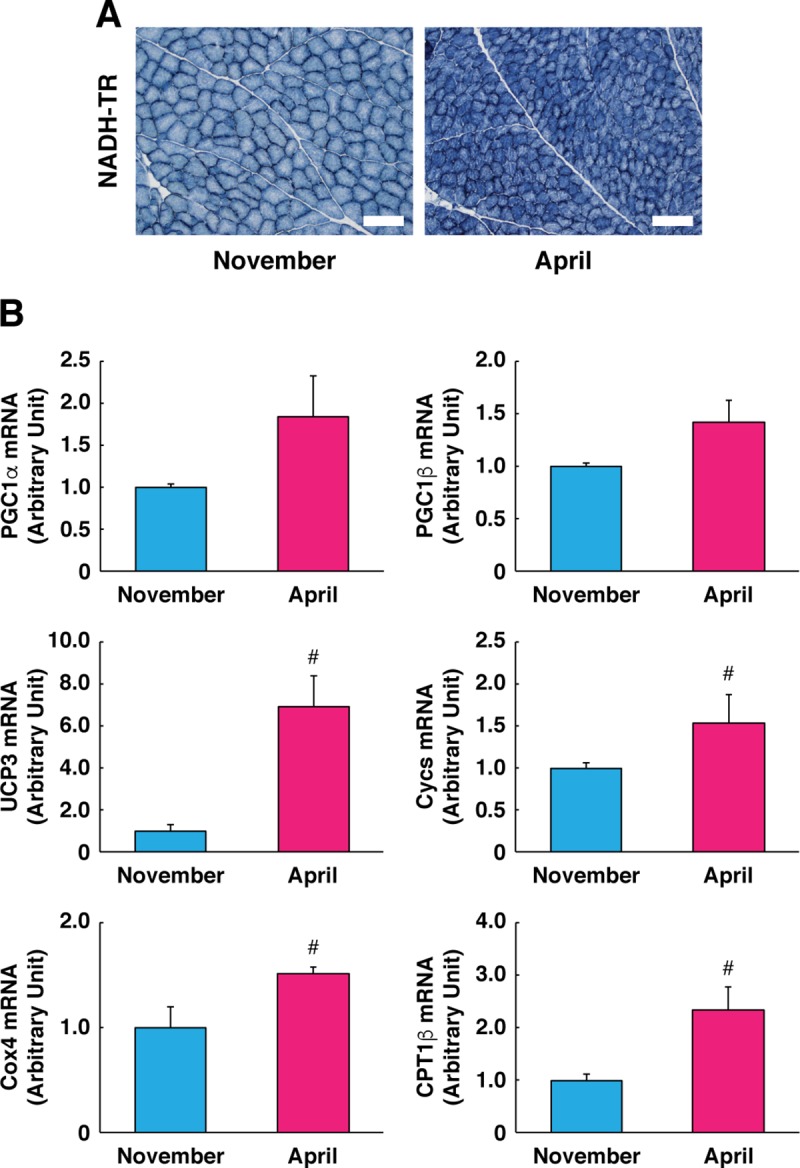
Hibernating mammals experience prolonged periods of torpor and starvation during winter for up to 5-7 months. Though physical inactivity and malnutrition generally lead to profound loss of muscle mass and metabolic dysfunction in humans, hibernating bears show limited muscle atrophy and can successfully maintain locomotive function. These physiological features in bears allow us to hypothesize that hibernating bears uniquely alter the regulation of protein and energy metabolism in skeletal muscle which then contributes to "muscle atrophy resistance" against continued physical inactivity. In this study, alteration of signaling pathways governing protein and energy metabolisms was examined in skeletal muscle of the Japanese black bear (Ursus thibetanus japonicus). Sartorius muscle samples were collected from bear legs during late November (pre-hibernation) and early April (post-hibernation). Protein degradation pathways, through a ubiquitin-proteasome system (as assessed by increased expression of murf1 mRNA) and an autophagy-dependent system (as assessed by increased expression of atg7, beclin1, and map1lc3 mRNAs), were significantly activated in skeletal muscle following hibernation. In contrast, as indicated by a significant increase in S6K1 phosphorylation, an activation state of mTOR (mammalian/mechanistic target of rapamycin), which functions as a central regulator of protein synthesis, increased in post-hibernation samples. Gene expression of myostatin, a negative regulator of skeletal muscle mass, was significantly decreased post-hibernation. We also confirmed that the phenotype shifted toward slow-oxidative muscle and mitochondrial biogenesis. These observations suggest that protein and energy metabolism may be altered in skeletal muscle of hibernating bears, which then may contribute to limited loss of muscle mass and efficient energy utilization.
冬眠哺乳动物在冬季会经历长时间的休眠和饥饿,长达 5-7 个月。尽管身体不活动和营养不良通常会导致人类肌肉质量的严重损失和代谢功能障碍,但冬眠熊显示出有限的肌肉萎缩,并且能够成功维持运动功能。这些熊的生理特征使我们假设,冬眠熊独特地改变了骨骼肌中蛋白质和能量代谢的调节,从而有助于对持续的身体不活动产生“肌肉萎缩抵抗”。在这项研究中,我们检查了在日本黑熊(Ursus thibetanus japonicus)骨骼肌中控制蛋白质和能量代谢的信号通路的变化。在 11 月下旬(冬眠前)和 4 月初(冬眠后)从熊腿上采集了比目鱼肌样本。蛋白质降解途径,通过泛素-蛋白酶体系统(通过 murf1 mRNA 的增加表达来评估)和自噬依赖性系统(通过 atg7、beclin1 和 map1lc3 mRNAs 的增加表达来评估),在冬眠后骨骼肌中显著激活。相比之下,作为 mTOR(哺乳动物/雷帕霉素的机制靶标)激活状态的指标,S6K1 磷酸化的显著增加表明,作为蛋白质合成的中央调节剂的功能,在冬眠后样本中增加。骨骼肌质量的负调节因子肌抑素的基因表达在冬眠后显著降低。我们还证实了表型向慢氧化肌和线粒体生物发生的转变。这些观察结果表明,蛋白质和能量代谢可能在冬眠熊的骨骼肌中发生改变,从而有助于肌肉质量的有限损失和有效的能量利用。