Yan Yuxiang, Yang Hua, Yi Zao, Li Ruishan, Wang Xiangxian
State Key Laboratory of Advanced Processing and Recycling of Non-ferrous Metals, Lanzhou University of Technology, Lanzhou 730050, China.
Joint Laboratory for Extreme Conditions Matter Properties, Southwest University of Science and Technology, Mianyang 621010, China.
Micromachines (Basel). 2019 Apr 17;10(4):254. doi: 10.3390/mi10040254.
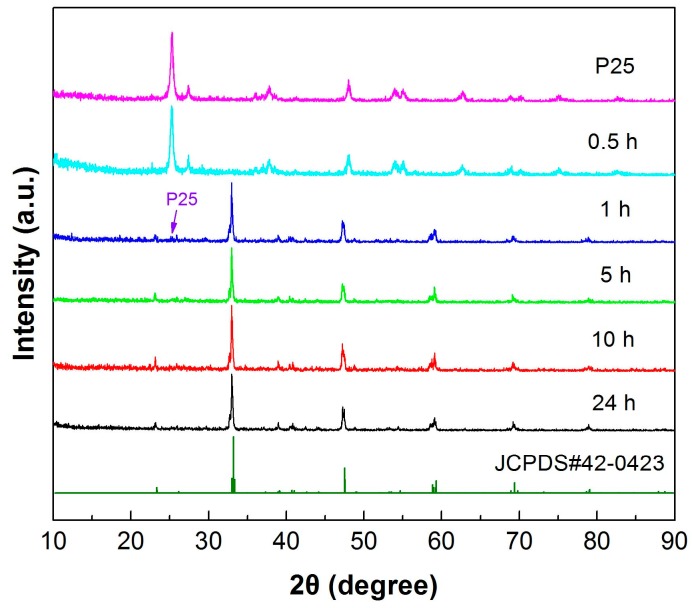
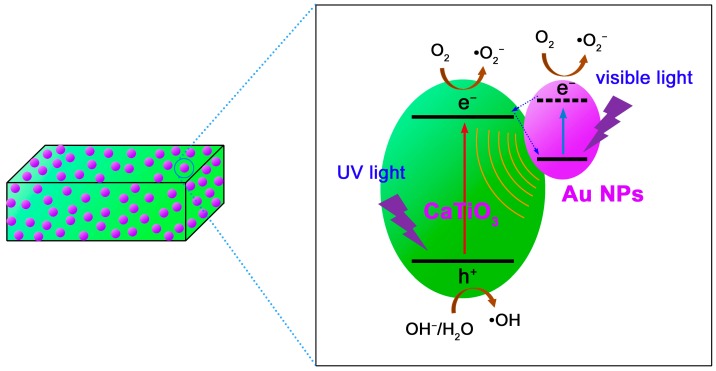
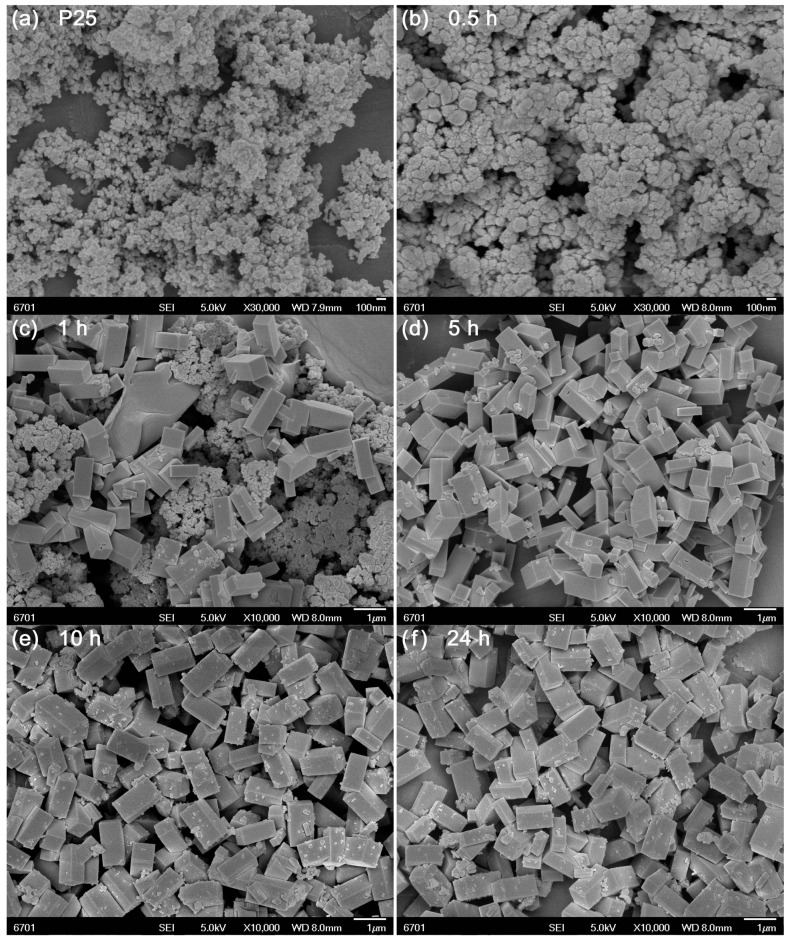
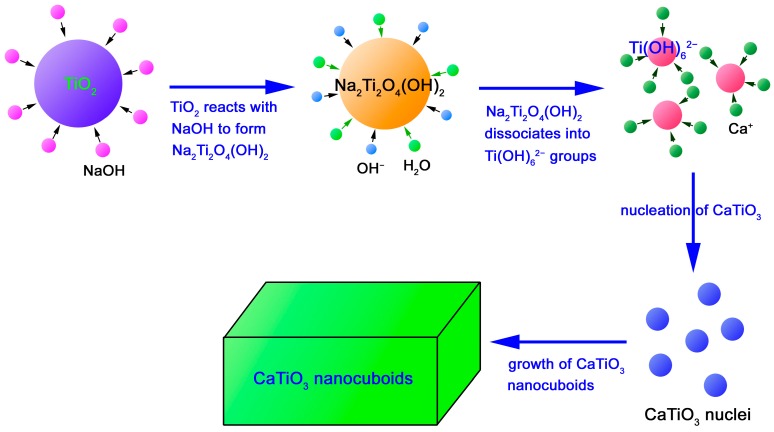
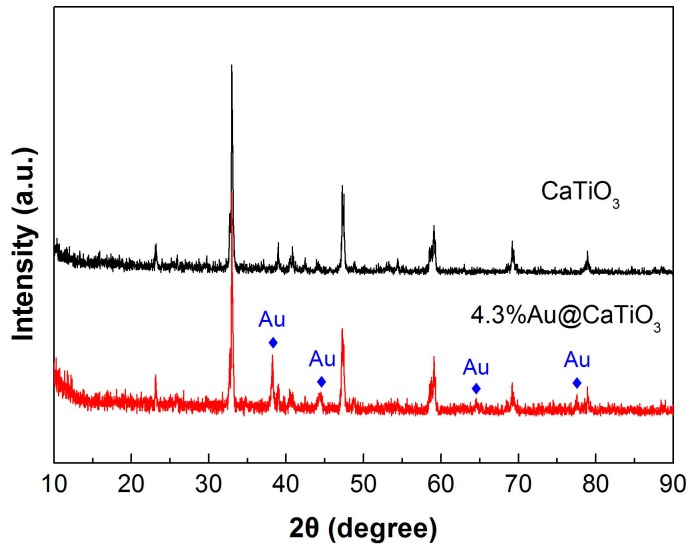
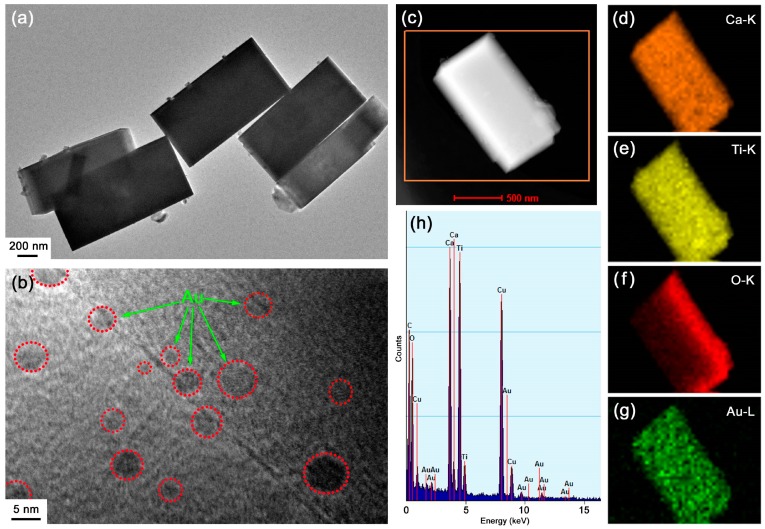
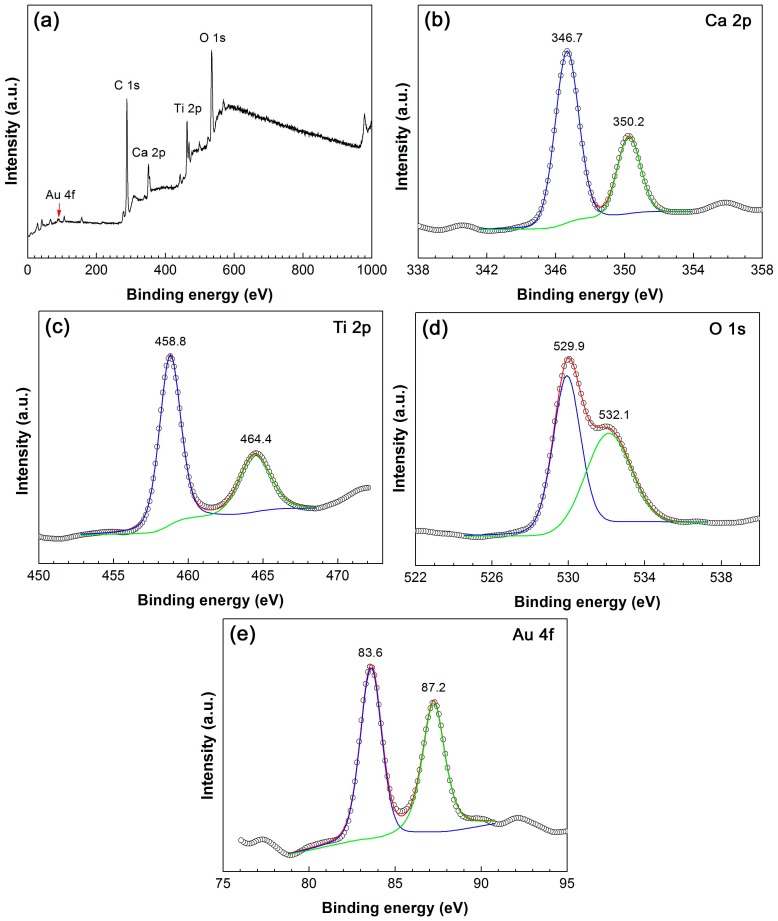
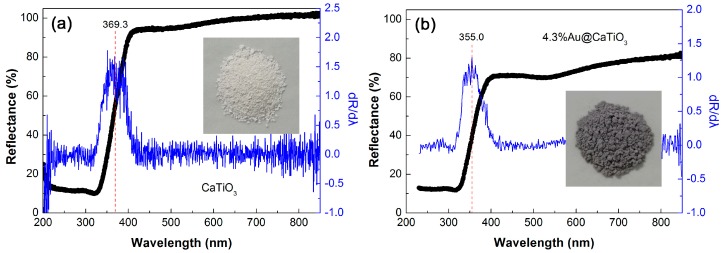
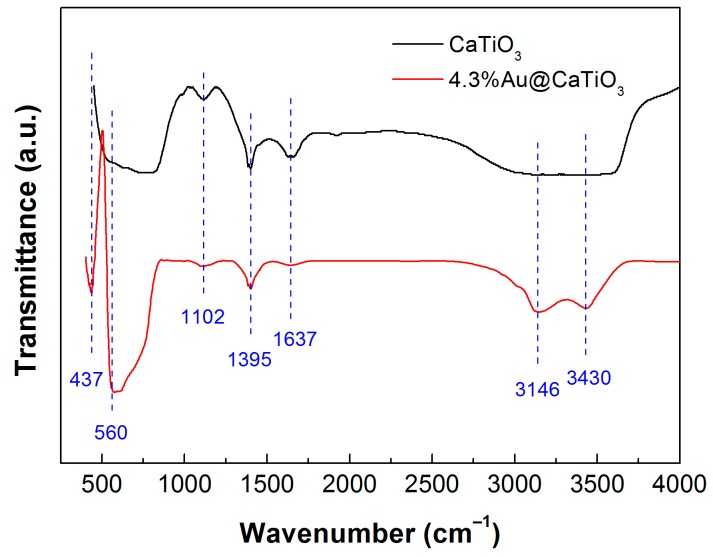
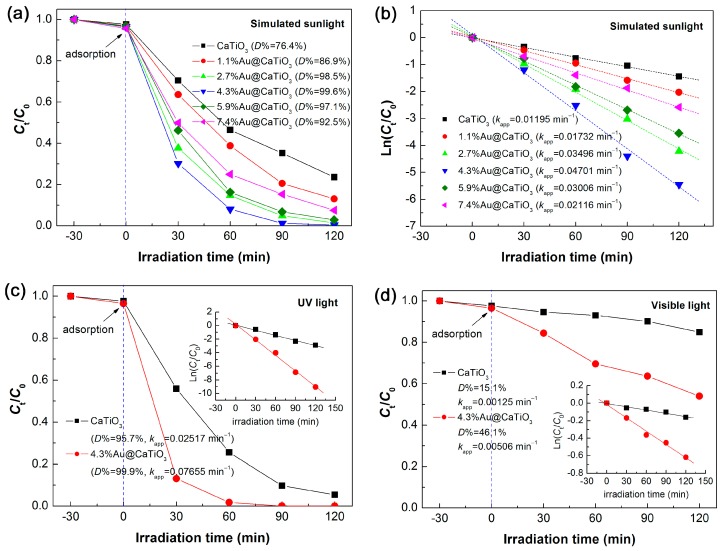
Using P25 as the titanium source and based on a hydrothermal route, we have synthesized CaTiO nanocuboids (NCs) with the width of 0.3-0.5 μm and length of 0.8-1.1 μm, and systematically investigated their growth process. Au nanoparticles (NPs) of 3-7 nm in size were assembled on the surface of CaTiO NCs via a photocatalytic reduction method to achieve excellent Au@CaTiO composite photocatalysts. Various techniques were used to characterize the as-prepared samples, including X-ray powder diffraction (XRD), scanning/transmission electron microscopy (SEM/TEM), diffuse reflectance spectroscopy (UV-vis DRS), Fourier transform infrared spectroscopy (FTIR), and X-ray photoelectron spectroscopy (XPS). Rhodamine B (RhB) in aqueous solution was chosen as the model pollutant to assess the photocatalytic performance of the samples separately under simulated-sunlight, ultraviolet (UV) and visible-light irradiation. Under irradiation of all kinds of light sources, the Au@CaTiO composites, particularly the 4.3%Au@CaTiO composite, exhibit greatly enhanced photocatalytic performance when compared with bare CaTiO NCs. The main roles of Au NPs in the enhanced photocatalytic mechanism of the Au@CaTiO composites manifest in the following aspects: (1) Au NPs act as excellent electron sinks to capture the photoexcited electrons in CaTiO, thus leading to an efficient separation of photoexcited electron/hole pairs in CaTiO; (2) the electromagnetic field caused by localized surface plasmon resonance (LSPR) of Au NPs could facilitate the generation and separation of electron/hole pairs in CaTiO; and (3) the LSPR-induced electrons in Au NPs could take part in the photocatalytic reactions.
以P25为钛源,基于水热法,我们合成了宽度为0.3 - 0.5μm、长度为0.8 - 1.1μm的CaTiO纳米立方体(NCs),并系统研究了它们的生长过程。通过光催化还原法将尺寸为3 - 7nm的金纳米颗粒(NPs)组装在CaTiO NCs表面,以制备出优异的Au@CaTiO复合光催化剂。采用多种技术对所制备的样品进行表征,包括X射线粉末衍射(XRD)、扫描/透射电子显微镜(SEM/TEM)、漫反射光谱(UV-vis DRS)、傅里叶变换红外光谱(FTIR)和X射线光电子能谱(XPS)。选择水溶液中的罗丹明B(RhB)作为模型污染物,分别在模拟太阳光、紫外(UV)和可见光照射下评估样品的光催化性能。在各种光源照射下,与裸露的CaTiO NCs相比,Au@CaTiO复合材料,特别是4.3%Au@CaTiO复合材料,表现出大大增强的光催化性能。金纳米颗粒在Au@CaTiO复合材料增强光催化机理中的主要作用体现在以下几个方面:(1)金纳米颗粒作为优异的电子阱捕获CaTiO中的光激发电子,从而导致CaTiO中光激发电子/空穴对的有效分离;(2)金纳米颗粒的局域表面等离子体共振(LSPR)所产生的电磁场可促进CaTiO中电子/空穴对的产生和分离;(3)金纳米颗粒中LSPR诱导的电子可参与光催化反应。