Istituto di Biomedicina ed Immunologia Molecolare (IBIM) CNR, via Ugo la Malfa 153, 90146, Palermo, Italy.
Dipartimento di Scienze e Tecnologie Biologiche Chimiche e Farmaceutiche, Università degli Studi di Palermo, 90128, Palermo, Italy.
BMC Bioinformatics. 2019 Apr 18;20(Suppl 4):120. doi: 10.1186/s12859-019-2683-y.
MicroRNAs (miRNAs) are small non-coding RNA molecules mediating the translational repression and degradation of target mRNAs in the cell. Mature miRNAs are used as a template by the RNA-induced silencing complex (RISC) to recognize the complementary mRNAs to be regulated. To discern further RISC functions, we analyzed the activities of two RISC proteins, AGO2 and GW182, in the MCF-7 human breast cancer cell line.
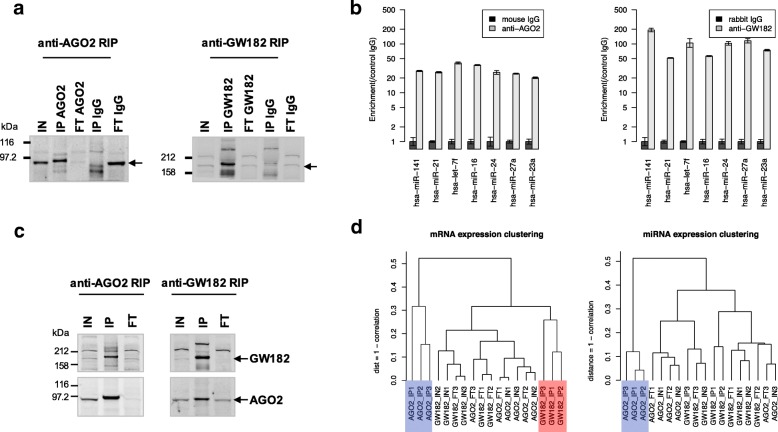
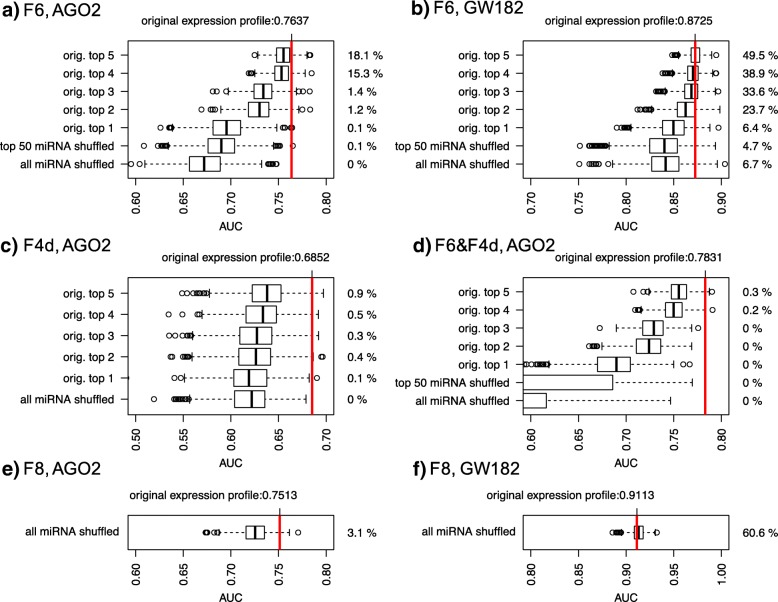
We performed three RIP-Chip experiments using either anti-AGO2 or anti-GW182 antibodies and compiled a data set made up of the miRNA and mRNA expression profiles of three samples for each experiment. Specifically, we analyzed the input sample, the immunoprecipitated fraction and the unbound sample resulting from the RIP experiment. We used the expression profile of the input sample to compute several variables, using formulae capable of integrating the information on miRNA binding sites, both in the 3'UTR and coding regions, with miRNA and mRNA expression level profiles. We compared immunoprecipitated vs unbound samples to determine the enriched or underrepresented genes in the immunoprecipitated fractions, independently for AGO2 and GW182 related samples.
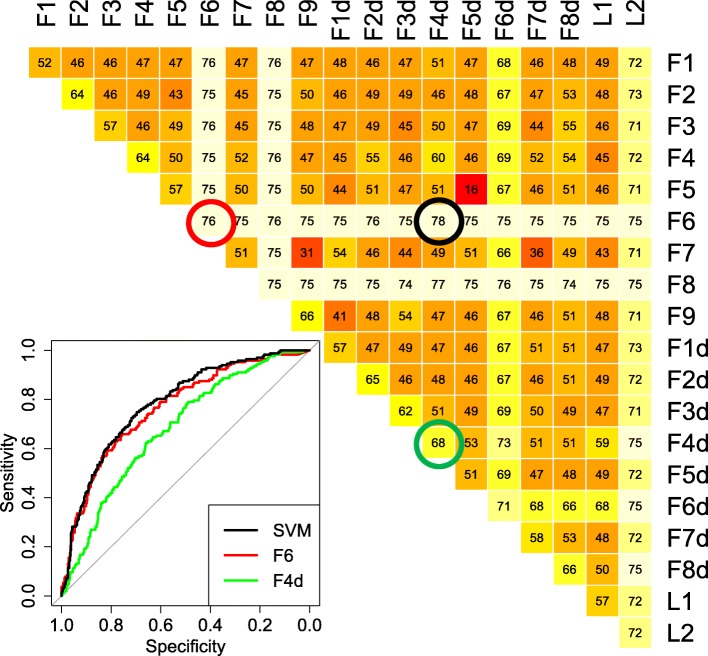
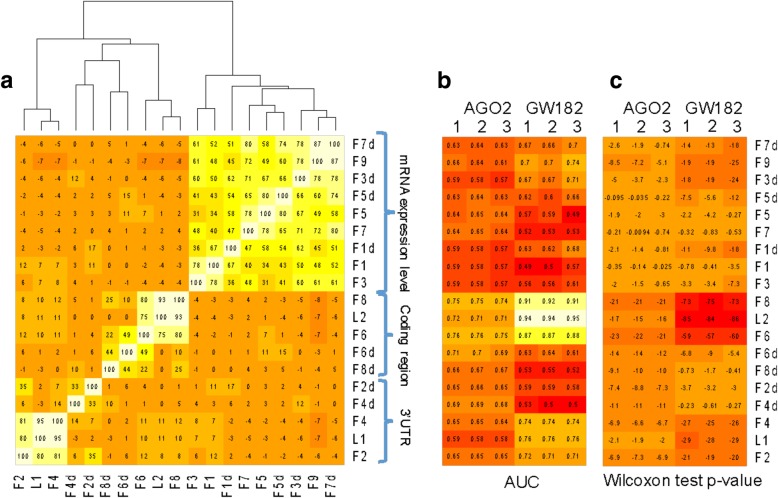
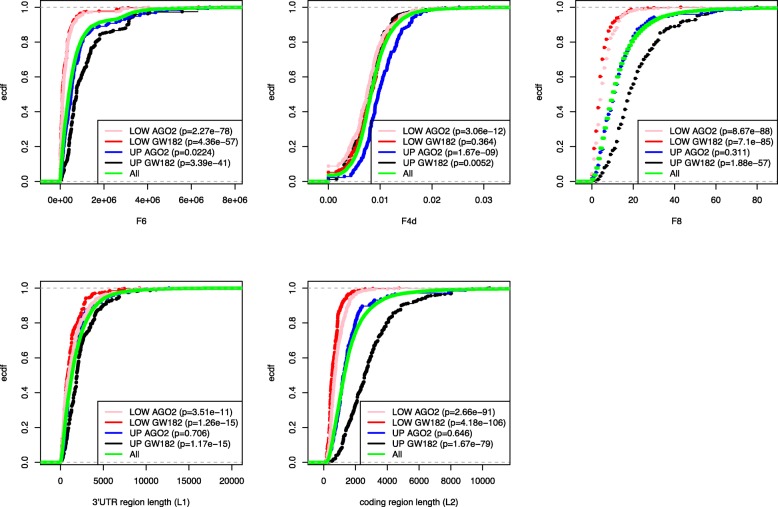
For each of the two proteins, we trained and tested several support vector machine algorithms capable of distinguishing the enriched from the underrepresented genes that were experimentally detected. The most efficient algorithm for distinguishing the enriched genes in AGO2 immunoprecipitated samples was trained by using variables involving the number of binding sites in both the 3'UTR and coding region, integrated with the miRNA expression profile, as expected for miRNA targets. On the other hand, we found that the best variable for distinguishing the enriched genes in the GW182 immunoprecipitated samples was the length of the coding region.
Due to the major role of GW182 in GW/P-bodies, our data suggests that the AGO2-GW182 RISC recruits genes based on miRNA binding sites in the 3'UTR and coding region, but only the longer mRNAs probably remain sequestered in GW/P-bodies, functioning as a repository for translationally silenced RNAs.
MicroRNAs (miRNAs) 是一种小的非编码 RNA 分子,在细胞中通过翻译抑制和靶 mRNA 的降解来调节基因表达。成熟的 miRNAs 可作为 RNA 诱导沉默复合物 (RISC) 的模板,用于识别待调控的互补 mRNAs。为了进一步研究 RISC 的功能,我们在 MCF-7 人乳腺癌细胞系中分析了两种 RISC 蛋白(AGO2 和 GW182)的活性。
我们使用抗 AGO2 或抗 GW182 抗体进行了三次 RIP-Chip 实验,并为每个实验编译了一个由三个样本的 miRNA 和 mRNA 表达谱组成的数据集。具体来说,我们分析了输入样本、免疫沉淀部分和 RIP 实验产生的未结合样本。我们使用输入样本的表达谱来计算几个变量,这些变量使用能够整合 miRNA 结合位点信息的公式,包括 3'UTR 和编码区域中的 miRNA 结合位点,以及 miRNA 和 mRNA 表达水平谱。我们比较了免疫沉淀部分与未结合部分,以确定在 AGO2 和 GW182 相关样本中富集或表达不足的基因。
对于两种蛋白质,我们分别针对 AGO2 和 GW182 免疫沉淀样本,训练和测试了几种能够区分实验检测到的富集基因和表达不足基因的支持向量机算法。用于区分 AGO2 免疫沉淀样本中富集基因的最有效的算法是使用涉及 3'UTR 和编码区域中结合位点数量的变量进行训练的,这与 miRNA 靶基因的预期一致。另一方面,我们发现区分 GW182 免疫沉淀样本中富集基因的最佳变量是编码区域的长度。
由于 GW182 在 GW/P-bodies 中的主要作用,我们的数据表明,AGO2-GW182 RISC 基于 3'UTR 和编码区域中的 miRNA 结合位点招募基因,但只有较长的 mRNA 可能仍然被隔离在 GW/P-bodies 中,作为翻译沉默 RNA 的储存库。