Department of Pharmacology, School of Medicine, College of Medicine, Taipei Medical University, No. 250, Wu Hsing St., Taipei, 110, Taiwan.
Graduate Institute of Medical Sciences, College of Medicine, Taipei Medical University, No. 250, Wu Hsing St., Taipei, 110, Taiwan.
J Biomed Sci. 2019 Apr 18;26(1):27. doi: 10.1186/s12929-019-0521-1.
Promoting post-stroke neurogenesis has long been proposed to be a therapeutic strategy for the enhancement of functional recovery after cerebral ischemic stroke. Despite numerous approaches have been widely reported the proliferation or differentiation of the neurogenic population therapeutic strategies by targeting adult neurogenesis not yet to be successfully clarified in clinical settings. Here, we hypothesized that alterations in microenvironment of the ischemic brain might impede the functional maturation of adult newly generated neurons that limits functional recovery after stroke.
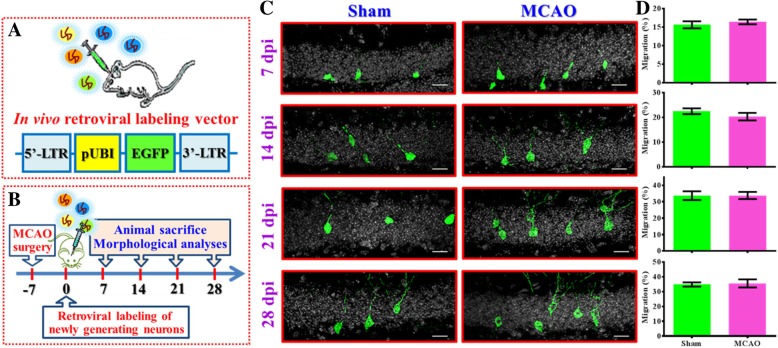
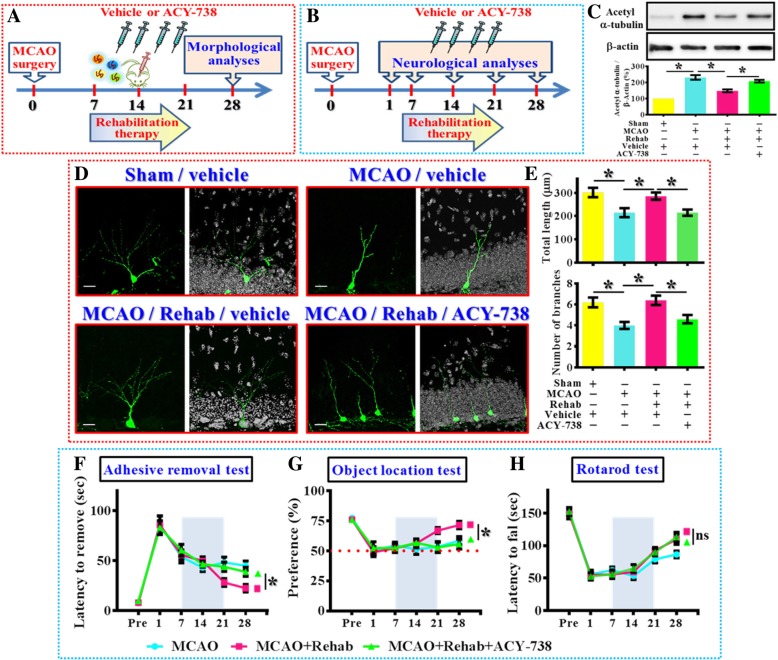
The in vivo retroviral based labeling model was applied to directly birth-date and trace the maturation process of adult newly generating neurons after hypoxic challenge. A rehabilitation therapy procedure was adopted through the combination of task-specific motor rehabilitating training with environmental enrichment to promote functional recovery after stroke. In addition, a pharmacological or genetic suppression of HDAC6 was performed to evaluate the functional significance of HDAC6 in the pathology of ischemic stroke induced deficits.
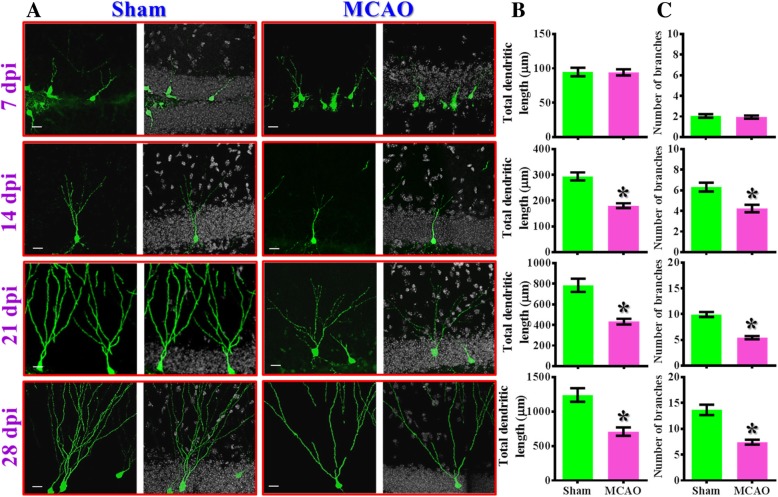
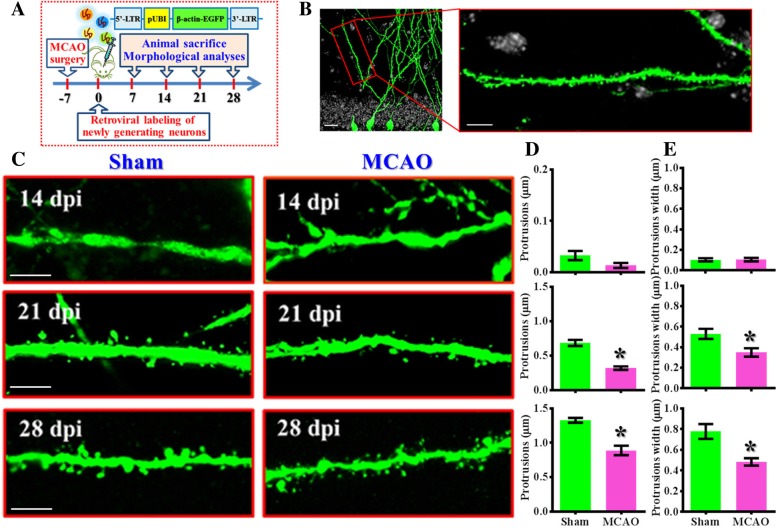
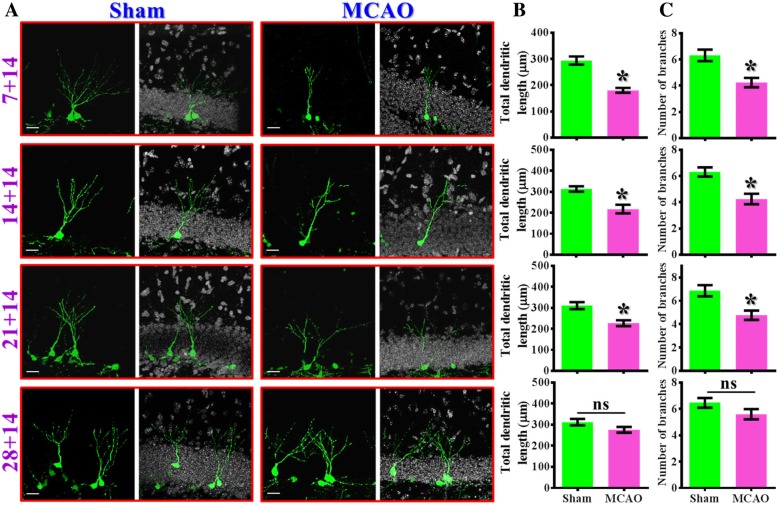
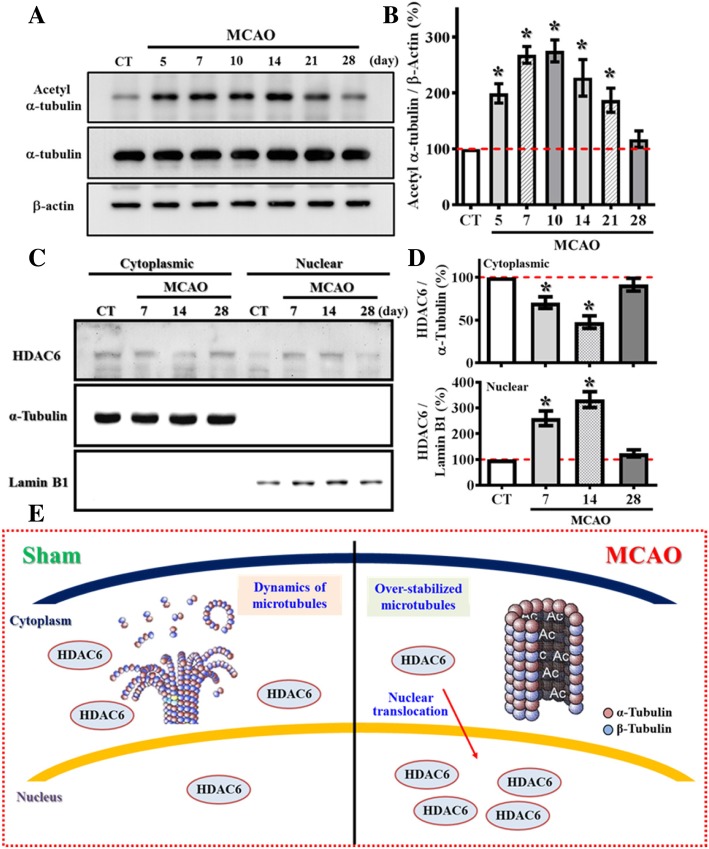
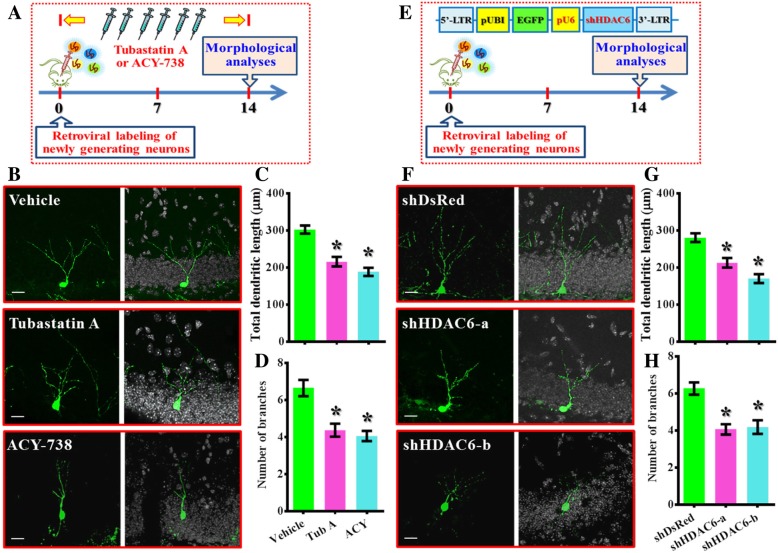
Serial morphological analyses at multiple stages along the maturation process showed significant retardation of the dendritic maturation on the newly generated neurons after stroke. Subsequent biochemical analyses revealed an aberrant nuclear translocation of HDAC6 that leads to the hyper-acetylation of α-tubulin (an indication of over-stabilized microtubules) after hypoxic challenge was observed at different time points after stroke. Furthermore, the mimicry experiments with either pharmacological or genetic suppression of HDAC6, phenocopied the stroke induced retardation in dendritic maturation of newly generating neurons in vivo. More importantly, we provide direct evidence showing the proper function of HDAC6 is required for rehabilitation therapy induced therapeutic benefits after stroke.
Together, our current study unravels that dysfunction of HDAC6 contributes to stroke induced deficits in neurogenesis and provides an innovative therapeutic strategy that targets HDAC6 for promoting functional recovery toward the patients with stroke in clinic.
促进卒中后神经发生长期以来被提议作为一种治疗策略,以增强脑缺血性卒中后的功能恢复。尽管已经广泛报道了许多方法来促进神经发生,但针对成人神经发生的增殖或分化的治疗策略尚未在临床环境中得到成功阐明。在这里,我们假设缺血性脑微环境的改变可能会阻碍成年新生神经元的功能成熟,从而限制卒中后的功能恢复。
采用体内逆转录病毒标记模型,直接标记缺氧刺激后成年新生神经元的成熟过程,并追踪其成熟过程。通过结合任务特异性运动康复训练和环境丰富化的康复治疗程序,促进卒中后功能恢复。此外,还进行了 HDAC6 的药理学或基因抑制实验,以评估 HDAC6 在缺血性卒中诱导缺陷中的功能意义。
沿着成熟过程的多个阶段进行的连续形态学分析表明,卒中后新生神经元的树突成熟明显延迟。随后的生化分析显示,在卒中后不同时间点观察到缺氧刺激后 HDAC6 的异常核转位,导致α-微管蛋白的过度乙酰化(微管过度稳定的迹象)。此外,用药理学或基因抑制 HDAC6 的模拟实验,在体内复制了卒中诱导的新生神经元树突成熟的延迟。更重要的是,我们提供了直接证据,表明 HDAC6 的正常功能是康复治疗诱导卒中后功能恢复的必要条件。
总之,我们的研究揭示了 HDAC6 的功能障碍导致了卒中诱导的神经发生缺陷,并提供了一种针对 HDAC6 的创新治疗策略,以促进临床中风患者的功能恢复。