Section of Epidemiology, Vetsuisse Faculty, University of Zürich, Winterthurerstrasse 270, 8057, Zürich, Switzerland.
Kazakh Scientific Veterinary Research Institute, Raiymbek 223, Almaty, Kazakhstan.
Parasit Vectors. 2019 Apr 18;12(1):175. doi: 10.1186/s13071-019-3438-3.
The zoonotic parasite Taenia saginata transmits between humans, the definitive host (causing taeniosis), and bovines as the intermediate host (causing cysticercosis). Central and western Asia and the Caucasus have large cattle populations and beef consumption is widespread. However, an overview of the extent of human T. saginata infection and bovine cysticercosis is lacking. This review aims to summarize the distribution of T. saginata in this region.
A systematic review was conducted, that gathered published and grey literature, and official data concerning T. saginata taeniosis and bovine cysticercosis in central and western Asia and the Caucasus published between January 1st, 1990 and December 31st, 2018. Where no data were available for a country within this period, published data from 1985-1990 were also accessed.
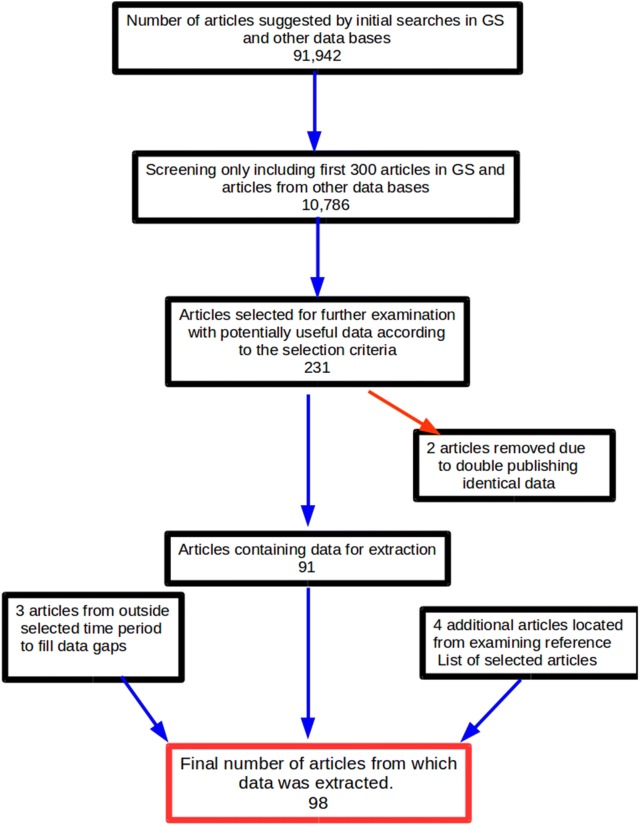
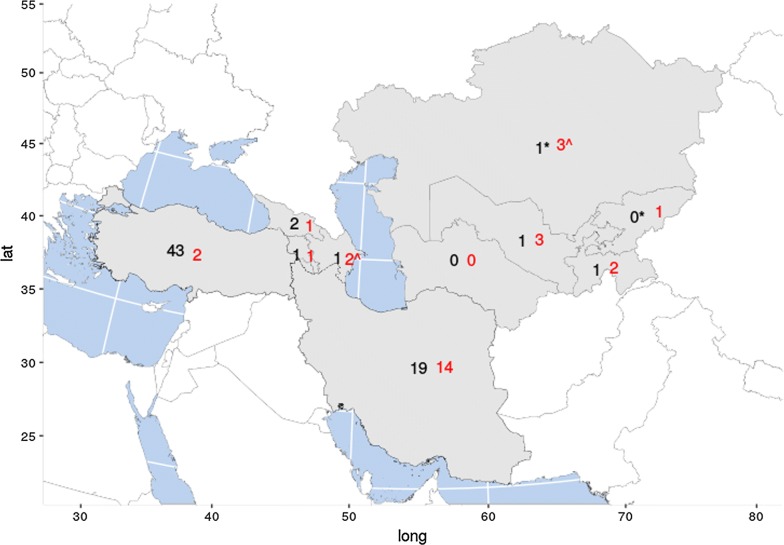
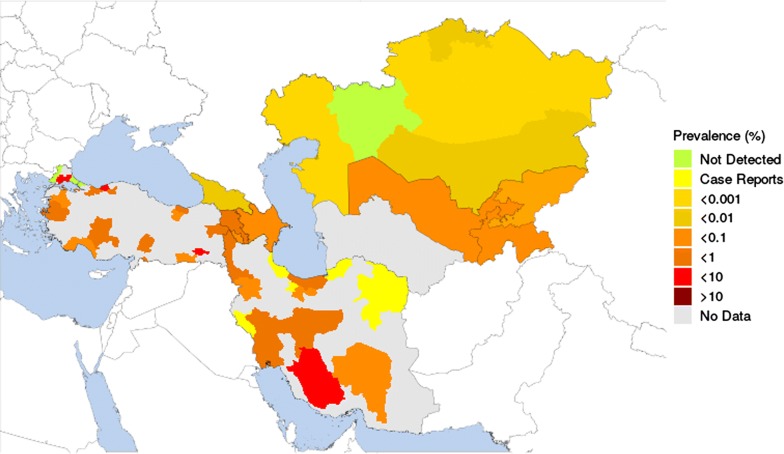
From 10,786 articles initially scanned, we retrieved 98 full-text articles from which data were extracted. In addition, two unpublished datasets were provided on the incidence of human taeniosis. Data for human taeniosis and bovine cysticercosis were found for all countries except Turkmenistan. Human taeniosis prevalence varied from undetected to over 5.3%, with regional variations. Where bovine cysticercosis was detected, prevalences varied from case reports to 25%.
The public health burden of T. saginata is assumed to be small as the parasite is of low pathogenicity to humans. However, this review indicates that infection continues to be widespread and this may result in a large economic burden, due to the resources utilized in meat inspection and condemnation or processing with subsequent downgrading of infected carcasses.
人畜共患寄生虫猪带绦虫在人类(导致带绦虫病)、终宿主和牛(导致囊尾蚴病)、中间宿主之间传播。中亚和高加索地区拥有大量的牛群,且牛肉消费广泛。然而,目前缺乏该地区人类猪带绦虫感染和牛囊尾蚴病流行程度的概述。本综述旨在总结该地区猪带绦虫的分布情况。
系统检索了 1990 年 1 月 1 日至 2018 年 12 月 31 日期间发表和灰色文献,以及有关中亚和高加索地区猪带绦虫带绦虫病和牛囊尾蚴病的官方数据。对于该期间内一个国家没有数据的情况,也查阅了 1985 年至 1990 年发表的数据。
从最初扫描的 10786 篇文章中,我们检索到了 98 篇全文文章,从中提取了数据。此外,还提供了两个关于人类带绦虫病发病率的未发表数据集。除了土库曼斯坦,所有国家都有人类带绦虫病和牛囊尾蚴病的数据。人类带绦虫病的患病率从未检出到超过 5.3%不等,存在地区差异。在检测到牛囊尾蚴病的地方,患病率从病例报告到 25%不等。
由于寄生虫对人类的致病性较低,因此猪带绦虫的公共卫生负担被认为较小。然而,本综述表明感染仍在广泛传播,这可能会导致巨大的经济负担,因为需要利用资源进行肉类检查和废弃或处理受感染的尸体,从而导致降级。