Eichenberger Ramon M, Thomas Lian F, Gabriël Sarah, Bobić Branco, Devleesschauwer Brecht, Robertson Lucy J, Saratsis Anastasios, Torgerson Paul R, Braae Uffe C, Dermauw Veronique, Dorny Pierre
Institute of Parasitology, Vetsuisse Faculty, University of Zurich, Zurich, Switzerland.
Institute of Infection and Global Health, University of Liverpool, Liverpool, UK.
Parasit Vectors. 2020 May 7;13(1):234. doi: 10.1186/s13071-020-04095-1.
Taenia saginata is an important zoonotic parasite, causing taeniosis in humans and cysticercosis in bovines, the latter being a significant concern for the global beef industry. Many countries in East, Southeast and South Asia are experiencing rapid economic growth, and an increasing number of people in these countries are dependent on the livestock industry. Currently, however, an overview of the prevalence of T. saginata in this region is lacking. In this review, we analysed the available literature on T. saginata taeniosis and bovine cysticercosis for East, Southeast and South Asia.
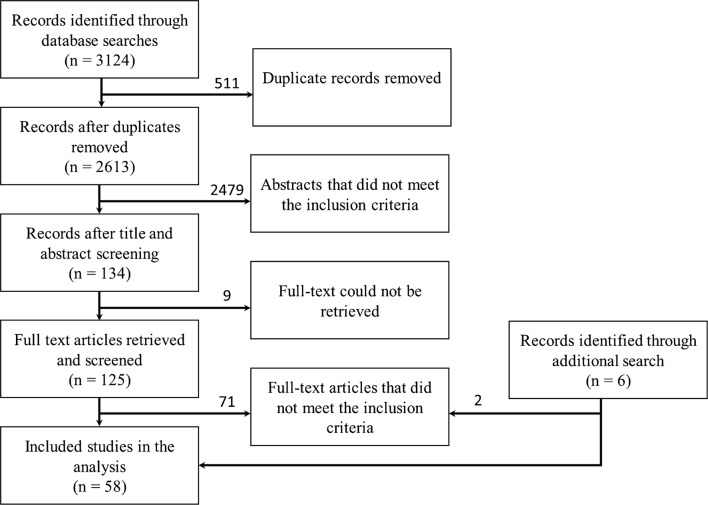
A systematic review was conducted, based on both published and grey literature. Articles published between 1990 and 2017 were mined for information on the occurrence, prevalence, and geographical distribution of T. saginata taeniosis and bovine cysticercosis in East, Southeast and South Asia.
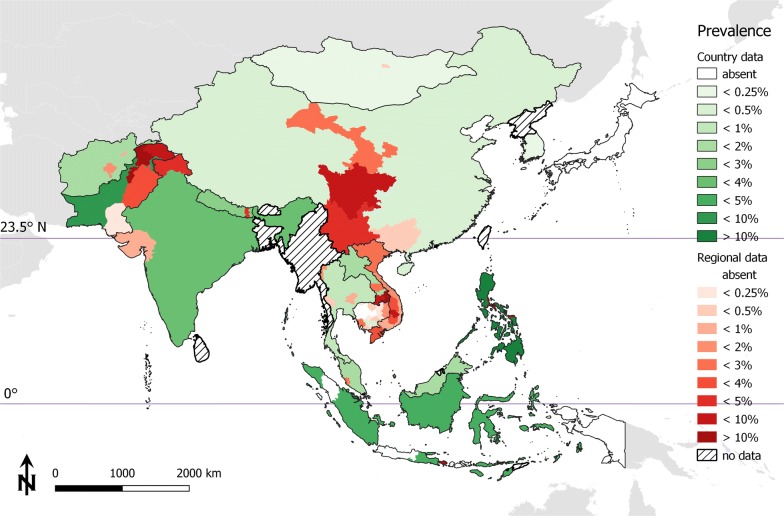
The presence of T. saginata was described in 15 of 27 countries of the region, including Afghanistan, Cambodia, China, India, Indonesia, Japan, Lao PDR, Malaysia, Mongolia, Nepal, Pakistan, Philippines, South Korea, Thailand and Vietnam. The only country that reported an absence of T. saginata is Japan, although sporadic reports of imported cases and unconfirmed reports of autochthonous infections were identified. Nationwide surveys of taeniosis with systematic sample collection and high sample numbers were available for Cambodia, China, Lao PDR, and South Korea, although speciation of Taenia was not always performed. Regional prevalence of taeniosis and bovine cysticercosis in endemic regions ranged between 0.02-42.6%, and 0.76-46.7%, respectively. However, data for bovine cysticercosis were only available for five countries (Japan, Lao PDR, Mongolia, Pakistan and Vietnam).
The data indicate a widespread occurrence of T. saginata throughout East, Southeast and South Asia. Identification of Taenia spp. in human infections was frequently not performed, leading to gaps in knowledge about the distribution of human tapeworm infections, mainly in regions where different human Taenia species co-occur. A high prevalence of T. saginata taeniosis and bovine cysticercosis may reflect insufficiencies in sanitation, limited health education standards, and insufficient food safety measures. Therefore, there is a need to improve local surveillance, notification, and overall control systems.
牛带绦虫是一种重要的人畜共患寄生虫,可导致人类患牛带绦虫病以及牛患囊尾蚴病,后者是全球牛肉行业的一个重大问题。东亚、东南亚和南亚的许多国家正在经历快速的经济增长,这些国家越来越多的人依赖畜牧业。然而,目前缺乏该地区牛带绦虫流行情况的概述。在本综述中,我们分析了东亚、东南亚和南亚关于牛带绦虫病和牛囊尾蚴病的现有文献。
基于已发表文献和灰色文献进行了系统综述。挖掘了1990年至2017年间发表的文章,以获取有关东亚、东南亚和南亚牛带绦虫病和牛囊尾蚴病的发生、流行情况及地理分布的信息。
该地区27个国家中的15个国家报告存在牛带绦虫,包括阿富汗、柬埔寨、中国、印度、印度尼西亚、日本、老挝人民民主共和国、马来西亚、蒙古、尼泊尔、巴基斯坦、菲律宾、韩国、泰国和越南。唯一报告不存在牛带绦虫的国家是日本,不过发现了输入性病例的零星报告和本地感染的未经证实的报告。柬埔寨、中国、老挝人民民主共和国和韩国有全国性的牛带绦虫病调查,采用了系统的样本采集且样本数量较多,尽管并非总是对带绦虫进行物种鉴定。流行地区牛带绦虫病和牛囊尾蚴病的区域流行率分别在0.02%至42.6%和0.76%至46.7%之间。然而,牛囊尾蚴病的数据仅来自五个国家(日本、老挝人民民主共和国、蒙古、巴基斯坦和越南)。
数据表明牛带绦虫在整个东亚、东南亚和南亚广泛存在。在人类感染中,经常不进行带绦虫物种鉴定,这导致了对人类绦虫感染分布情况的了解存在空白,主要是在不同人类带绦虫物种共存的地区。牛带绦虫病和牛囊尾蚴病的高流行率可能反映了卫生条件不足、健康教育水平有限以及食品安全措施不完善。因此,有必要改善当地的监测、通报和整体控制系统。