Department of Medical Genetics, Cambridge Institute for Medical Research, University of Cambridge, The Keith Peters Building, Cambridge Biomedical Campus, Hills Road, Cambridge, CB2 0XY, UK.
UK Dementia Research Institute, Cambridge Institute for Medical Research, University of Cambridge, The Keith Peters Building, Cambridge Biomedical Campus, Hills Road, Cambridge, CB2 0XY, UK.
Nat Commun. 2019 Apr 18;10(1):1817. doi: 10.1038/s41467-019-09494-2.
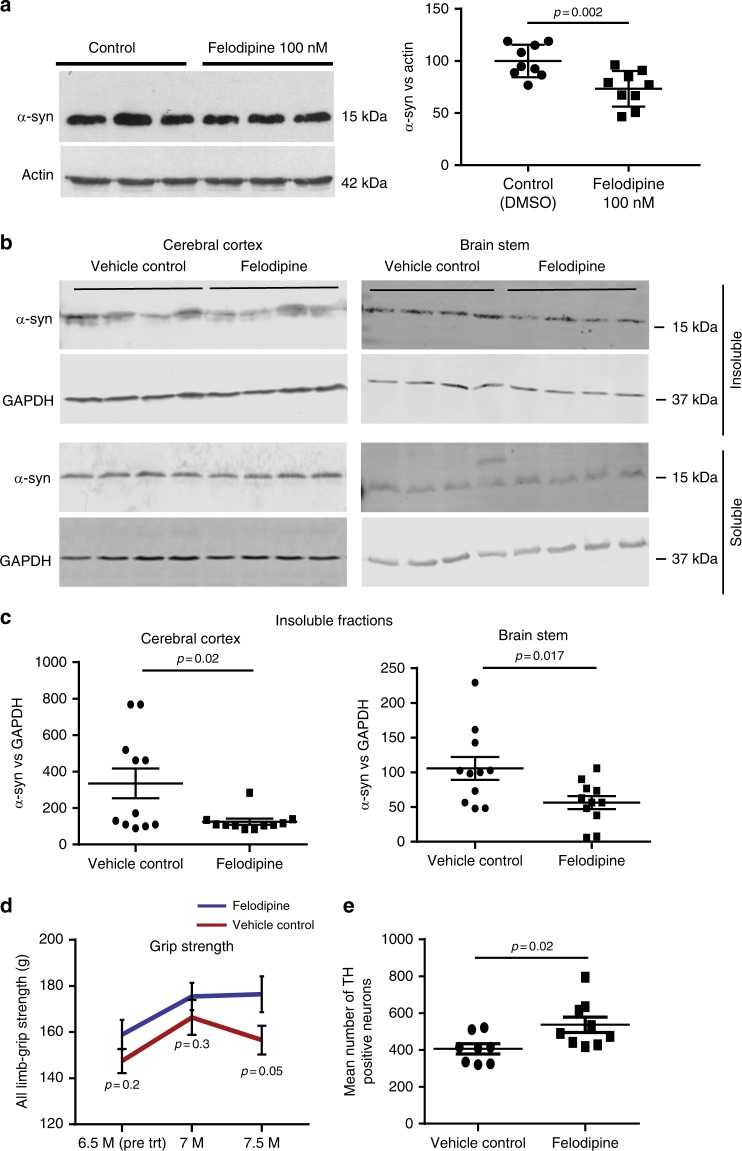
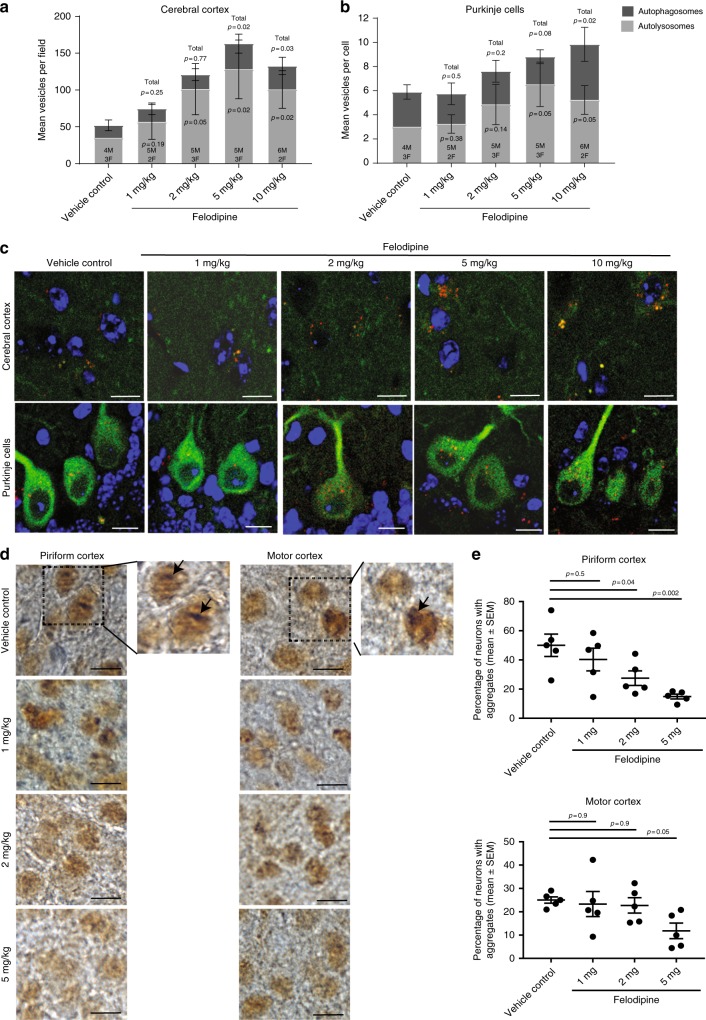
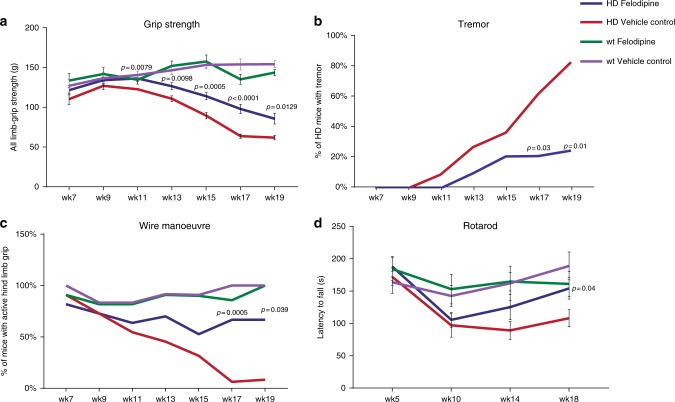
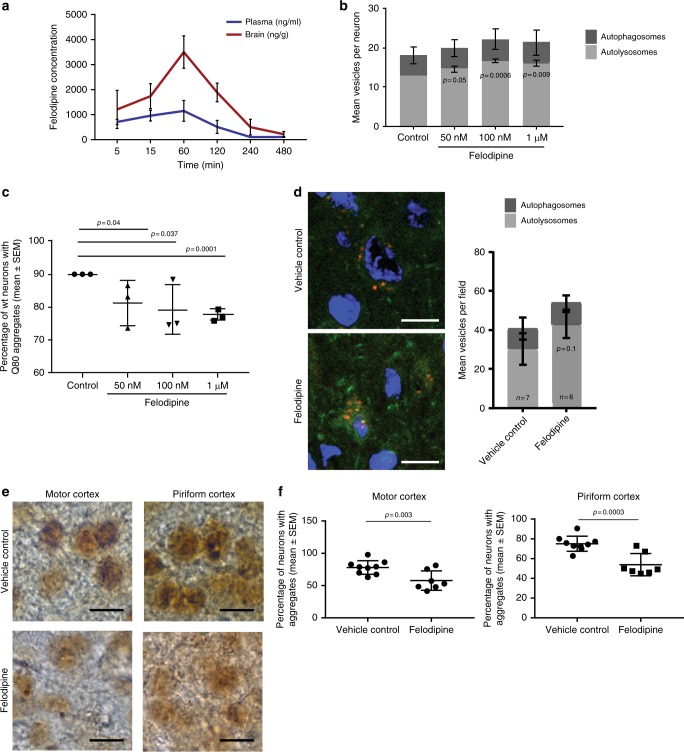
Neurodegenerative diseases like Alzheimer's disease, Parkinson's disease and Huntington's disease manifest with the neuronal accumulation of toxic proteins. Since autophagy upregulation enhances the clearance of such proteins and ameliorates their toxicities in animal models, we and others have sought to re-position/re-profile existing compounds used in humans to identify those that may induce autophagy in the brain. A key challenge with this approach is to assess if any hits identified can induce neuronal autophagy at concentrations that would be seen in humans taking the drug for its conventional indication. Here we report that felodipine, an L-type calcium channel blocker and anti-hypertensive drug, induces autophagy and clears diverse aggregate-prone, neurodegenerative disease-associated proteins. Felodipine can clear mutant α-synuclein in mouse brains at plasma concentrations similar to those that would be seen in humans taking the drug. This is associated with neuroprotection in mice, suggesting the promise of this compound for use in neurodegeneration.
神经退行性疾病,如阿尔茨海默病、帕金森病和亨廷顿病,表现为神经元中有毒蛋白质的积累。由于自噬上调增强了对这些蛋白质的清除,并改善了它们在动物模型中的毒性,我们和其他人试图重新定位/重新评估现有的在人类中使用的化合物,以确定那些可能在大脑中诱导自噬的化合物。这种方法的一个关键挑战是评估所鉴定的任何化合物是否可以在人类服用该药物治疗其常规适应症的浓度下诱导神经元自噬。在这里,我们报告说,非洛地平,一种 L 型钙通道阻滞剂和抗高血压药物,可诱导自噬并清除多种易于聚集的、与神经退行性疾病相关的蛋白质。非洛地平可以在类似于人类服用该药物时的血浆浓度下清除小鼠大脑中的突变型α-突触核蛋白。这与小鼠的神经保护有关,表明该化合物在神经退行性变中的应用有一定前景。