Schenk Marian, Matar Abraham J, Hanekamp Isabel, Hawley Robert J, Huang Christene A, Duran-Struuck Raimon
Center for Transplantation Sciences, Massachusetts General Hospital, Charlestown, MA, United States.
Department of Surgery, Emory University, Atlanta, GA, United States.
Front Oncol. 2019 Apr 2;9:209. doi: 10.3389/fonc.2019.00209. eCollection 2019.
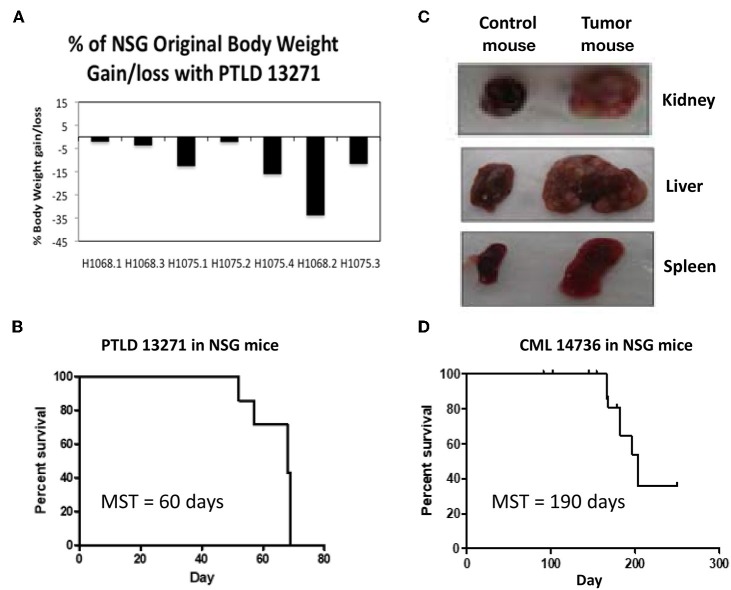
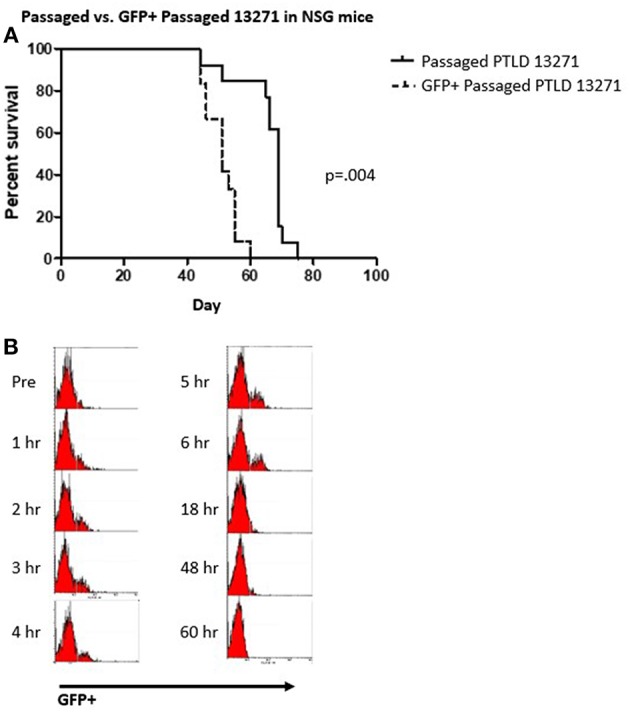
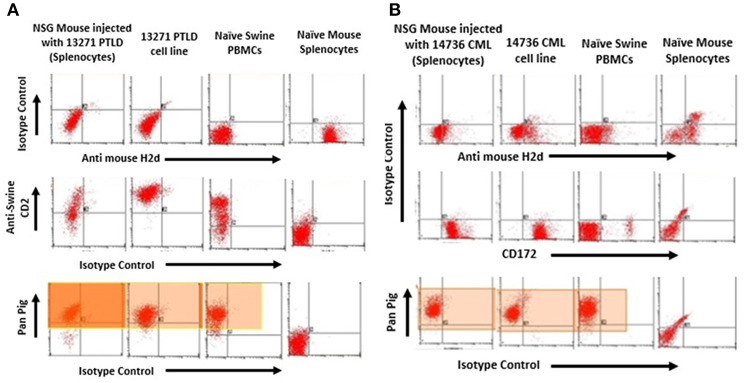
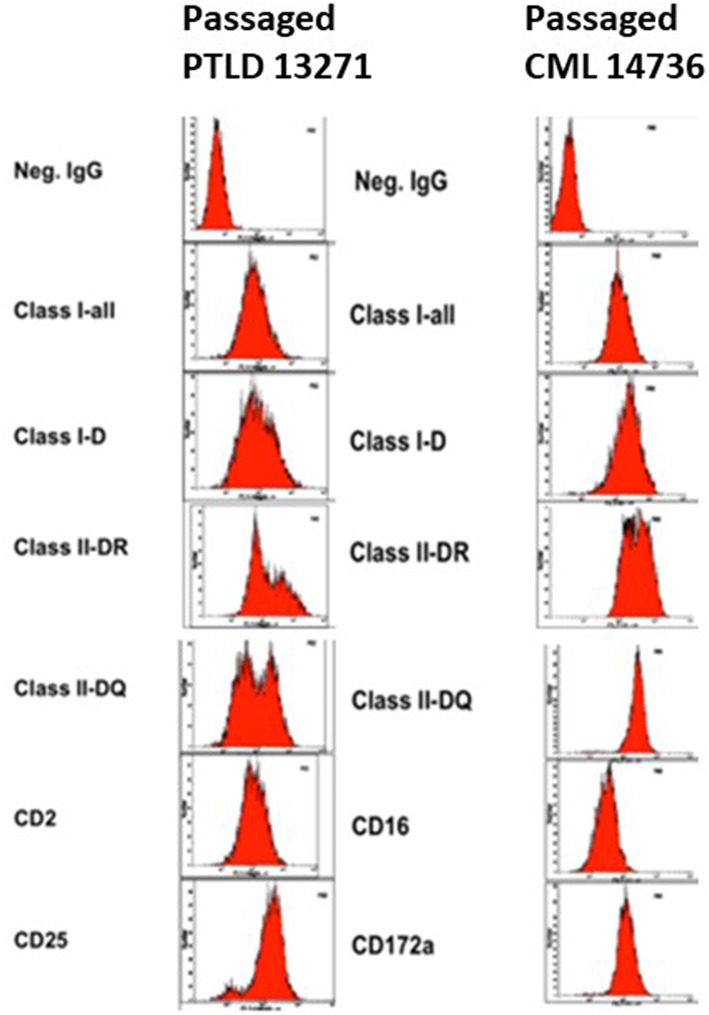
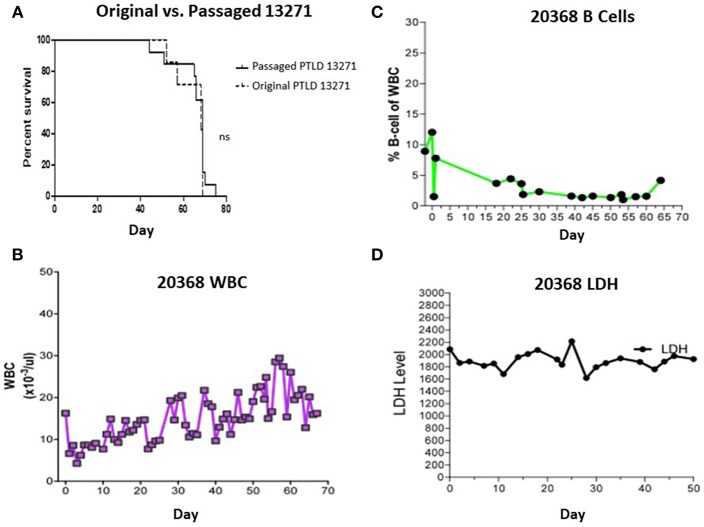
The lack of a reliable and reproducible large animal tumor model for the study of hemolymphatic malignancies limits the ability to explore the underlying pathophysiology and testing of novel therapies. The goal of this study was to develop an aggressive, trackable swine tumor cell line in mice for adoptive transfer into MHC matched swine. Two tumor cell lines, post-transplant lymphoproliferative disease (PTLD) 13271 and chronic myelogenous leukemia (CML) 14736, were previously established from the Massachusetts General Hospital (MGH) miniature swine herd. PTLD 13271 is a swine B-cell lymphoma line originating from an animal that developed PTLD following hematopoietic cell transplantation (HCT), while CML 14736 was generated from a swine that spontaneously developed CML. In order to select for aggressive tumor variants, both lines were passage into NOD/SCID IL-2 receptor γ (NSG) mice. Tumor induced mortality in mice injected with CML14736 was 68% while 100% of mice injected with PTLD 13271 succumbed to PTLD by day 70. Based on aggressiveness, PTLD 13271 was selected for further development and re-passage into NSG mice resulting in increased tumor burden and metastasis. Transduction of the PTLD 13271 cell line with a green fluorescent protein (GFP)-expressing lentivirus facilitated tumor tracking when re-passaged in mice. Utilizing a tolerance induction strategy, GFP+ tumors were injected into an MHC matched miniature swine and successfully followed via flow cytometry for 48 h in circulation, although tumor engraftment was not observed. In summary, we report the development of an aggressive GFP+B-cell lymphoma cell line which has the potential for facilitating development of a large animal tumor model.
缺乏用于研究血行性和淋巴性恶性肿瘤的可靠且可重复的大型动物肿瘤模型,限制了探索潜在病理生理学及新型疗法测试的能力。本研究的目的是在小鼠中建立一种侵袭性、可追踪的猪肿瘤细胞系,以便过继转移到 MHC 匹配的猪体内。两种肿瘤细胞系,移植后淋巴细胞增殖性疾病(PTLD)13271 和慢性粒细胞白血病(CML)14736,先前从麻省总医院(MGH)小型猪群中建立。PTLD 13271 是一种猪 B 细胞淋巴瘤系,源自一只在造血细胞移植(HCT)后发生 PTLD 的动物,而 CML 14736 是从一只自发发生 CML 的猪产生的。为了选择侵袭性肿瘤变体,将这两种细胞系接种到 NOD/SCID IL-2 受体γ(NSG)小鼠体内。注射 CML14736 的小鼠中肿瘤诱导死亡率为 68%,而注射 PTLD 13271 的小鼠在第 70 天时 100%死于 PTLD。基于侵袭性,选择 PTLD 13271 进行进一步开发,并再次接种到 NSG 小鼠体内,导致肿瘤负荷增加和转移。用表达绿色荧光蛋白(GFP)的慢病毒转导 PTLD 13271 细胞系,便于在小鼠中再次接种时追踪肿瘤。利用耐受性诱导策略,将 GFP+肿瘤注射到 MHC 匹配的小型猪体内,并通过流式细胞术在循环中成功追踪 48 小时,尽管未观察到肿瘤植入。总之,我们报告了一种侵袭性 GFP+B 细胞淋巴瘤细胞系的开发,其有潜力促进大型动物肿瘤模型的开发。