Institute of Development Studies, Library Road, University of Sussex, Brighton, UK.
Health Policy Plan. 2019 Apr 1;34(3):207-215. doi: 10.1093/heapol/czz024.
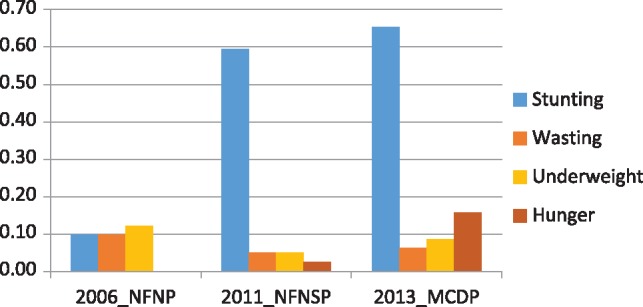
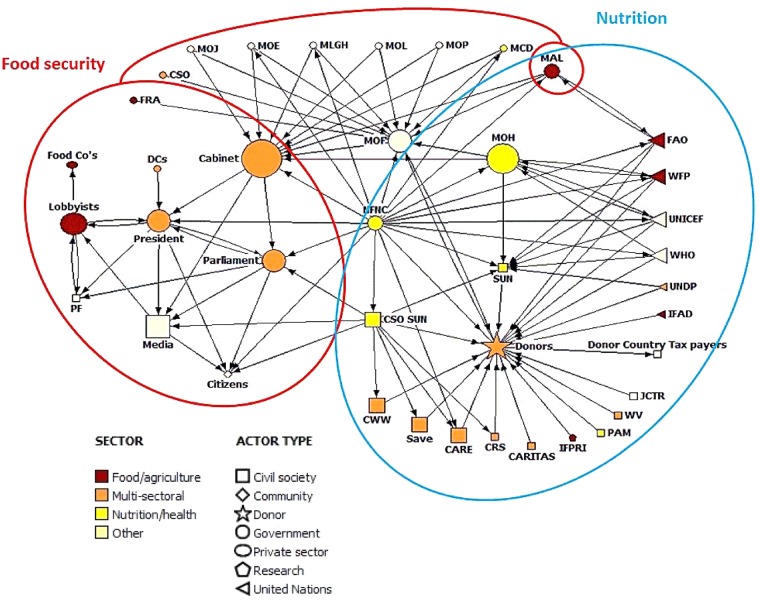
Stunted growth in children and multisectoral action to address it are dominant ideas in the international nutrition community today, and this study finds that these ideas are increasingly evident over time in nutrition policy in Zambia, with stunting largely displacing other framings of nutrition. This study is based on key informant interviews (70 interviews with 61 interviewees), policy document review, and social network mapping, with iterative data collection and analysis taking place over 6 years (2011-2016). Analysis was based on two established political science theories: policy transfer theory and the Advocacy Coalition Framework. Policy changes in Zambia are shown to result from the international community's nutrition agenda, transferred to national policy through the normative promotion of certain ways of understanding the issue of malnutrition, largely propagated through advocacy, technical assistance and funding. With its focus on multisectoral action to reduce stunting, the recent nutrition policy narrative impinges directly on an existing food security narrative as it attempts to alter agriculture policy away from maize reliance. The nutrition policy sub-system in Zambia is therefore split between an international coalition promoting action on child stunting, and a national coalition focused on food security and hunger, with implications for both sides on progressing a coherent policy agenda. This study finds that it is possible to understand policy processes for nutrition more fully than has so far been achieved in much nutrition literature through the application of multiple political science theories. These theories allow the generalization of findings from this case study to assess their relevance in other contexts: the study ultimately is about the transfer of policy being explained by the presence of advocacy coalitions and their different beliefs, resources and power, and these concepts can be investigated wherever the nutrition system reaches down from international to national level.
儿童发育迟缓问题以及解决该问题的多部门行动是当前国际营养界的主要理念,本研究发现,随着时间的推移,这些理念在赞比亚的营养政策中越来越明显,发育迟缓在很大程度上取代了其他营养框架。本研究基于关键知情人访谈(70 次访谈,涉及 61 位受访者)、政策文件审查和社会网络绘图,历时 6 年(2011-2016 年)进行了迭代数据收集和分析。分析基于两个既定的政治学理论:政策转移理论和倡导联盟框架。研究表明,赞比亚的政策变化源自国际社会的营养议程,通过规范性地推广某些理解营养不良问题的方式,将其转移到国家政策中,这些方式主要通过倡导、技术援助和资金来传播。由于其重点是减少发育迟缓的多部门行动,最近的营养政策叙述直接影响到现有的粮食安全叙述,因为它试图改变农业政策,减少对玉米的依赖。因此,赞比亚的营养政策子系统在国际联盟倡导减少儿童发育迟缓行动和国家联盟关注粮食安全和饥饿之间存在分歧,这对双方推进连贯的政策议程都有影响。本研究发现,通过应用多种政治学理论,有可能比营养文献迄今为止更全面地理解营养政策过程。这些理论允许从案例研究中推广发现,以评估其在其他背景下的相关性:本研究最终是关于政策转移的解释,这是由倡导联盟及其不同信仰、资源和权力的存在所决定的,这些概念可以在营养系统从国际层面延伸到国家层面的任何地方进行研究。