Lynch Kate D, Keshav Satish, Chapman Roger W
Translational Gastroenterology Unit, Nuffield Department of Medicine, Level 5, John Radcliffe Hospital, University of Oxford, Headley Way, Headington, Oxford, OX3 9DU UK.
Curr Hepatol Rep. 2019;18(1):115-126. doi: 10.1007/s11901-019-00456-2. Epub 2019 Mar 7.
Biologics are well established in the treatment of many immuno-inflammatory diseases including inflammatory bowel disease (IBD). However, although primary sclerosing cholangitis (PSC) is closely associated with IBD, the role of biologics in PSC remains uncertain. Many new biologics are becoming available to treat IBD, and this review aims to use the experience of biologics in PSC so far to guide more effective evaluation of emerging therapies in the future.
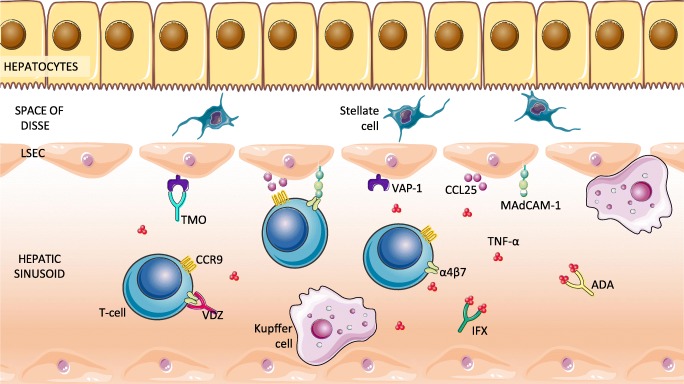
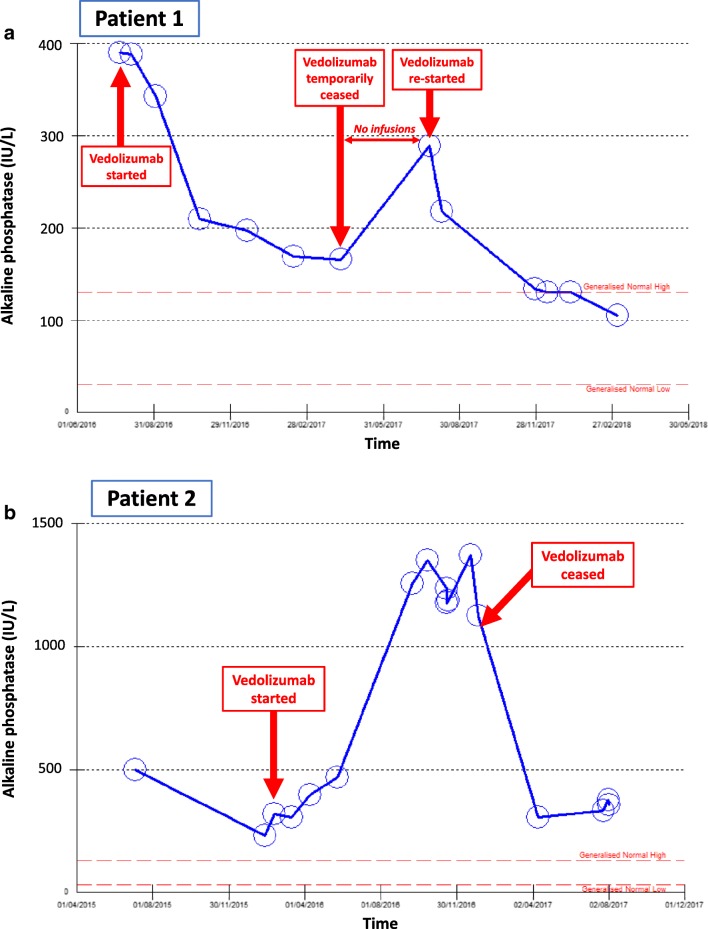
Antibodies to TNF-α were the first biologics used in IBD, and retrospective analysis suggests that they may have some benefit in PSC, even though an early randomised controlled trial (RCT) showed no effect. Mechanistic studies suggest that TNF-α may have a pathogenic role in PSC. An antibody to integrin α4β7 is effective in IBD, and there are emerging data on its effects in PSC, although no RCT data are available. Mechanistic studies suggest that interrupting the migration of lymphocytes is relevant in PSC. Two biologics, targeting vascular adhesion protein-1 (VAP-1), and lysyl oxidase-like 2 (LOXL2) have been tested in RCTs. The trial of anti-VAP1 is ongoing, whilst the anti-LOXL2 trial was negative.
Anti-TNF antibodies may benefit PSC when used to treat concomitant IBD, and this may be a direct effect on the liver in a subgroup of patients, or may be an indirect effect of treating IBD. Similarly, anti-integrin therapy may benefit a subset of patients with IBD and PSC. RCTs could decide the role of emerging biologics in PSC, although future trials should be guided by biomarkers that could predict response to the pathway being targeted.
生物制剂在包括炎症性肠病(IBD)在内的多种免疫炎症性疾病的治疗中已得到广泛应用。然而,尽管原发性硬化性胆管炎(PSC)与IBD密切相关,但生物制剂在PSC中的作用仍不明确。许多新型生物制剂可用于治疗IBD,本综述旨在利用目前生物制剂在PSC中的应用经验,为未来更有效地评估新兴疗法提供指导。
抗TNF-α抗体是IBD中最早使用的生物制剂,回顾性分析表明它们可能对PSC有一定益处,尽管早期的一项随机对照试验(RCT)显示无效。机制研究表明TNF-α可能在PSC中具有致病作用。抗整合素α4β7抗体在IBD中有效,关于其在PSC中的作用也有新的数据出现,尽管尚无RCT数据。机制研究表明,阻断淋巴细胞迁移在PSC中具有相关性。两种生物制剂,靶向血管黏附蛋白-1(VAP-1)和赖氨酰氧化酶样2(LOXL2),已在RCT中进行了测试。抗VAP1的试验正在进行中,而抗LOXL2的试验结果为阴性。
抗TNF抗体用于治疗合并IBD时可能对PSC有益,这可能是对一部分患者肝脏的直接作用,也可能是治疗IBD的间接作用。同样,抗整合素治疗可能使一部分IBD和PSC患者受益。RCT可以确定新兴生物制剂在PSC中的作用,尽管未来的试验应以能够预测对所靶向通路反应的生物标志物为指导。