Mohr Andrea, Chu Tianyuan, Brooke Greg N, Zwacka Ralf M
Cancer and Stem Cell Biology Group, School of Biological Sciences, University of Essex, Colchester CO4 3SQ, UK.
Molecular Oncology Group, School of Biological Sciences, University of Essex, Colchester CO4 3SQ, UK.
Cancers (Basel). 2019 Apr 21;11(4):568. doi: 10.3390/cancers11040568.
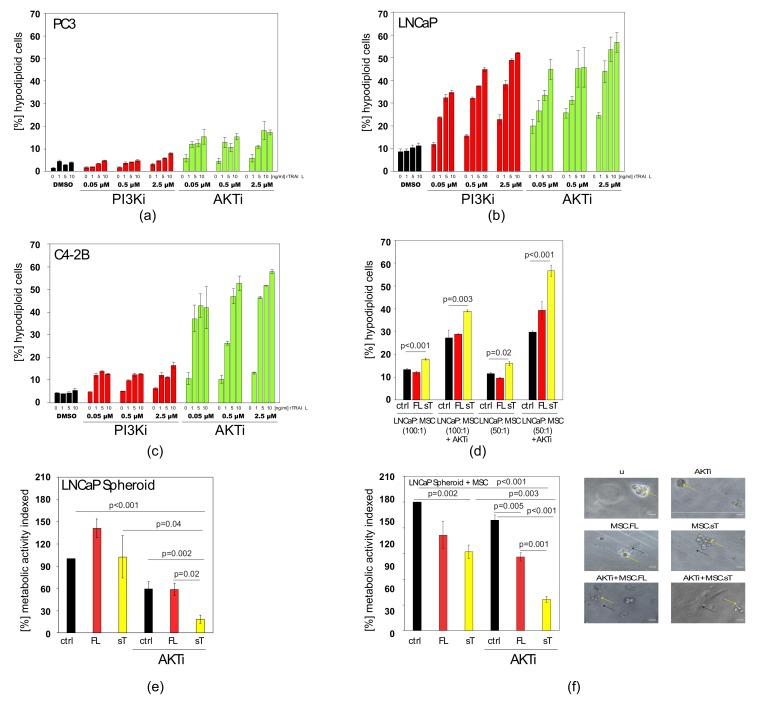
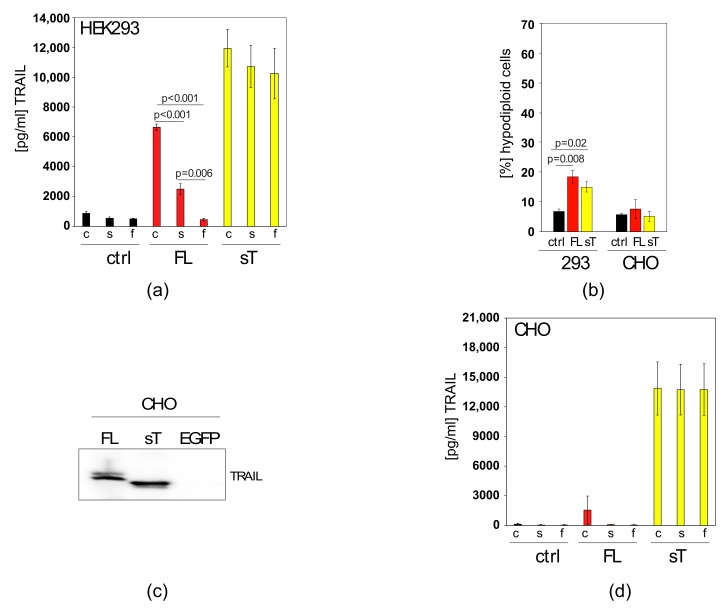
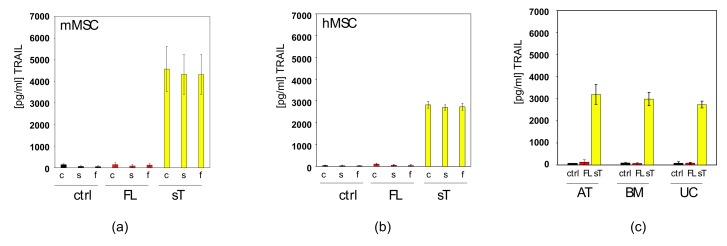
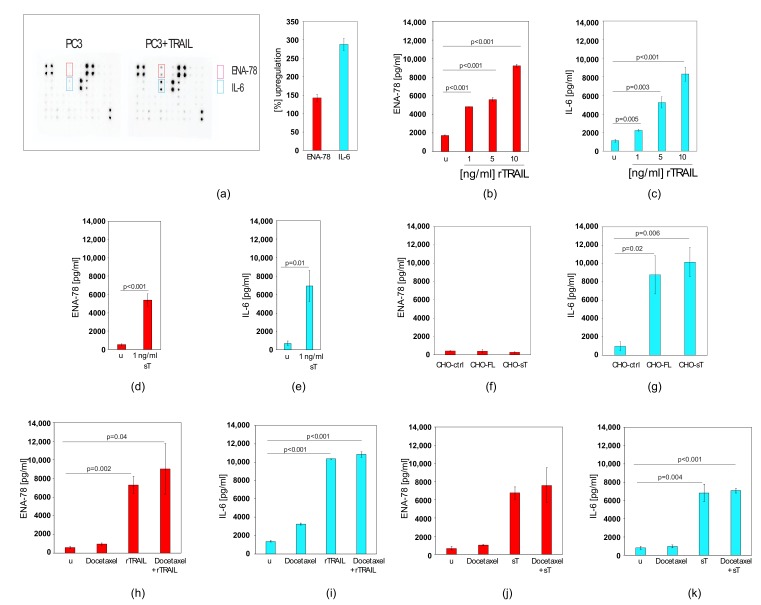
Cell therapy is a promising new treatment option for cancer. In particular, mesenchymal stem cells (MSCs) have shown potential in delivering therapeutic genes in various tumour models and are now on the verge of being tested in the clinic. A number of therapeutic genes have been examined in this context, including the death ligand TRAIL. For cell therapy, it can be used in its natural form as a full-length and membrane-bound protein (FL-TRAIL) or as an engineered version commonly referred to as soluble TRAIL (sTRAIL). As to which is more therapeutically efficacious, contradicting results have been reported. We discovered that MSCs producing sTRAIL have significantly higher apoptosis-inducing activity than cells expressing FL-TRAIL and found that FL-TRAIL, in contrast to sTRAIL, is not secreted. We also demonstrated that TRAIL does induce the expression of pro-metastatic cytokines in prostate cancer cells, but that this effect could be overcome through combination with an AKT inhibitor. Thus, a combination consisting of small-molecule drugs specifically targeting tumour cells in combination with MSC.sTRAIL, not only provides a way of sensitising cancer cells to TRAIL, but also reduces the issue of side-effect-causing cytokine production. This therapeutic strategy therefore represents a novel targeted treatment option for advanced prostate cancer and other difficult to treat tumours.
细胞疗法是一种很有前景的癌症新治疗选择。特别是,间充质干细胞(MSC)在多种肿瘤模型中已显示出递送治疗性基因的潜力,目前正处于临床测试的边缘。在这种情况下,已经研究了许多治疗性基因,包括死亡配体TRAIL。对于细胞疗法,它可以以天然形式作为全长膜结合蛋白(FL-TRAIL)使用,也可以作为通常称为可溶性TRAIL(sTRAIL)的工程化版本使用。关于哪种更具治疗效果,已有相互矛盾的报道。我们发现产生sTRAIL的MSC具有比表达FL-TRAIL的细胞显著更高的凋亡诱导活性,并且发现与sTRAIL不同,FL-TRAIL不分泌。我们还证明TRAIL确实会诱导前列腺癌细胞中促转移细胞因子的表达,但这种效应可以通过与AKT抑制剂联合来克服。因此,由特异性靶向肿瘤细胞的小分子药物与MSC.sTRAIL组成的联合疗法,不仅提供了一种使癌细胞对TRAIL敏感的方法,还减少了引起副作用的细胞因子产生问题。因此,这种治疗策略代表了晚期前列腺癌和其他难治性肿瘤的一种新型靶向治疗选择。