School of Medicine and Jeju Research Center for Natural Medicine, Jeju National University, Jeju 63243, Korea.
Mar Drugs. 2019 Apr 19;17(4):234. doi: 10.3390/md17040234.
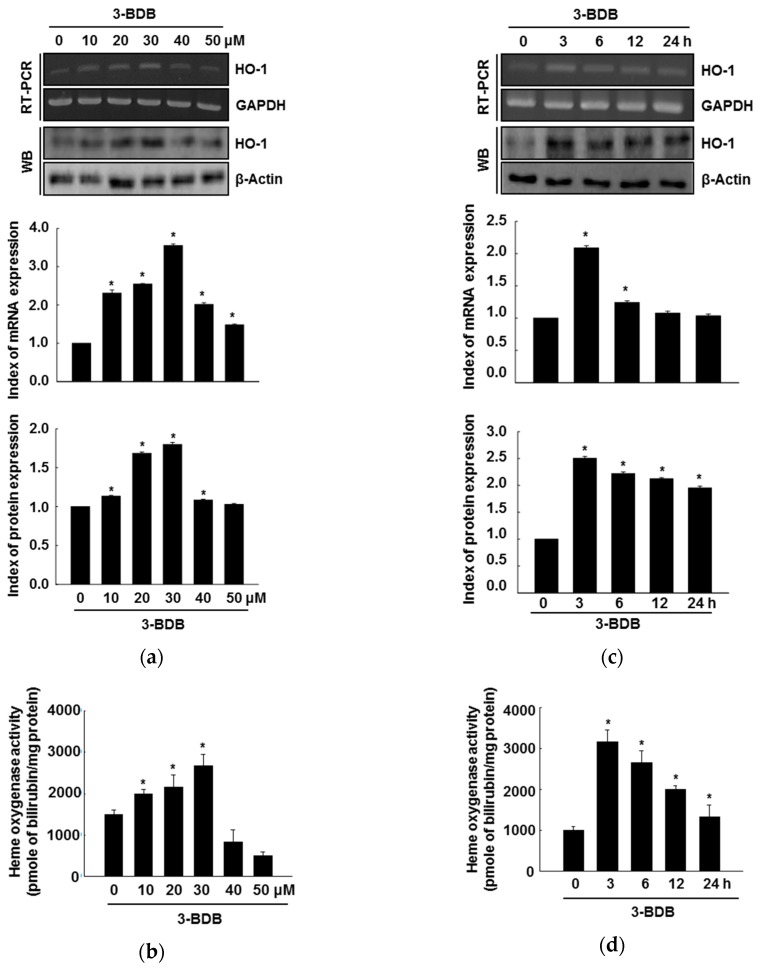
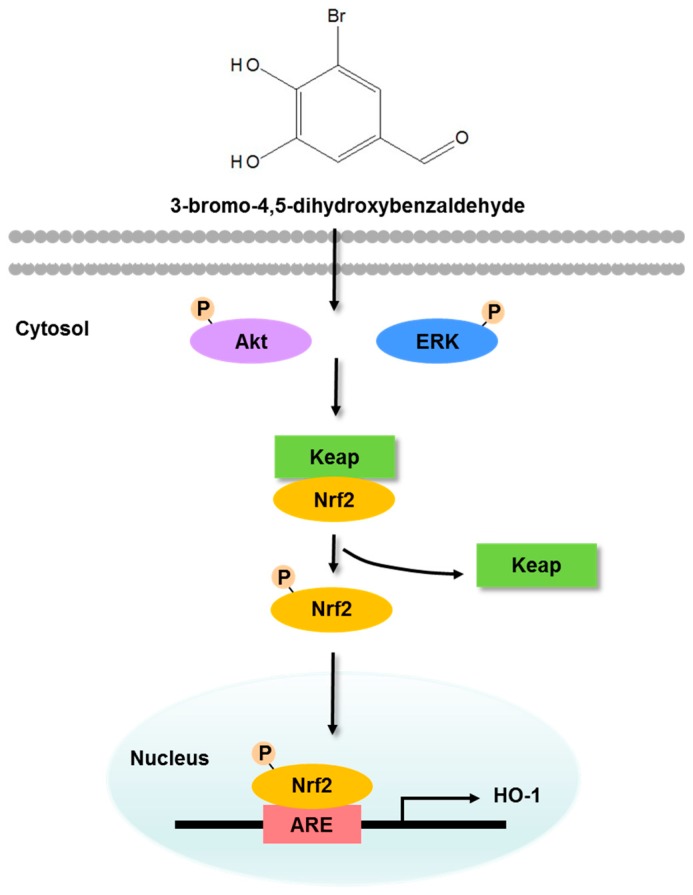
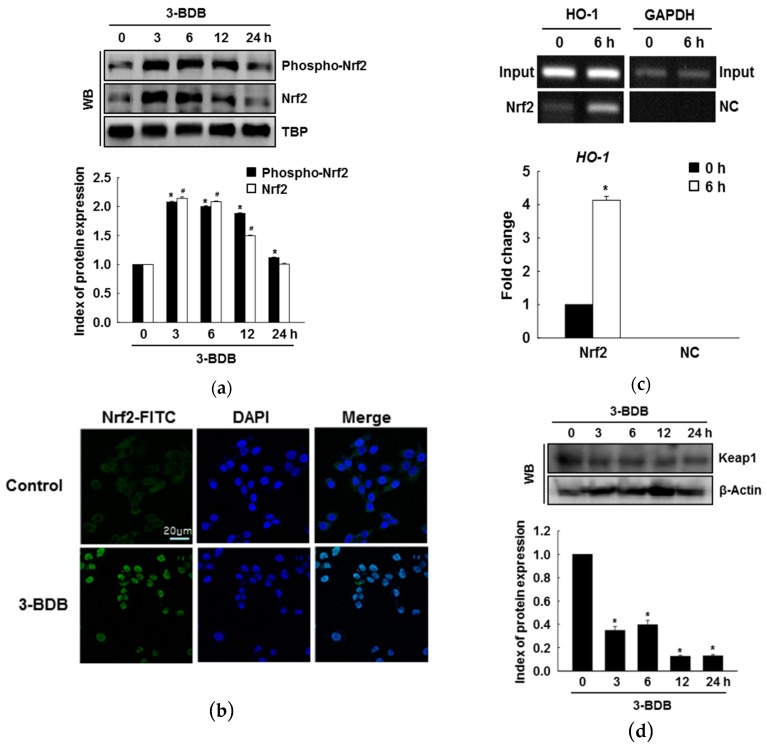
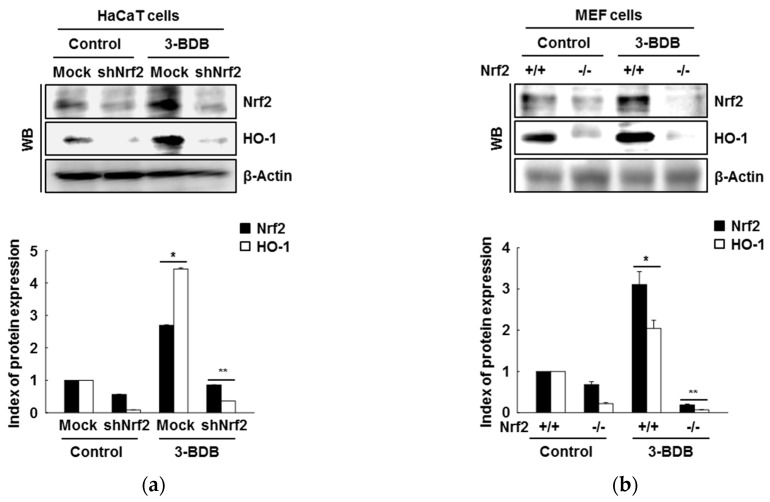
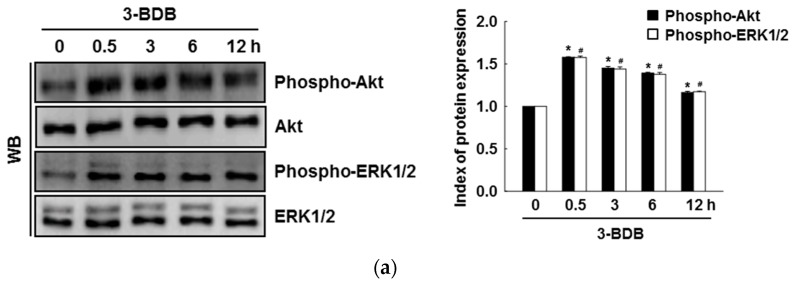
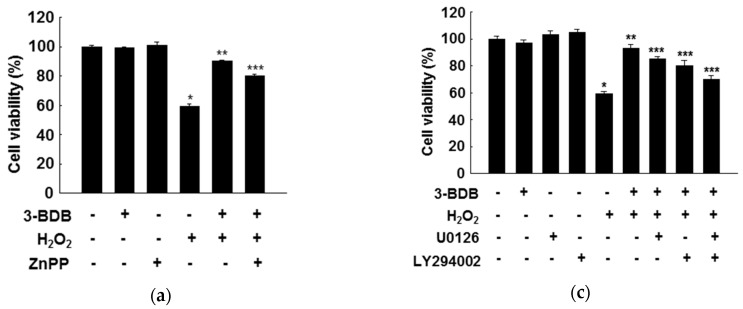
In this study, we aimed to illustrate the potential bio-effects of 3-bromo-4,5-dihydroxybenzaldehyde (3-BDB) on the antioxidant/cytoprotective enzyme heme oxygenase-1 (HO-1) in keratinocytes. The antioxidant effects of 3-BDB were examined via reverse transcription PCR, Western blotting, HO-1 activity assay, and immunocytochemistry. Chromatin immunoprecipitation analysis was performed to test for nuclear factor erythroid 2-related factor 2 (Nrf2) binding to the antioxidant response element of the HO-1 promoter. Furthermore, the 3-(4,5-dimethylthiazol-2-yl)-2,5-diphenyltetrazolium bromide assay showed that the cytoprotective effects of 3-BDB were mediated by the activation of extracellular signal-regulated kinase (ERK) and protein kinase B (PKB, Akt) signaling. Moreover, 3-BDB induced the phosphorylation of ERK and Akt, while inhibitors of ERK and Akt abrogated the 3-BDB-enhanced levels of HO-1 and Nrf2. Finally, 3-BDB protected cells from HO- and UVB-induced oxidative damage. This 3-BDB-mediated cytoprotection was suppressed by inhibitors of HO-1, ERK, and Akt. The present results indicate that 3-BDB activated Nrf2 signaling cascades in keratinocytes, which was mediated by ERK and Akt, upregulated HO-1, and induced cytoprotective effects against oxidative stress.
在这项研究中,我们旨在阐明 3-溴-4,5-二羟基苯甲醛(3-BDB)对角质细胞抗氧化/细胞保护酶血红素加氧酶-1(HO-1)的潜在生物效应。通过逆转录 PCR、Western blot、HO-1 活性测定和免疫细胞化学检测 3-BDB 的抗氧化作用。进行染色质免疫沉淀分析以测试核因子红细胞 2 相关因子 2(Nrf2)与 HO-1 启动子的抗氧化反应元件的结合。此外,3-(4,5-二甲基噻唑-2-基)-2,5-二苯基四氮唑溴盐(3-(4,5-dimethylthiazol-2-yl)-2,5-diphenyltetrazolium bromide,MTT)测定表明 3-BDB 的细胞保护作用是通过细胞外信号调节激酶(extracellular signal-regulated kinase,ERK)和蛋白激酶 B(protein kinase B,PKB,Akt)信号通路的激活介导的。此外,3-BDB 诱导 ERK 和 Akt 的磷酸化,而 ERK 和 Akt 的抑制剂则消除了 3-BDB 增强的 HO-1 和 Nrf2 水平。最后,3-BDB 可保护细胞免受 HO 和 UVB 诱导的氧化损伤。3-BDB 介导的细胞保护作用被 HO-1、ERK 和 Akt 的抑制剂所抑制。这些结果表明,3-BDB 通过 ERK 和 Akt 激活角质细胞中的 Nrf2 信号级联,上调 HO-1,并诱导对氧化应激的细胞保护作用。