Department of Nanomedicine, Houston Methodist Hospital Research Institute, Houston, TX 77030, USA.
Xiangya School of Medicine, Central South University, 410008 Changsha, Hunan, China.
Genes (Basel). 2019 Apr 12;10(4):297. doi: 10.3390/genes10040297.
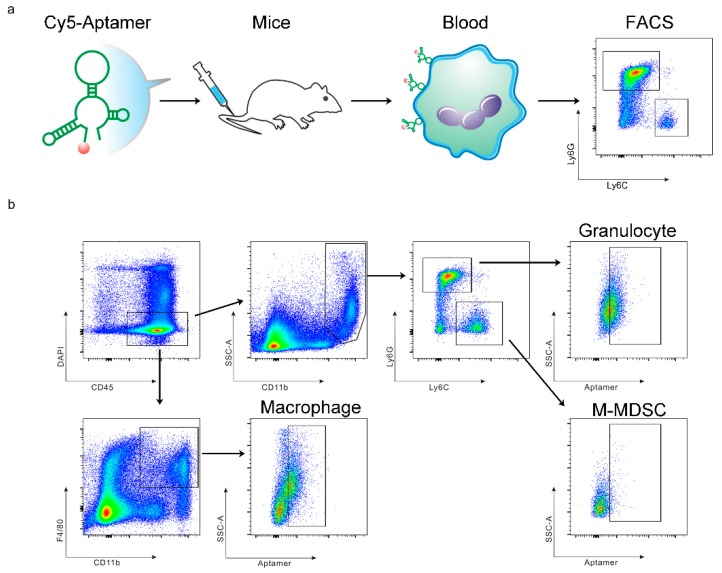
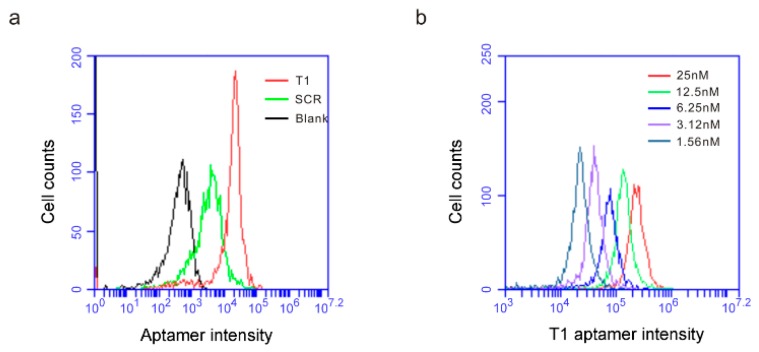
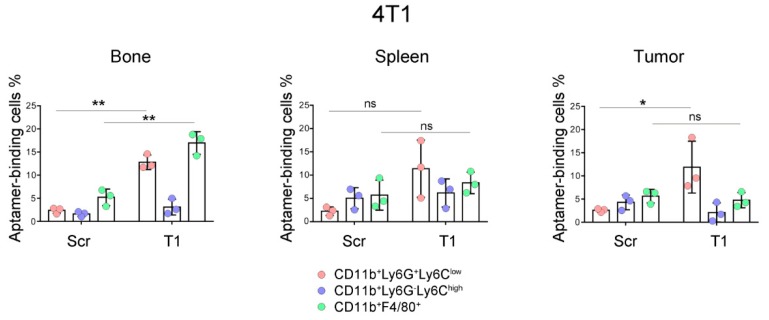
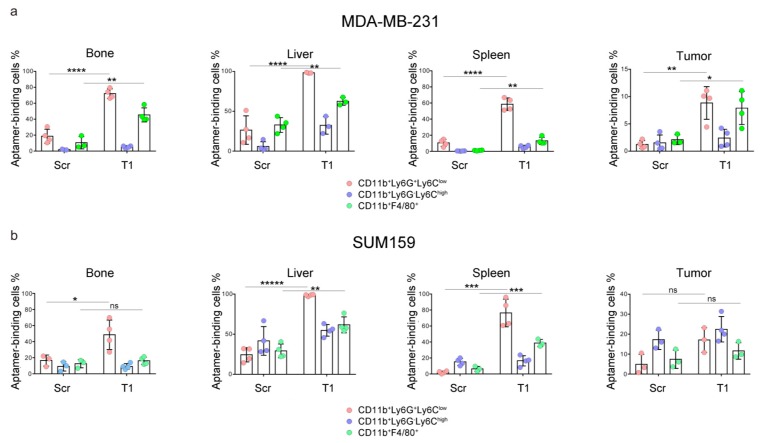
A growing tumor is constantly secreting inflammatory chemokines and cytokines that induce release of immature myeloid cells, including myeloid-derived suppressor cells (MDSCs) and macrophages, from the bone marrow. These cells not only promote tumor growth, but also prepare distant organs for tumor metastasis. On the other hand, the myeloid-derived cells also have phagocytic potential, and can serve as vehicles for drug delivery. We have previously identified thioaptamers that bind a subset of MDSCs with high affinity and specificity. In the current study, we applied one of the thioaptamers as a probe to track myeloid cell distribution in the bone, liver, spleen and tumor in multiple murine models of breast cancer including the 4T1 syngeneic model and MDA-MB-231 and SUM159 xenograft models. Information generated from this study will facilitate further understanding of tumor growth and metastasis, and predict biodistribution patterns of cell-mediated drug delivery.
不断生长的肿瘤会持续分泌炎症趋化因子和细胞因子,从而诱导骨髓中未成熟髓系细胞(包括髓系来源的抑制细胞(MDSCs)和巨噬细胞)的释放。这些细胞不仅促进肿瘤生长,而且还为肿瘤转移做远处器官的准备。另一方面,髓系细胞也具有吞噬作用,并且可以作为药物输送的载体。我们之前已经鉴定出了与 MDSCs 具有高亲和力和特异性的硫代适体。在本研究中,我们应用其中一种硫代适体作为探针,在多个乳腺癌小鼠模型(包括同源 4T1 模型和 MDA-MB-231 及 SUM159 异种移植模型)中追踪骨髓细胞在骨、肝、脾和肿瘤中的分布。这项研究提供的信息将有助于进一步了解肿瘤生长和转移,并预测细胞介导的药物输送的生物分布模式。