Kudo Hisashi, Hayashi Yuuki, Arai Munehito
1Department of Life Sciences, Graduate School of Arts and Sciences, The University of Tokyo, 3-8-1 Komaba, Meguro, Tokyo, 153-8902 Japan.
2Department of Physics, Graduate School of Science, The University of Tokyo, 3-8-1 Komaba, Meguro, Tokyo, 153-8902 Japan.
Biotechnol Biofuels. 2019 Apr 17;12:89. doi: 10.1186/s13068-019-1409-8. eCollection 2019.
Cyanobacteria produce hydrocarbons corresponding to diesel fuels by means of aldehyde-deformylating oxygenase (ADO). ADO catalyzes a difficult and unusual reaction in the conversion of aldehydes to hydrocarbons and has been widely used for biofuel production in metabolic engineering; however, its activity is low. A comparison of the amino acid sequences of highly active and less active ADOs will elucidate non-conserved residues that are essential for improving the hydrocarbon-producing activity of ADOs.
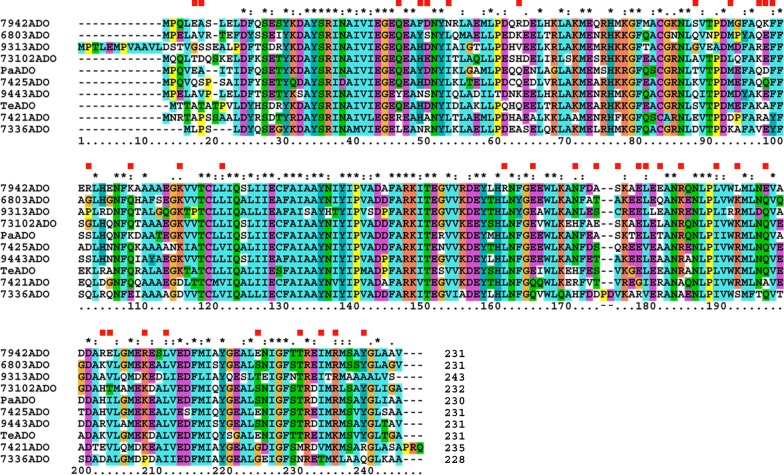
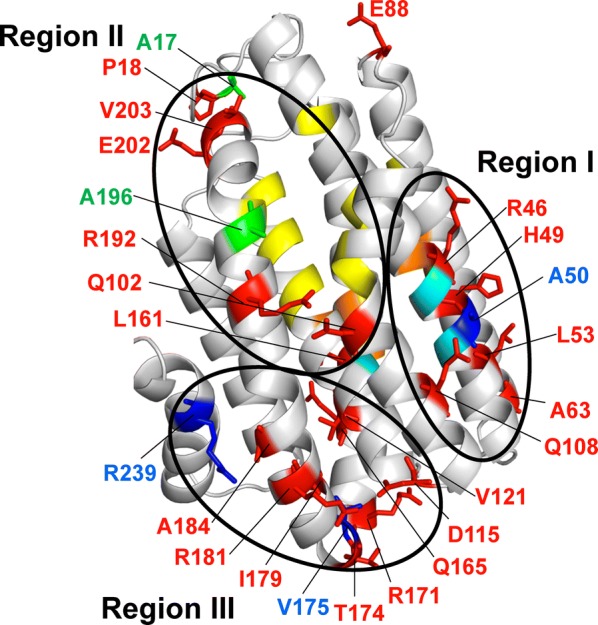
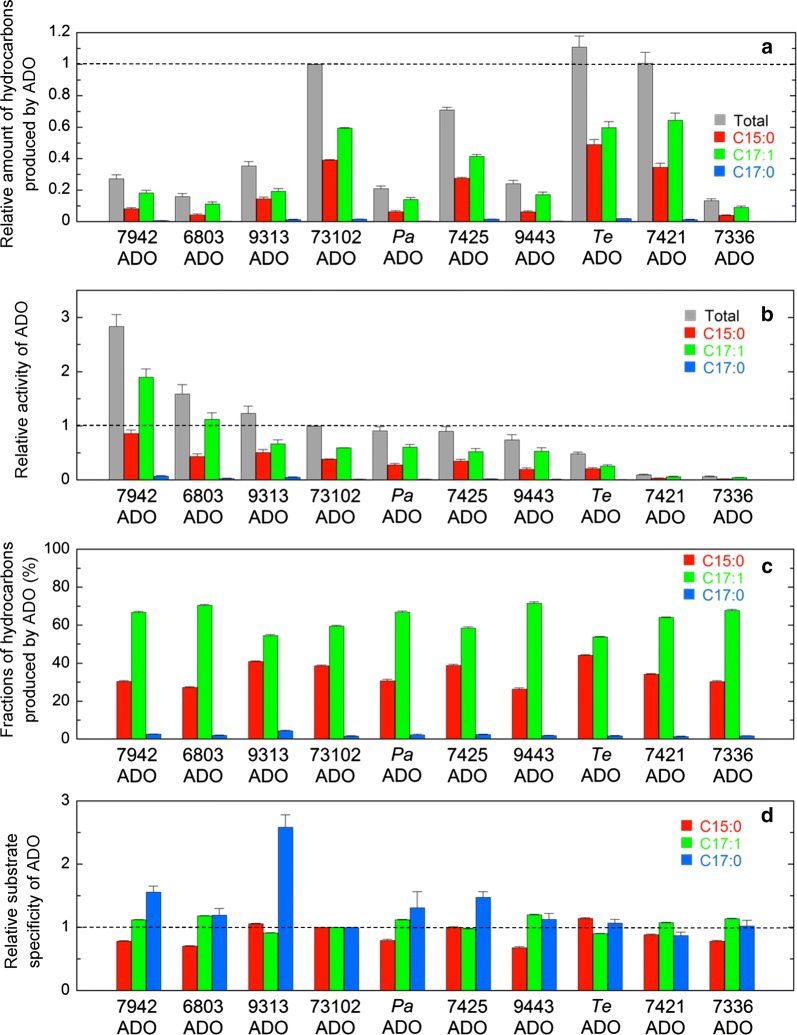
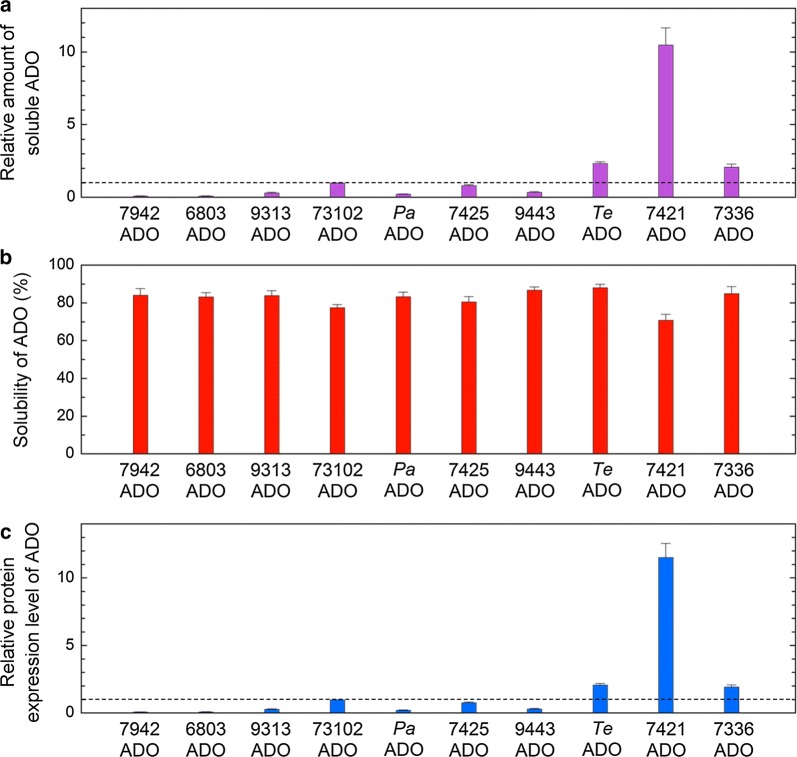
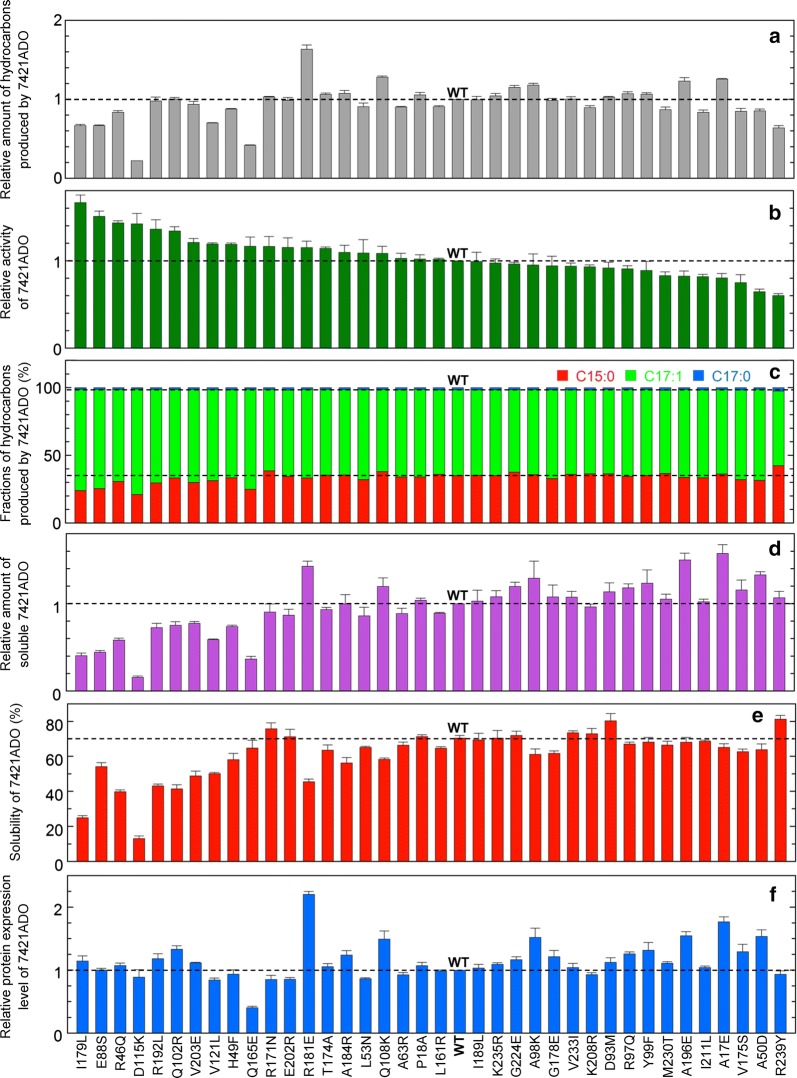
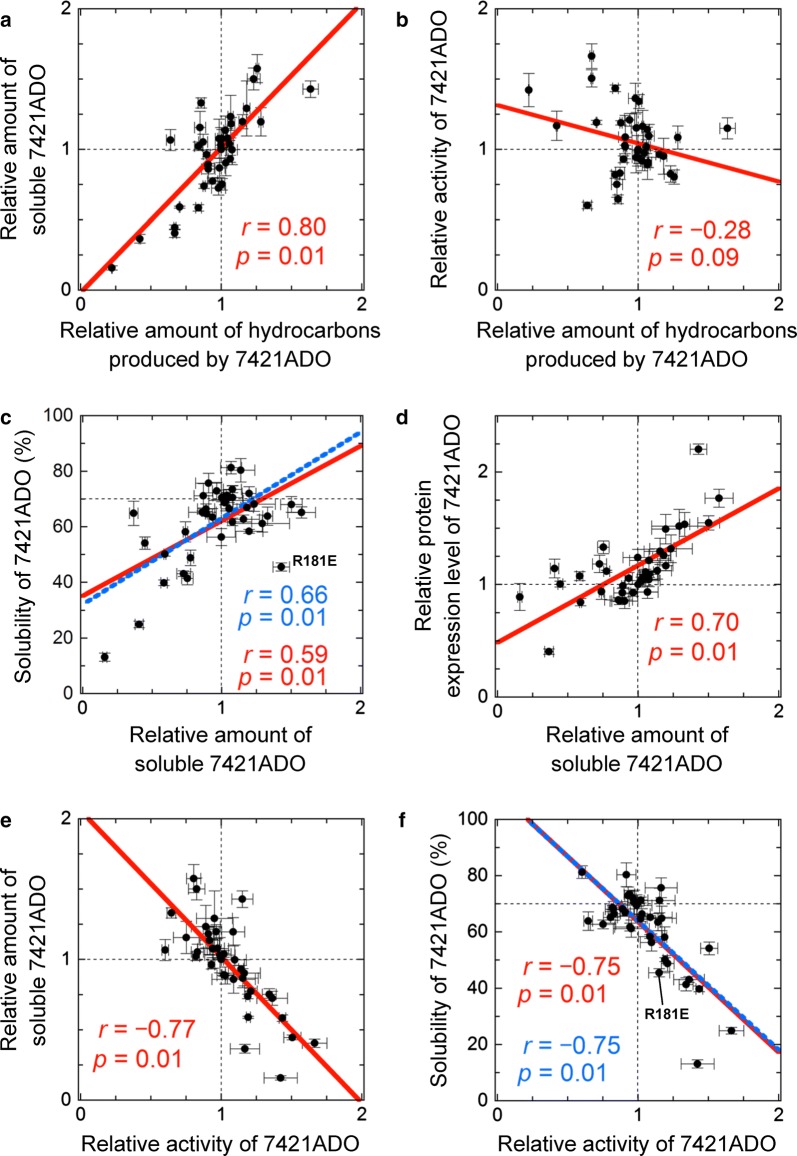
Here, we measured the activities of ADOs from 10 representative cyanobacterial strains by expressing each of them in and quantifying the hydrocarbon yield and amount of soluble ADO. We demonstrated that the activity was highest for the ADO from PCC 7942 (7942ADO). In contrast, the ADO from PCC 7421 (7421ADO) had low activity but yielded high amounts of soluble protein, resulting in a high production level of hydrocarbons. By introducing 37 single amino acid substitutions at the non-conserved residues of the less active ADO (7421ADO) to make its sequence more similar to that of the highly active ADO (7942ADO), we found 20 mutations that improved the activity of 7421ADO. In addition, 13 other mutations increased the amount of soluble ADO while maintaining more than 80% of wild-type activity. Correlation analysis showed a solubility-activity trade-off in ADO, in which activity was negatively correlated with solubility.
We succeeded in identifying non-conserved residues that are essential for improving ADO activity. Our results may be useful for generating combinatorial mutants of ADO that have both higher activity and higher amounts of the soluble protein in vivo, thereby producing higher yields of biohydrocarbons.
蓝细菌通过醛脱甲酰基加氧酶(ADO)产生与柴油燃料相对应的碳氢化合物。ADO催化醛转化为碳氢化合物的过程中一个困难且不寻常的反应,并且已在代谢工程中广泛用于生物燃料生产;然而,其活性较低。对高活性和低活性ADO的氨基酸序列进行比较,将阐明对提高ADO碳氢化合物生产活性至关重要的非保守残基。
在这里,我们通过在[具体表达体系]中表达来自10个代表性蓝细菌菌株的ADO并量化碳氢化合物产量和可溶性ADO的量,来测量它们的活性。我们证明了来自集胞藻PCC 7942的ADO(7942ADO)活性最高。相比之下,来自集胞藻PCC 7421的ADO(7421ADO)活性较低,但产生大量的可溶性蛋白,从而导致较高的碳氢化合物生产水平。通过在低活性ADO(7421ADO)的非保守残基处引入37个单氨基酸取代,使其序列更类似于高活性ADO(7942ADO)的序列,我们发现了20个提高7421ADO活性的突变。此外,其他13个突变增加了可溶性ADO的量,同时保持了超过80%的野生型活性。相关性分析表明ADO存在溶解度-活性权衡,其中活性与溶解度呈负相关。
我们成功鉴定出对提高ADO活性至关重要的非保守残基。我们的结果可能有助于生成在体内具有更高活性和更高可溶性蛋白量的ADO组合突变体,从而产生更高产量的生物碳氢化合物。