Institute of Biophysics and Biomedical Engineering, Bulgarian Academy of Sciences, "Acad. Georgi Bonchev", Str., Bl. 21, Sofia 1113, Bulgaria.
University of Trento, Via alla Cascata, 56/C, 38123 Povo, Trento, Italy.
Oxid Med Cell Longev. 2019 Mar 20;2019:3738980. doi: 10.1155/2019/3738980. eCollection 2019.
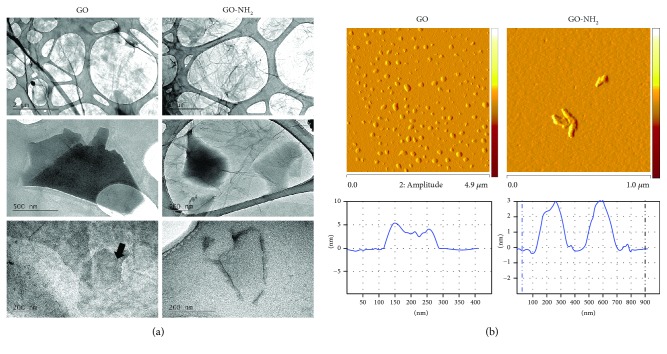
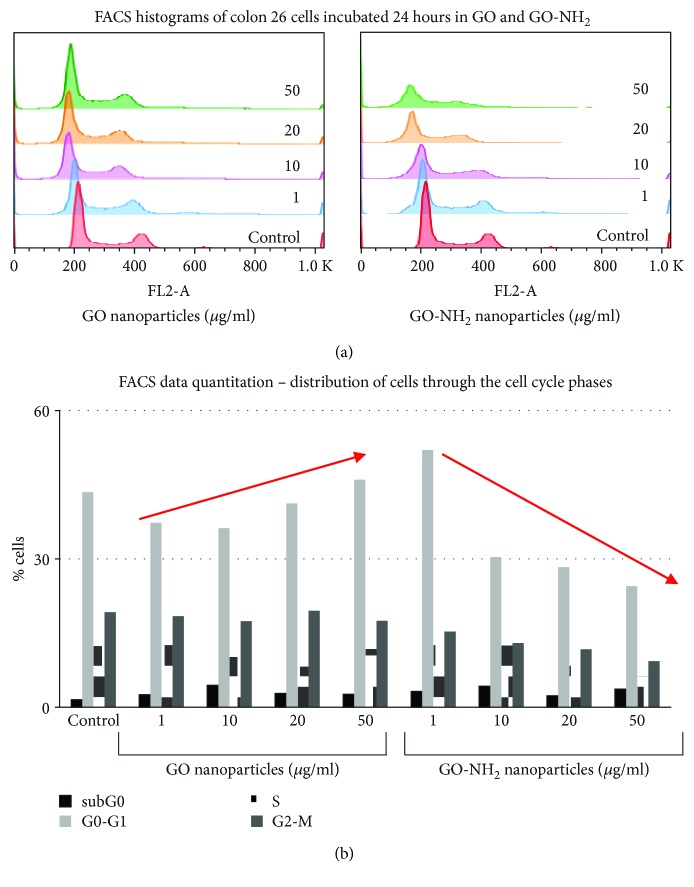
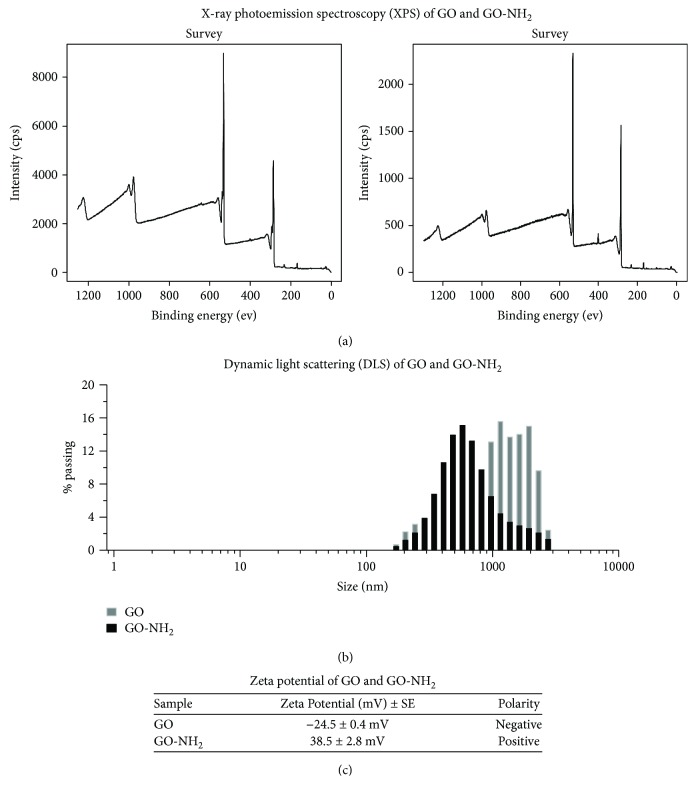
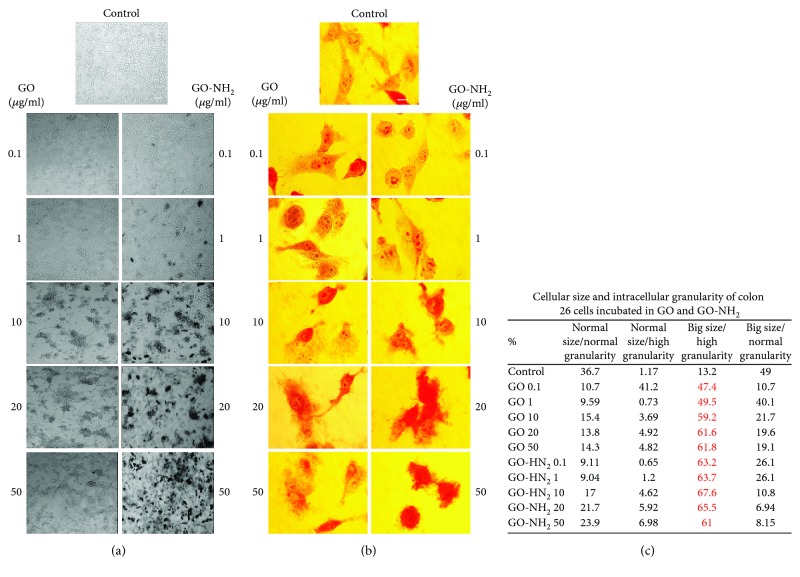
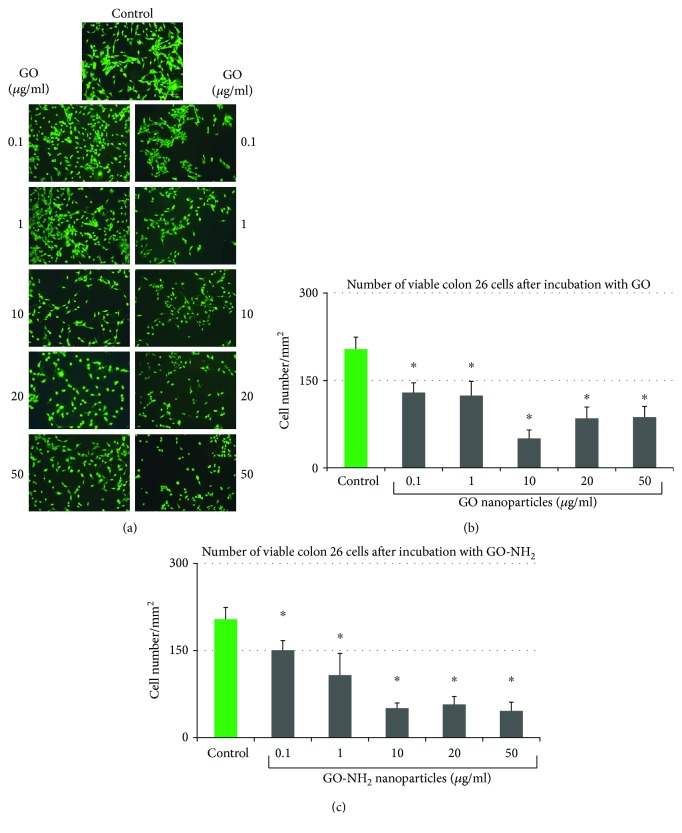
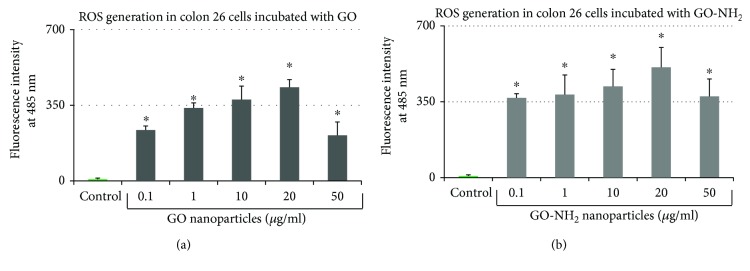
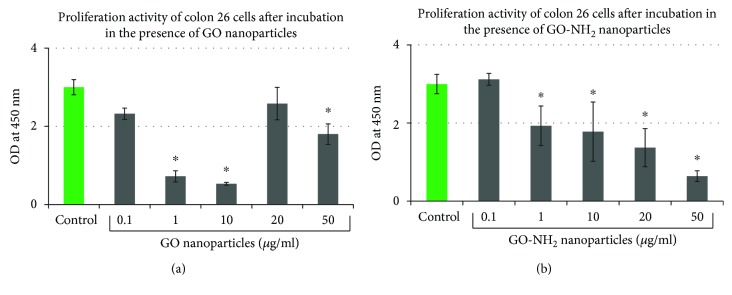
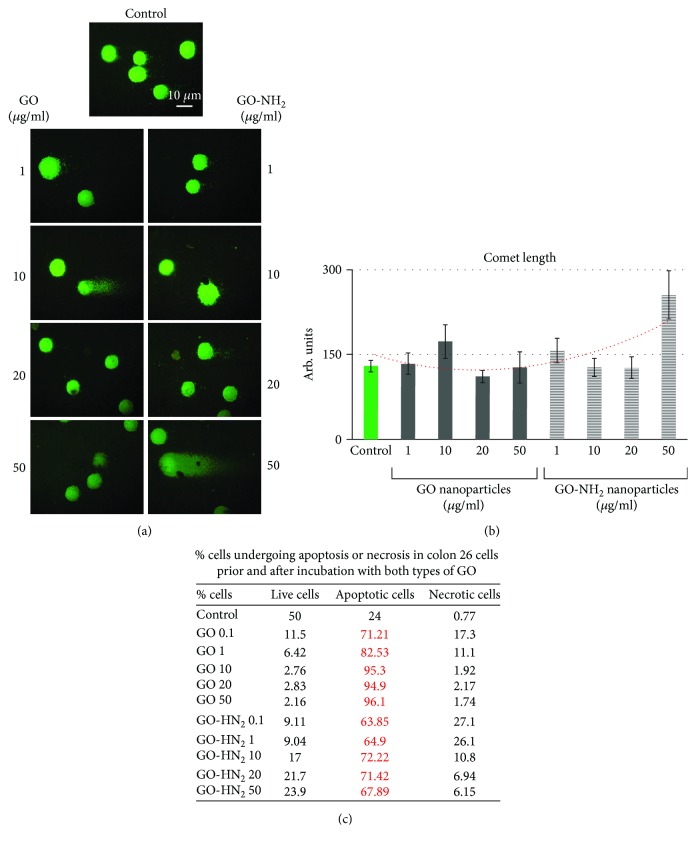
Nanotechnology-based drug delivery systems for cancer therapy are the topic of interest for many researchers and scientists. Graphene oxide (GO) and its derivates are among the most extensively studied delivery systems of this type. The increased surface area, elevated loading capacity, and aptitude for surface functionalization together with the ability to induce reactive oxygen species make GO a promising tool for the development of novel anticancer therapies. Moreover, GO nanoparticles not only function as effective drug carriers but also have the potential to exert their own inhibitory effects on tumour cells. Recent results show that the functionalization of GO with different functional groups, namely, with amine groups, leads to increased reactivity of the nanoparticles. The last steers different hypotheses for the mechanisms through which this functionalization of GO could potentially lead to improved anticancer capacity. In this research, we have evaluated the potential of amine-functionalized graphene oxide nanoparticles (GO-NH) as new molecules for colorectal cancer therapy. For the purpose, we have assessed the impact of aminated graphene oxide (GO) sheets on the viability of colon cancer cells, their potential to generate ROS, and their potential to influence cellular proliferation and survival. In order to elucidate their mechanism of action on the cellular systems, we have probed their genotoxic and cytostatic properties and compared them to pristine GO. Our results revealed that both GO samples (pristine and aminated) were composed of few-layer sheets with different particle sizes, zeta potential, and surface characteristics. Furthermore, we have detected increased cyto- and genotoxicity of the aminated GO nanoparticles following 24-hour exposure on Colon 26 cells. The last leads us to conclude that exposure of cancer cells to GO, namely, aminated GO, can significantly contribute to cancer cell killing by enhancing the cytotoxicity effect exerted through the induction of ROS, subsequent DNA damage, and apoptosis.
基于纳米技术的癌症治疗药物输送系统是许多研究人员和科学家关注的话题。氧化石墨烯(GO)及其衍生物是此类研究最广泛的输送系统之一。增加的表面积、提高的负载能力和表面功能化能力以及诱导活性氧的能力使 GO 成为开发新型抗癌疗法的有前途的工具。此外,GO 纳米粒子不仅作为有效的药物载体发挥作用,而且还有可能对肿瘤细胞产生自身的抑制作用。最近的结果表明,GO 与不同官能团的功能化,即与胺基的功能化,导致纳米粒子的反应性增加。最后提出了不同的假设,即 GO 的这种功能化可能潜在地导致抗癌能力的提高。在这项研究中,我们评估了胺功能化氧化石墨烯纳米粒子(GO-NH)作为结直肠癌治疗新分子的潜力。为此,我们评估了胺化氧化石墨烯(GO)片对结肠癌细胞活力、产生 ROS 的潜力以及对细胞增殖和存活的影响。为了阐明它们在细胞系统中的作用机制,我们探测了它们的遗传毒性和细胞抑制特性,并将其与原始 GO 进行了比较。我们的结果表明,两种 GO 样品(原始和胺化)都由具有不同粒径、zeta 电位和表面特性的少层片组成。此外,我们检测到经过 24 小时暴露于 Colon 26 细胞后,胺化 GO 纳米粒子的细胞毒性和遗传毒性增加。最后得出结论,暴露于 GO(即胺化 GO)的癌细胞可以通过增强通过诱导 ROS、随后的 DNA 损伤和细胞凋亡来发挥的细胞毒性作用,显著有助于癌细胞杀伤。