EA 2496 Pathologies, Imagerie et Biothérapies Orofaciales et Plateforme Imagerie du Vivant (PIV), Dental School, Université Paris Descartes Sorbonne Paris Cité, Montrouge, France.
AP-HP Département d'Odontologie, Hôpitaux Universitaires PNVS, Charles Foix et Henri Mondor, Ile de France, France.
Stem Cells Transl Med. 2019 Aug;8(8):844-857. doi: 10.1002/sctm.18-0182. Epub 2019 Apr 23.
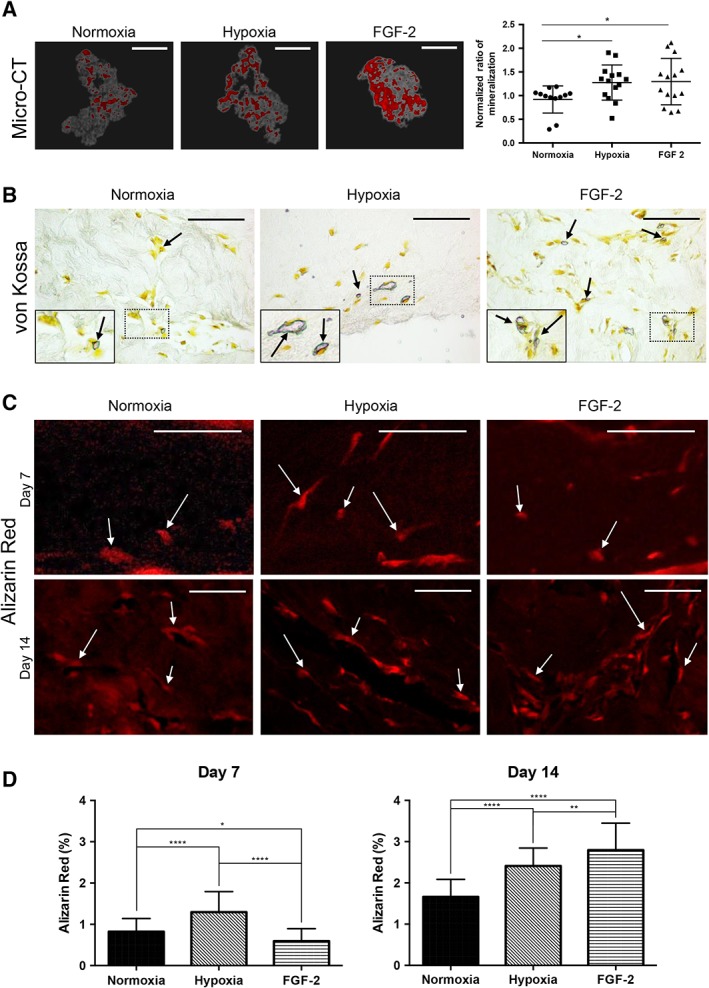
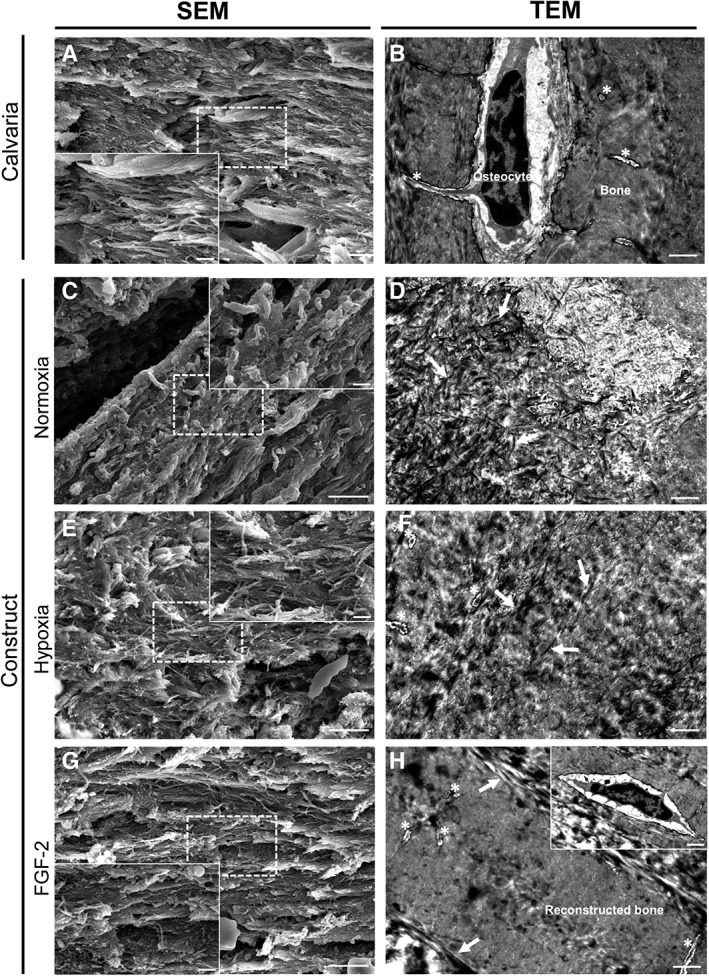
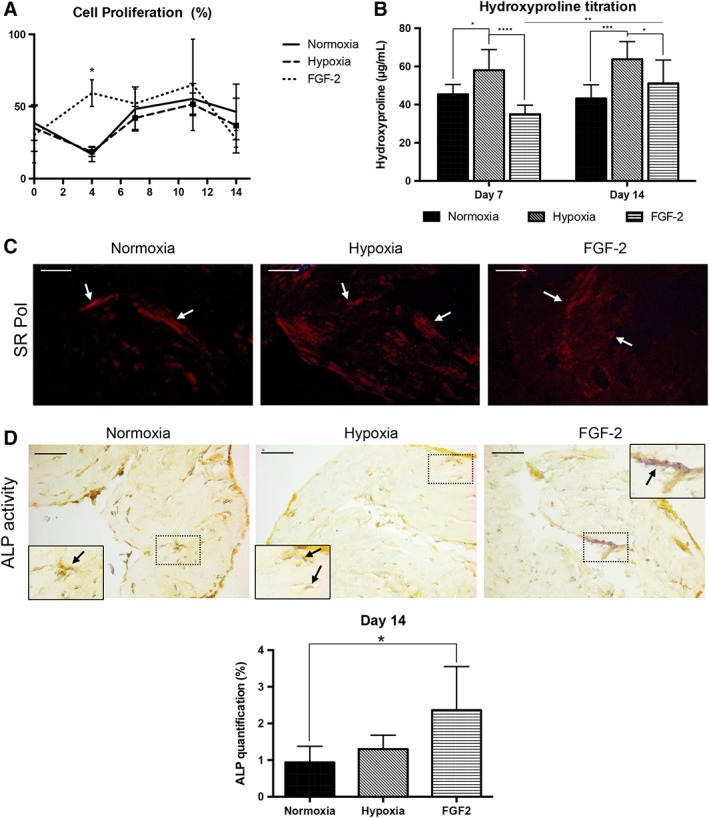
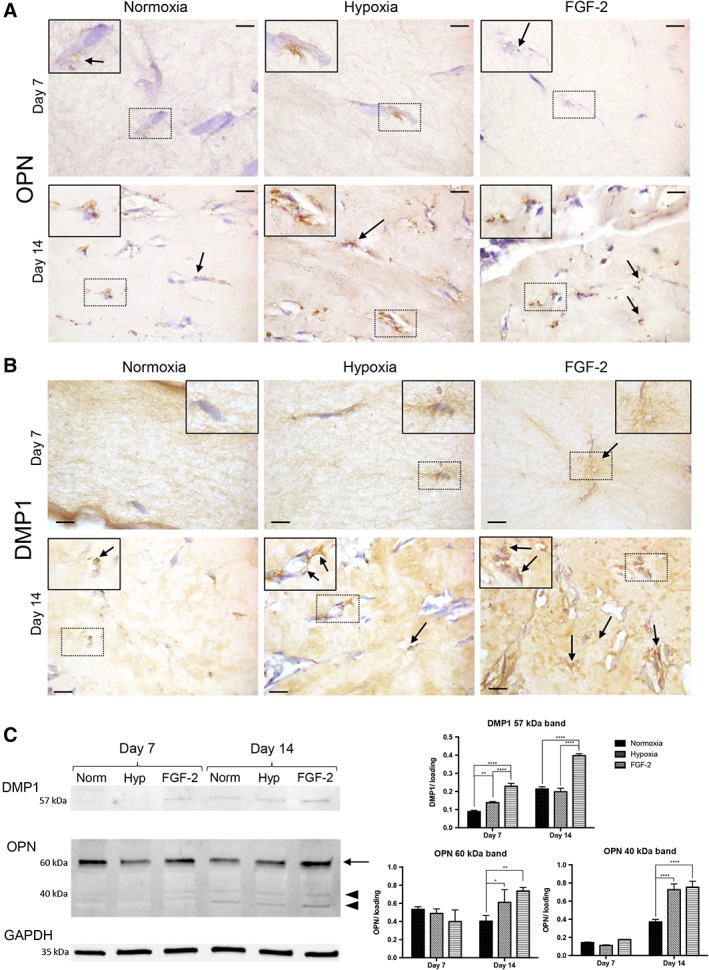
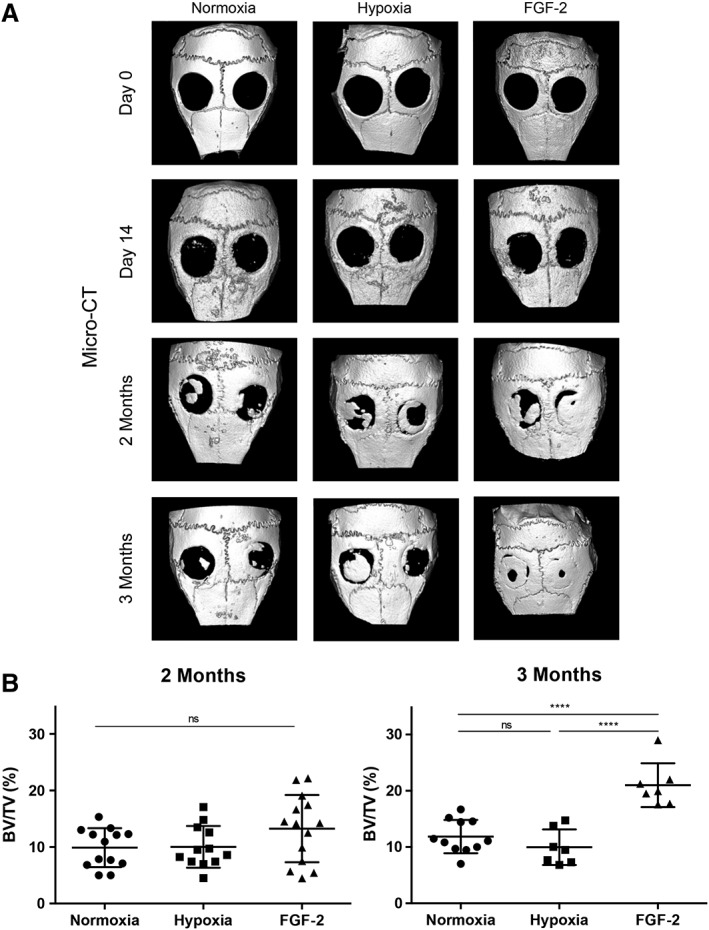
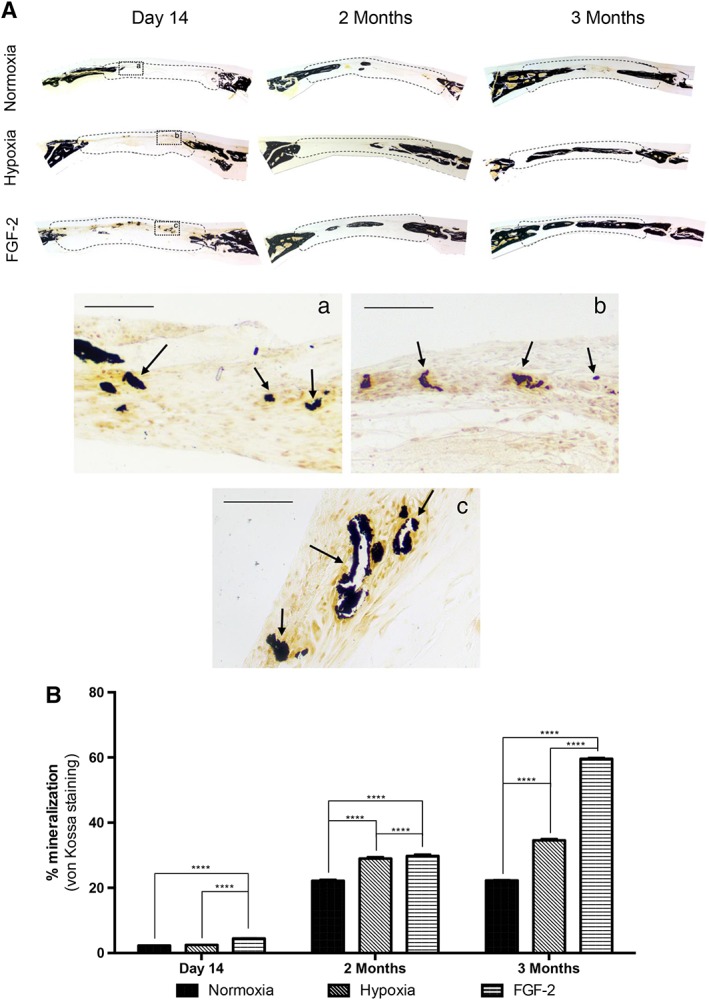
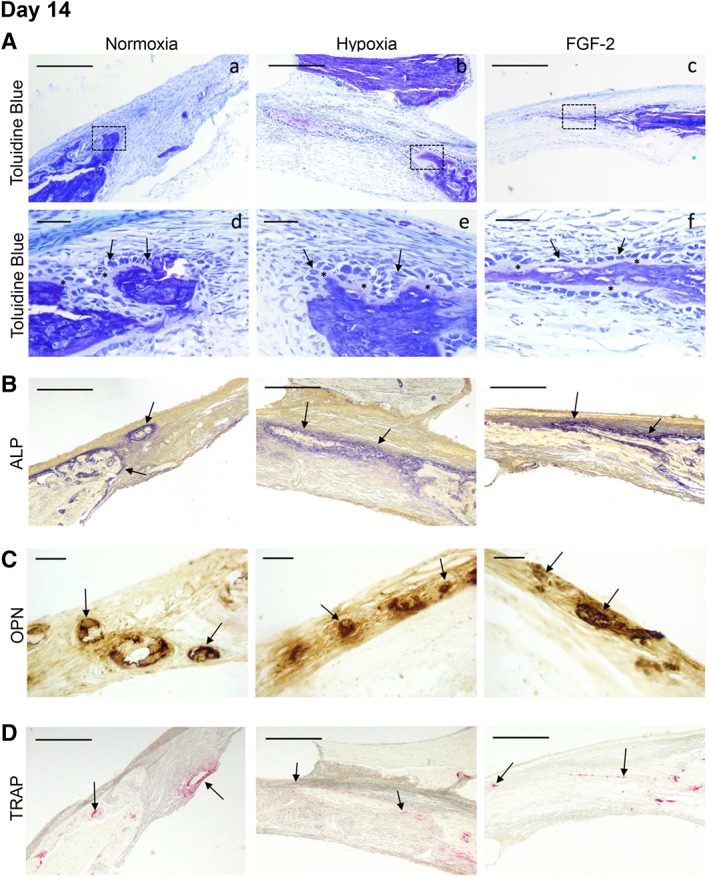
The craniofacial area is prone to trauma or pathologies often resulting in large bone damages. One potential treatment option is the grafting of a tissue-engineered construct seeded with adult mesenchymal stem cells (MSCs). The dental pulp appears as a relevant source of MSCs, as dental pulp stem cells display strong osteogenic properties and are efficient at bone formation and repair. Fibroblast growth factor-2 (FGF-2) and/or hypoxia primings were shown to boost the angiogenesis potential of dental pulp stem cells from human exfoliated deciduous teeth (SHED). Based on these findings, we hypothesized here that these primings would also improve bone formation in the context of craniofacial bone repair. We found that both hypoxic and FGF-2 primings enhanced SHED proliferation and osteogenic differentiation into plastically compressed collagen hydrogels, with a much stronger effect observed with the FGF-2 priming. After implantation in immunodeficient mice, the tissue-engineered constructs seeded with FGF-2 primed SHED mediated faster intramembranous bone formation into critical size calvarial defects than the other groups (no priming and hypoxia priming). The results of this study highlight the interest of FGF-2 priming in tissue engineering for craniofacial bone repair. Stem Cells Translational Medicine 2019;8:844&857.
颅面区域容易受到创伤或病变的影响,这通常会导致大量的骨损伤。一种潜在的治疗选择是移植组织工程化构建体,该构建体中接种了成年间充质干细胞(MSCs)。牙髓看起来是 MSCs 的一个相关来源,因为牙髓干细胞具有很强的成骨特性,并且在骨形成和修复方面效率很高。研究表明,成纤维细胞生长因子-2(FGF-2)和/或低氧预培养可以提高人脱落乳牙牙髓干细胞(SHED)的血管生成潜力。基于这些发现,我们假设这些预培养也将改善颅面骨修复中骨形成的情况。我们发现,低氧和 FGF-2 预培养均增强了 SHED 的增殖和成骨分化为可塑压缩胶原水凝胶,其中 FGF-2 预培养的效果更强。在免疫缺陷小鼠中植入后,用 FGF-2 预培养的 SHED 接种的组织工程化构建体比其他组(无预培养和低氧预培养)更快地介导膜内骨形成到关键大小的颅顶骨缺损中。这项研究的结果强调了 FGF-2 预培养在颅面骨修复组织工程中的重要性。Stem Cells Translational Medicine 2019;8:844&857。