Fanney Thorsteinsdottir, Research Unit for Dietary Studies, The Parker Institute, Bisbebjerg og Frederiksberg Hospital, Nordre Fasanvej 57, 2000 Frederiksberg, Denmark.
Department of Primary Care and Public Health, Imperial College London, London W6 8RP, UK.
Nutrients. 2019 Apr 24;11(4):924. doi: 10.3390/nu11040924.
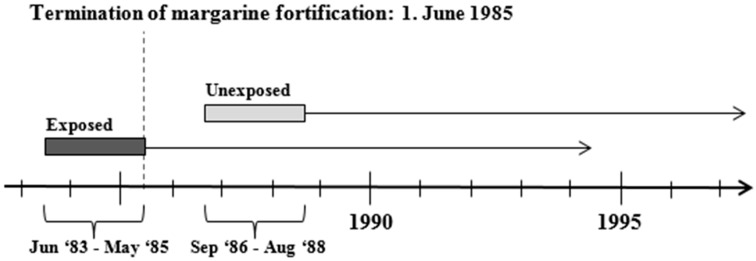
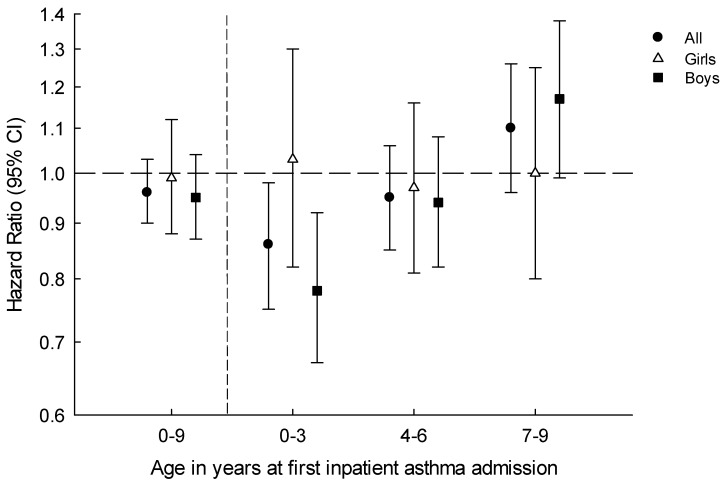
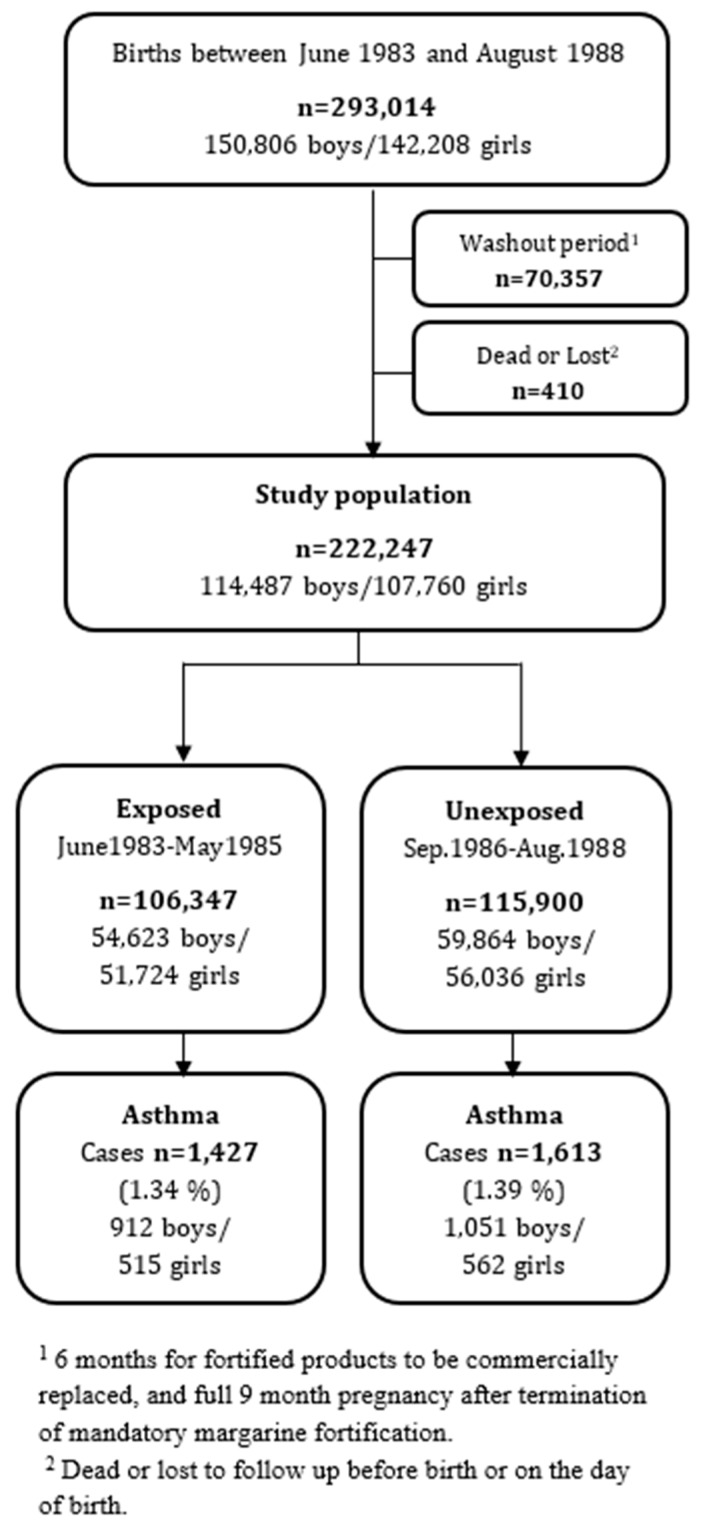
Prenatal vitamin D insufficiency may be associated with an increased risk of developing childhood asthma. Results from epidemiological studies are conflicting and limited by short follow-up and small sample sizes. The objective of this study was to examine if children born to women exposed to the margarine fortification policy with a small dose of extra vitamin D during pregnancy had a reduced risk of developing asthma until age 9 years, compared to children born to unexposed women. The termination of a Danish mandatory vitamin D fortification policy constituted the basis for the study design. We compared the risk of inpatient asthma diagnoses in all Danish children born two years before ( = 106,347, exposed) and two years after ( = 115,900, unexposed) the termination of the policy. The children were followed in the register from 0-9 years of age. Data were analyzed using Cox proportional hazards regression. The Hazard Ratio for the first inpatient asthma admission among exposed versus unexposed children was 0.96 (95%CI: 0.90-1.04). When stratifying by sex and age, 0-3 years old boys exposed to vitamin D fortification showed a lower asthma risk compared to unexposed boys (HR 0.78, 95%CI: 0.67-0.92). Prenatal exposure to margarine fortification policy with extra vitamin D did not affect the overall risk of developing asthma among children aged 0-9 years but seemed to reduce the risk among 0-3 years old boys. Taking aside study design limitations, this could be explained by different sensitivity to vitamin D from different sex-related asthma phenotypes in children with early onset, and sex differences in lung development or immune responses.
产前维生素 D 不足可能与儿童哮喘发病风险增加有关。来自流行病学研究的结果存在冲突,并且受到随访时间短和样本量小的限制。本研究的目的是检验在怀孕期间暴露于小剂量额外维生素 D 的人造黄油强化政策下出生的儿童与未暴露于该政策的妇女所生的儿童相比,在 9 岁之前是否患哮喘的风险降低。丹麦强制性维生素 D 强化政策的终止为研究设计提供了依据。我们比较了该政策终止前两年(= 106347,暴露组)和终止后两年(= 115900,未暴露组)所有丹麦儿童的住院哮喘诊断风险。这些儿童在登记处从 0 岁到 9 岁接受随访。使用 Cox 比例风险回归分析数据。与未暴露组相比,暴露组首次住院哮喘的风险比为 0.96(95%CI:0.90-1.04)。按性别和年龄分层时,暴露于维生素 D 强化的 0-3 岁男孩的哮喘风险低于未暴露的男孩(HR 0.78,95%CI:0.67-0.92)。产前接触添加维生素 D 的人造黄油强化政策并没有影响 0-9 岁儿童哮喘发病的总体风险,但似乎降低了 0-3 岁男孩的发病风险。除了研究设计的局限性之外,这可能是由于不同性别相关哮喘表型的儿童对维生素 D 的敏感性不同,以及儿童早期肺发育或免疫反应的性别差异所致。