Zhang Honghong, Li Yurong, Dickman Martin B, Wang Zonghua
Fujian University Key Laboratory for Plant-Microbe Interaction, College of Plant Protection, Fujian Agriculture and Forestry University, Fuzhou, China.
Institute for Plant Genomics and Biotechnology, College of Agriculture and Life Sciences, Texas A&M University, College Station, TX, United States.
Front Microbiol. 2019 Apr 9;10:685. doi: 10.3389/fmicb.2019.00685. eCollection 2019.
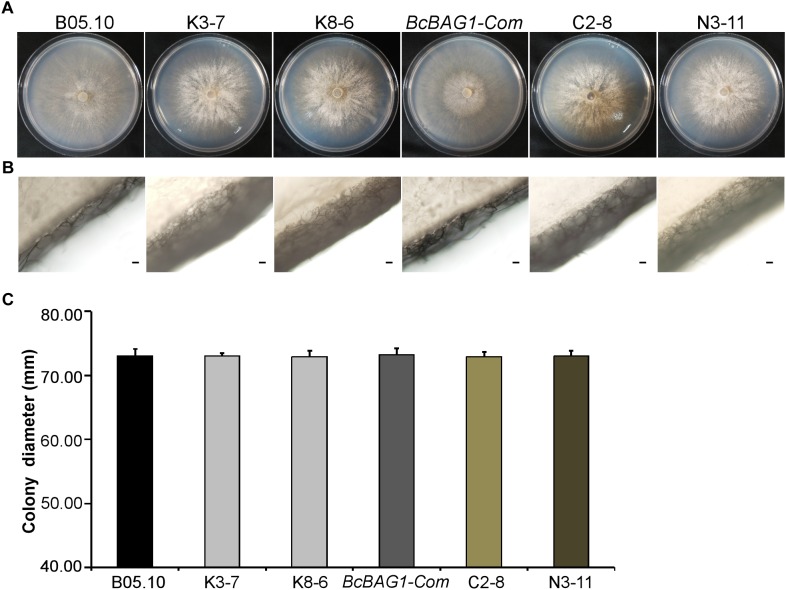
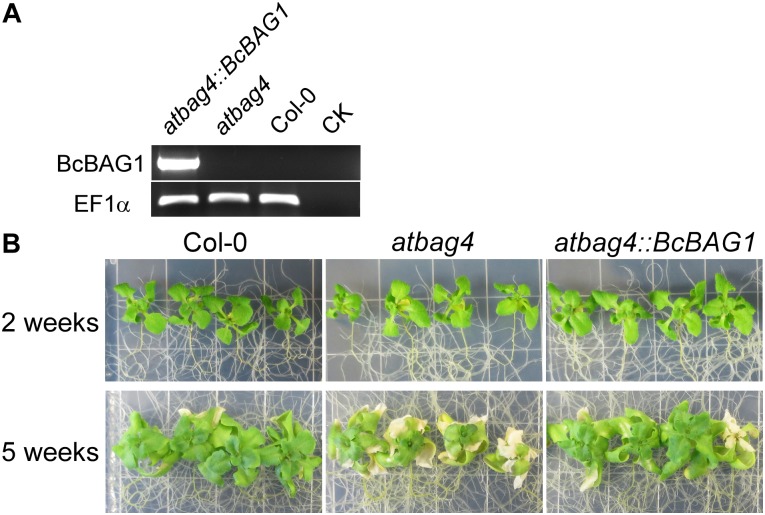
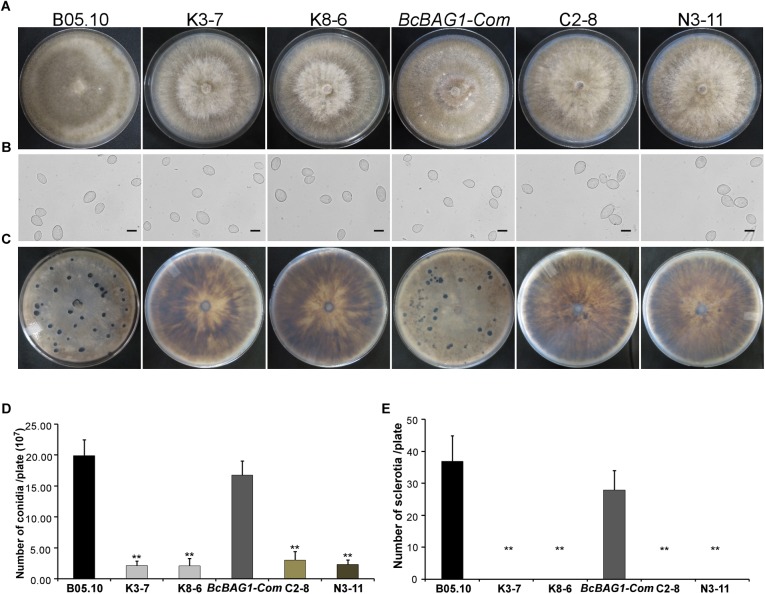
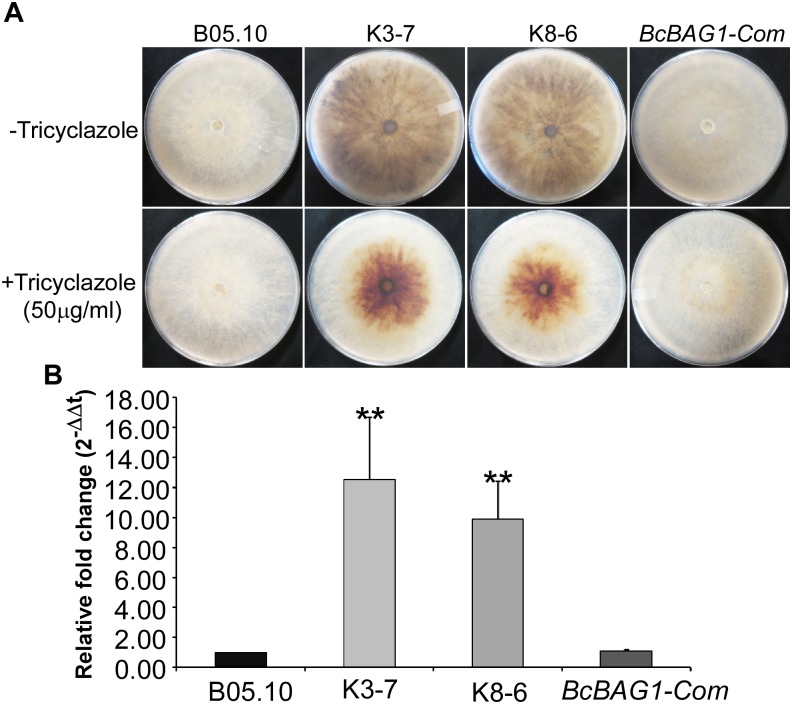
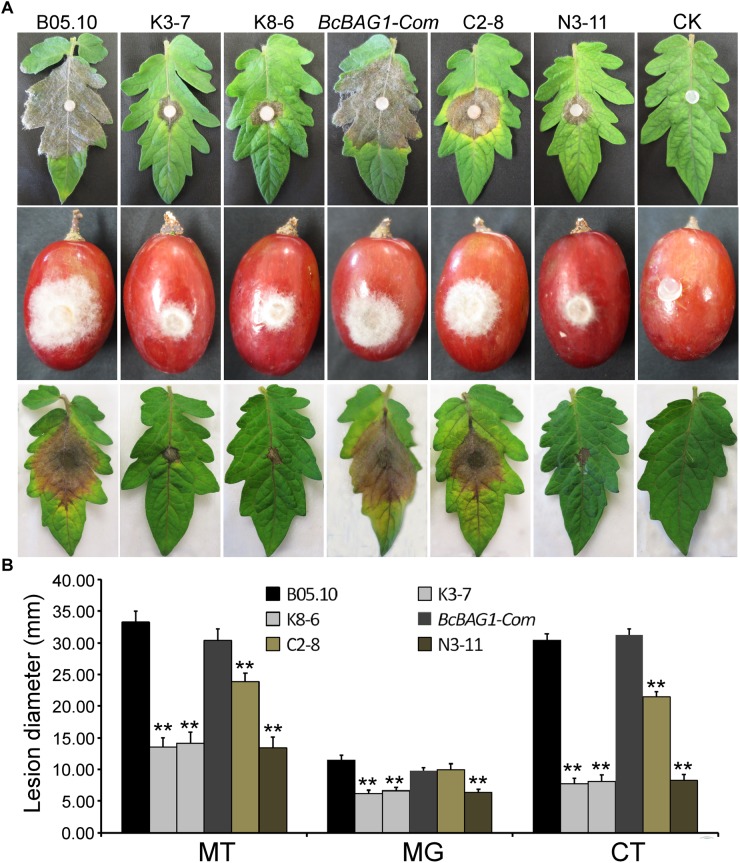
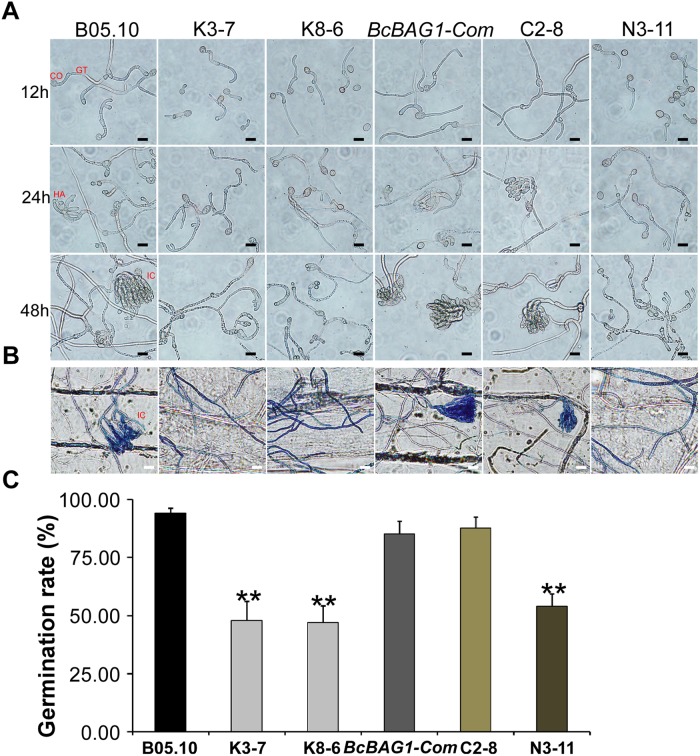
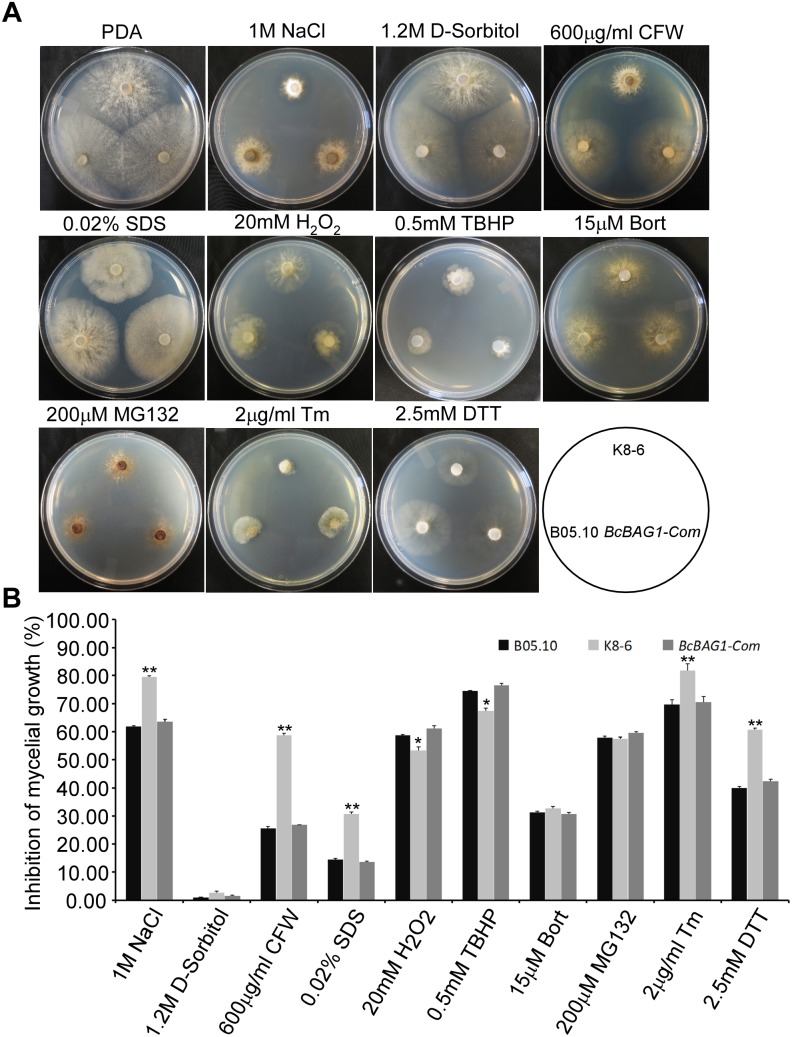
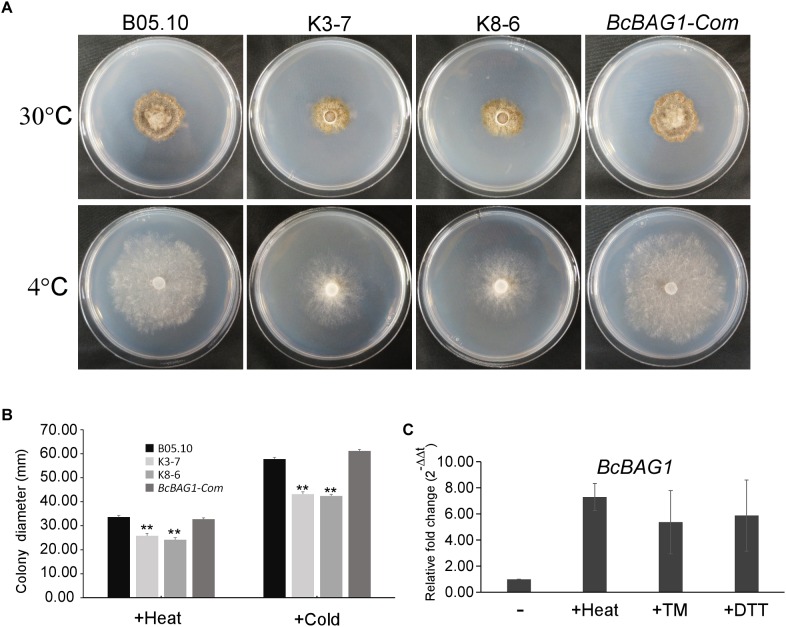
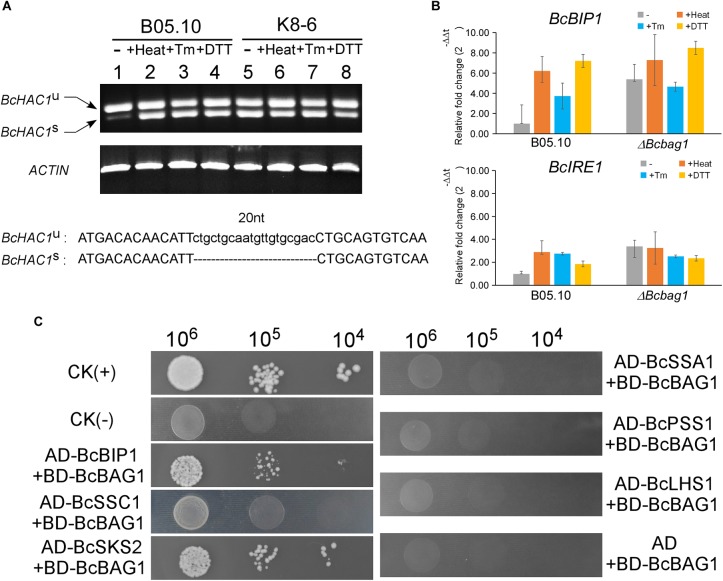
The Bcl-2 associated athanogene (BAG) family is an evolutionarily conserved group of co-chaperones that confers stress protection against a variety of cellular insults extending from yeasts, plants to humans. Little is known, however, regarding the biological role of BAG proteins in phytopathogenic fungi. Here, we identified the unique BAG gene () from the necrotrophic fungal pathogen, . BcBAG1 is the homolog of AtBAG4, and ectopic expression of in knock-out mutants restores salt tolerance. deletion mutants (Δ) exhibited decreased conidiation, enhanced melanin accumulation and lost the ability to develop sclerotia. Also, disruption blocked fungal conidial germination and successful penetration, leading to a reduced virulence in host plants. BcBAG1 contains BAG (BD) domain at C-terminus and ubiquitin-like (UBL) domain at N-terminus. Complementation assays indicated that BD can largely restored pathogenicity of Δ. Abiotic stress assays showed Δ was more sensitive than the wild-type strain to NaCl, calcofluor white, SDS, tunicamycin, dithiothreitol (DTT), heat and cold stress, suggesting BcBAG1 plays a cytoprotective role during salt stress, cell wall stress, and ER stress. BcBAG1 negatively regulated the expression of , and the splicing of mRNA, which are core regulators of unfolded protein response (UPR) during ER stress. Moreover, BcBAG1 interacted with HSP70-type chaperones, BcBIP1 and BcSKS2. In summary, this work demonstrates that BcBAG1 is pleiotropic and not only essential for fungal development, hyphal melanization, and virulence, but also required for response to multiple abiotic stresses and UPR pathway of .
Bcl-2相关抗凋亡基因(BAG)家族是一组进化上保守的共伴侣蛋白,可赋予从酵母、植物到人类的多种细胞免受各种细胞损伤的应激保护。然而,关于BAG蛋白在植物病原真菌中的生物学作用知之甚少。在这里,我们从坏死营养型真菌病原体中鉴定出独特的BAG基因()。BcBAG1是AtBAG4的同源物,在敲除突变体中的异位表达恢复了耐盐性。缺失突变体(Δ)表现出分生孢子形成减少、黑色素积累增加,并失去了形成菌核的能力。此外,破坏阻止了真菌分生孢子的萌发和成功穿透,导致宿主植物中的毒力降低。BcBAG1在C末端含有BAG(BD)结构域,在N末端含有泛素样(UBL)结构域。互补试验表明,BD可以在很大程度上恢复Δ的致病性。非生物胁迫试验表明,Δ比野生型菌株对NaCl、荧光增白剂、SDS、衣霉素、二硫苏糖醇(DTT)、热和冷胁迫更敏感,表明BcBAG1在盐胁迫、细胞壁胁迫和内质网应激期间发挥细胞保护作用。BcBAG1负调控、的表达以及mRNA的剪接,它们是内质网应激期间未折叠蛋白反应(UPR)的核心调节因子。此外,BcBAG1与HSP70型伴侣蛋白BcBIP1和BcSKS2相互作用。总之,这项工作表明BcBAG1具有多效性,不仅对真菌发育、菌丝黑色素化和毒力至关重要,而且对响应多种非生物胁迫和的UPR途径也是必需的。