Wang Shumin, Guan Jingwen, Zhang Qingdong, Chen Xiangxue, Li Fuchuan
National Glycoengineering Research Center and Shandong Provincial Key Laboratory of Carbohydrate Chemistry and Glycobiology, Shandong University, Qingdao, China.
Dongying Tiandong Pharmaceutical, Co., Ltd., Dongying, China.
Front Microbiol. 2019 Apr 5;10:704. doi: 10.3389/fmicb.2019.00704. eCollection 2019.
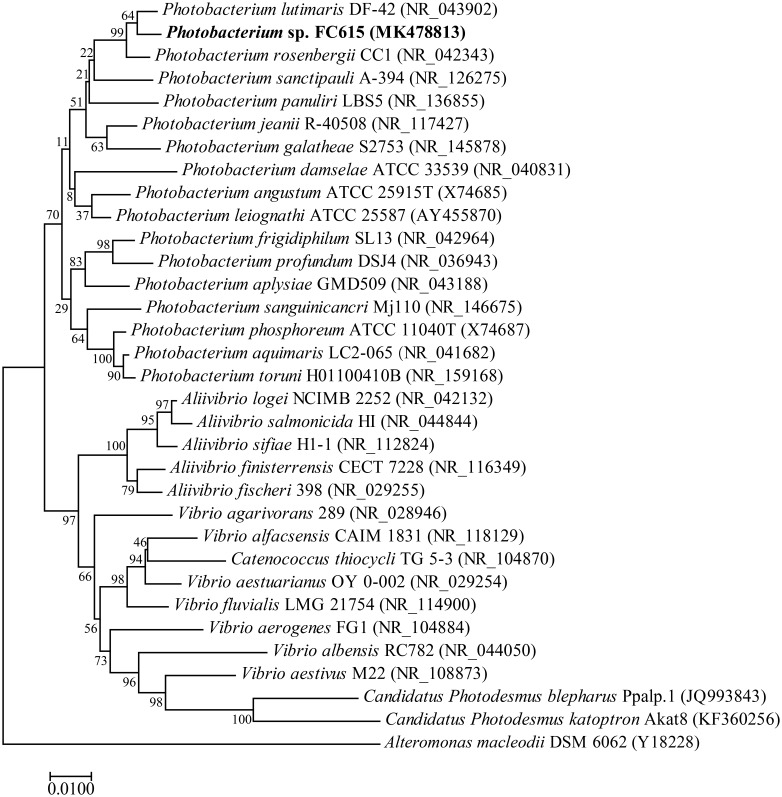
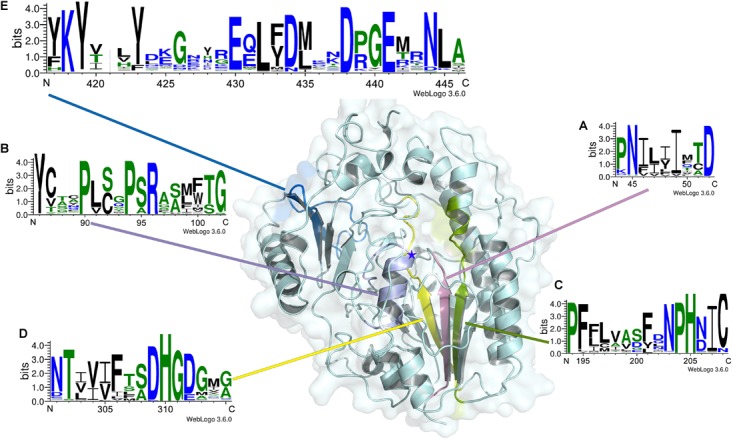
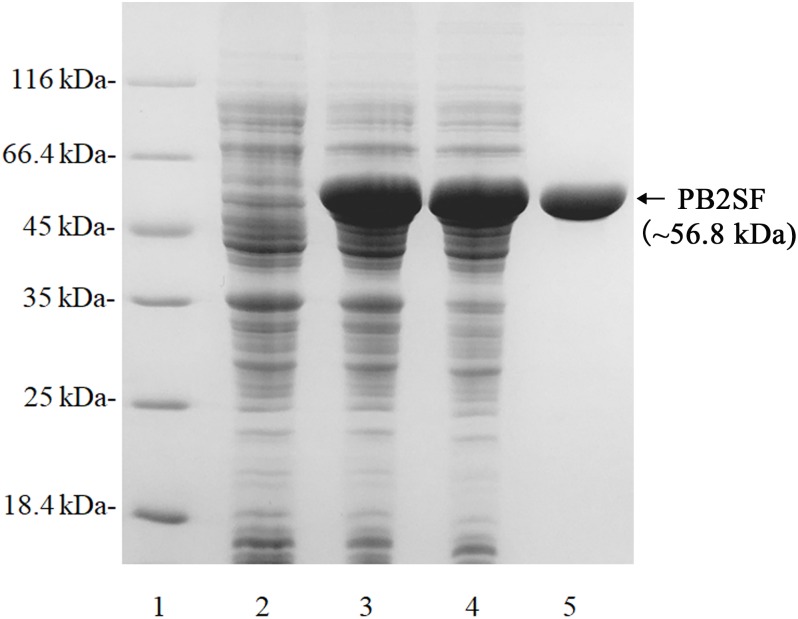
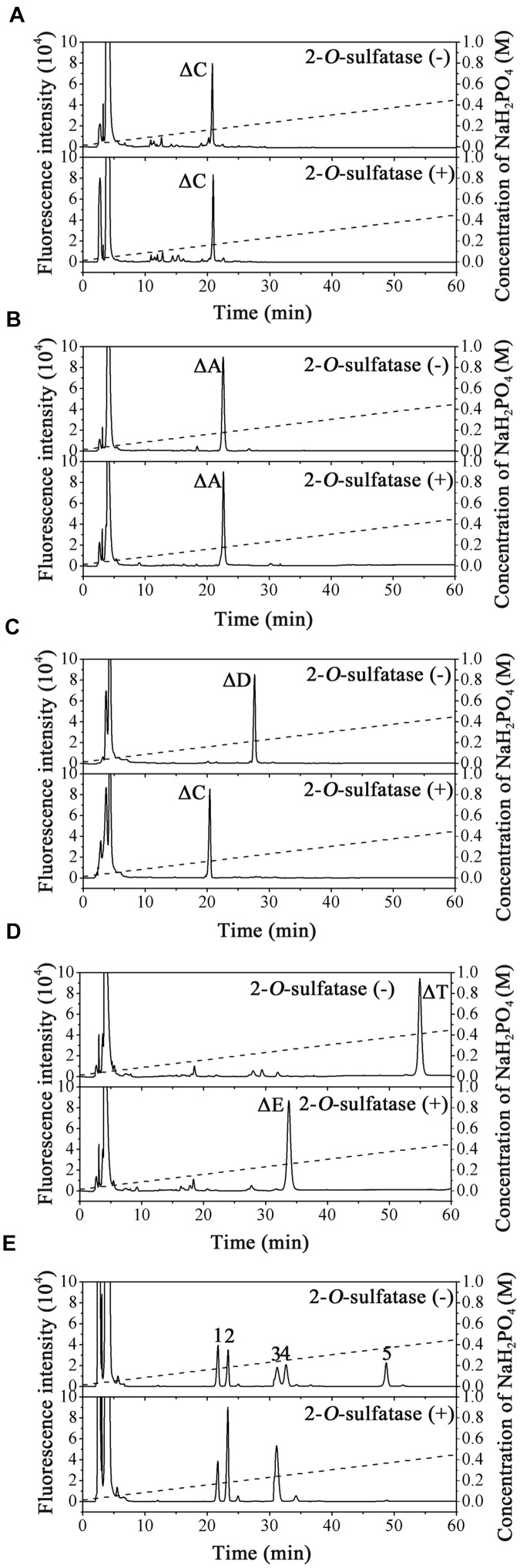
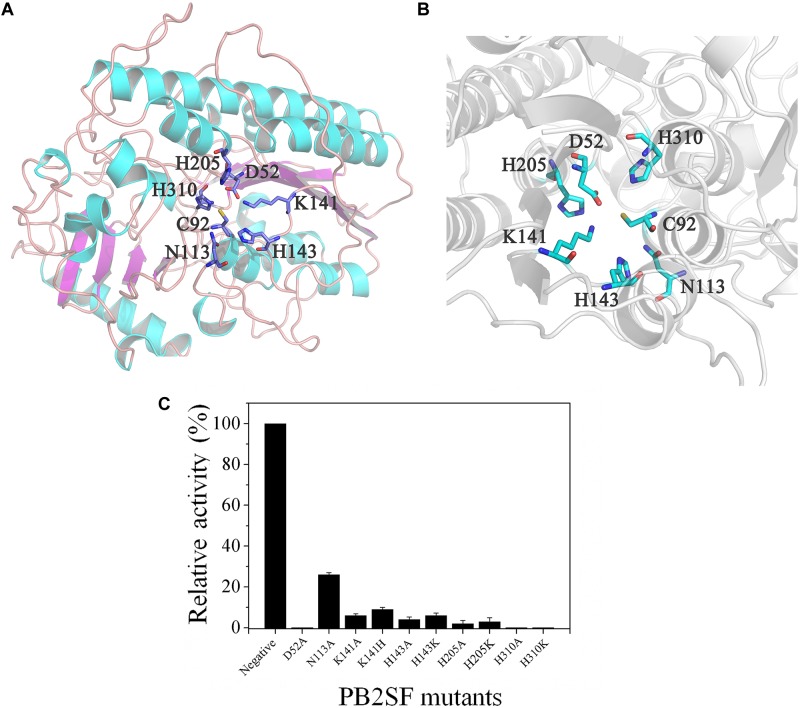
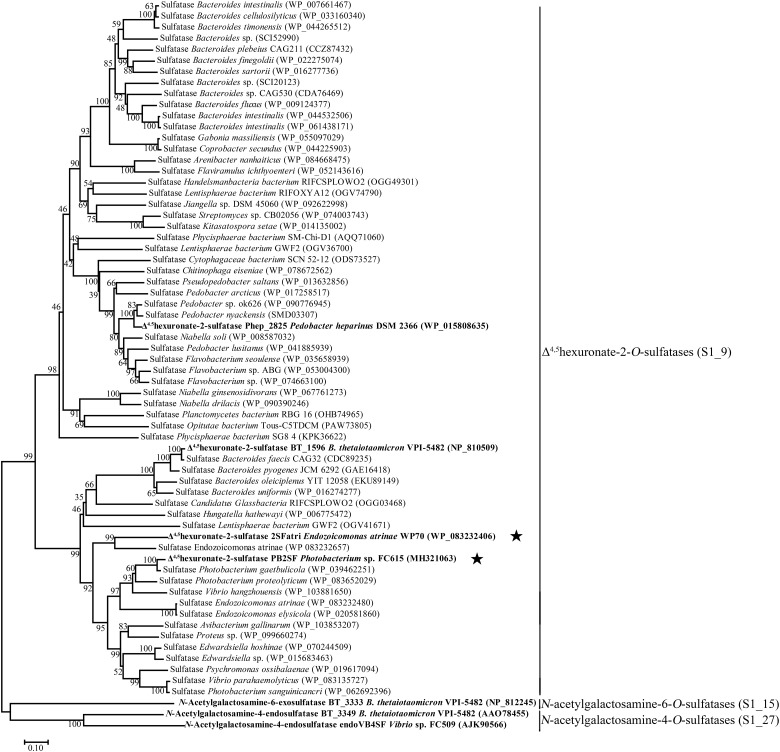
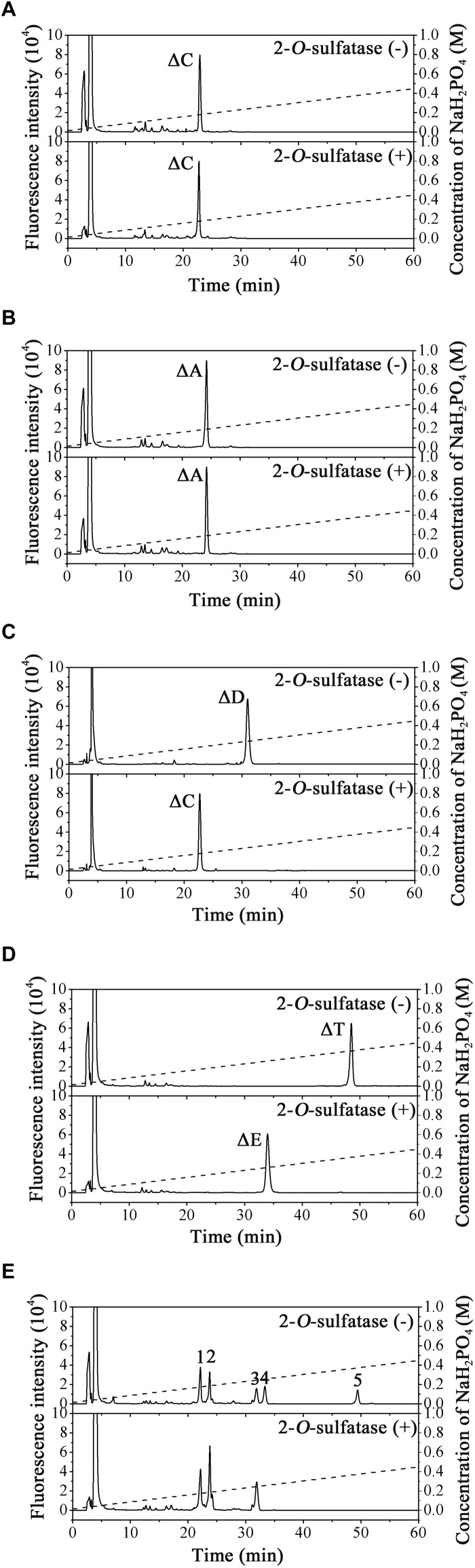
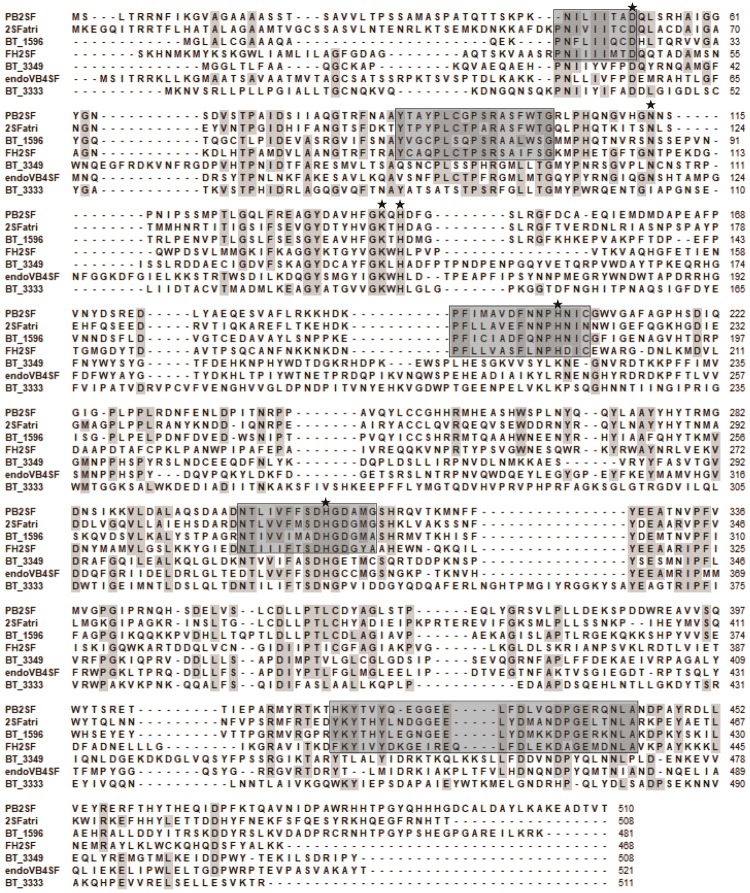
Glycosaminoglycan (GAG) sulfatases, which catalyze the hydrolysis of sulfate esters from GAGs, belong to a large and conserved sulfatase family. Bacterial GAG sulfatases are essential in the process of sulfur cycling and are useful for the structural analysis of GAGs. Only a few GAG-specific sulfatases have been studied in detail and reported to date. Herein, the GAG-degrading sp. FC615 was isolated from marine sediment, and a novel Δhexuronate-2--sulfatase (PB2SF) was identified from this bacterium. PB2SF specifically removed 2--sulfate from the unsaturated hexuronate residue located at the non-reducing end of GAG oligosaccharides produced by GAG lyases. A structural model of PB2SF was constructed through a homology-modeling method. Six conserved amino acids around the active site were chosen for further analysis using site-directed mutagenesis. N113A, K141A, K141H, H143A, H143K, H205A, and H205K mutants exhibited only feeble activity, while the H310A, H310K, and D52A mutants were totally inactive, indicating that these conserved residues, particularly Asp52 and His310, were essential in the catalytic mechanism. Furthermore, bioinformatic analysis revealed that GAG sulfatases with specific degradative properties clustered together in the neighbor-joining phylogenetic tree. Based on this finding, 60 Δhexuronate-2--sulfatases were predicted in the NCBI protein database, and one with relatively low identity to PB2SF was characterized to confirm our prediction. Moreover, the signature sequences of bacterial Δhexuronate-2--sulfatases were identified. With the reported signature motifs, the sulfatase sequence of the Δhexuronate-2--sulfatase family could be simply identified before cloning. Taken together, the results of this study should aid in the identification and further application of novel GAG sulfatases.
糖胺聚糖(GAG)硫酸酯酶催化从GAGs中水解硫酸酯,属于一个庞大且保守的硫酸酯酶家族。细菌GAG硫酸酯酶在硫循环过程中至关重要,并且对GAGs的结构分析很有用。迄今为止,仅有少数几种GAG特异性硫酸酯酶得到了详细研究并被报道。在此,从海洋沉积物中分离出了降解GAG的菌株FC615,并从该细菌中鉴定出了一种新型的Δ己糖醛酸-2-硫酸酯酶(PB2SF)。PB2SF特异性地从GAG裂解酶产生的GAG寡糖非还原端的不饱和己糖醛酸残基上去除2-硫酸酯。通过同源建模方法构建了PB2SF的结构模型。选择活性位点周围的六个保守氨基酸进行定点诱变进一步分析。N113A、K141A、K141H、H143A、H143K、H205A和H205K突变体仅表现出微弱的活性,而H310A、H310K和D52A突变体则完全无活性,这表明这些保守残基,特别是Asp52和His310,在催化机制中至关重要。此外,生物信息学分析表明,具有特定降解特性的GAG硫酸酯酶在邻接法系统发育树中聚集在一起。基于这一发现,在NCBI蛋白质数据库中预测了60种Δ己糖醛酸-2-硫酸酯酶,并对其中一种与PB2SF同一性相对较低的酶进行了表征以证实我们的预测。此外,还鉴定了细菌Δ己糖醛酸-2-硫酸酯酶的特征序列。利用已报道的特征基序,在克隆之前可以简单地鉴定出Δ己糖醛酸-2-硫酸酯酶家族的硫酸酯酶序列。综上所述,本研究结果应有助于新型GAG硫酸酯酶的鉴定和进一步应用。