Copes Francesco, Chevallier Pascale, Loy Caroline, Pezzoli Daniele, Boccafoschi Francesca, Mantovani Diego
Laboratory of Human Anatomy, Department of Health Sciences, University of Piemonte Orientale, Novara, Italy.
Laboratory for Biomaterials and Bioengineering, Canada Research Chair Tier I for the Innovation in Surgery, Department of Min-Met-Materials Engineering, CHU de Quebec Research Center, Laval University, Quebec, QC, Canada.
Front Bioeng Biotechnol. 2019 Apr 9;7:74. doi: 10.3389/fbioe.2019.00074. eCollection 2019.
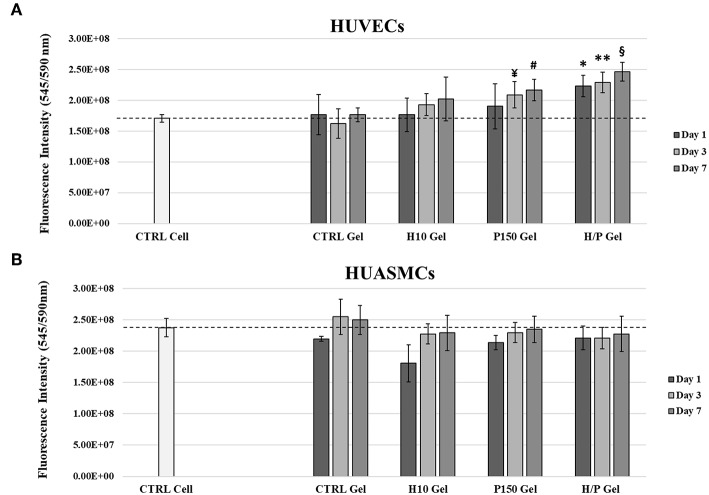
A fast re-endothelialization, along with the inhibition of neointima hyperplasia, are crucial to reduce the failure of vascular bypass grafts. Implants modifications with molecules capable of speeding up the re-endothelialization process have been proposed over the last years. However, clinical trials of angiogenic factor delivery have been mostly disappointing, underscoring the need to investigate a wider array of angiogenic factors. In this work, a drug release system based on a type I collagen hydrogel has been proposed for the controlled release of Pleiotrophin (PTN), a cytokine known for its pro-angiogenetic effects. Heparin, in virtue of its ability to sequester, protect and release growth factors, has been used to better control the release of PTN. Performances of the PTN drug delivery system on endothelial (ECs) and smooth muscle cells (SMCs) have been investigated. Structural characterization (mechanical tests and immunofluorescent analyses of the collagen fibers) was performed on the gels to assess if heparin caused changes in their mechanical behavior. The release of PTN from the different gel formulations has been analyzed using a PTN-specific ELISA assay. Cell viability was evaluated with the Alamar Blue Cell Viability Assay on cells directly seeded on the gels (direct test) and on cells incubated with supernatant, containing the released PTN, obtained from the gels (indirect test). The effects of the different gels on the migration of both ECs and SMCs have been evaluated using a Transwell migration assay. Hemocompatibility of the gel has been assessed with a clotting/hemolysis test. Structural analyses showed that heparin did not change the structural behavior of the collagen gels. ELISA quantification demonstrated that heparin induced a constant release of PTN over time compared to other conditions. Both direct and indirect viability assays showed an increase in ECs viability while no effects were noted on SMCs. Cell migration results evidenced that the heparin/PTN-modified gels significantly increased ECs migration and decreased the SMCs one. Finally, heparin significantly increased the hemocompatibility of the collagen gels. In conclusion, the PTN-heparin-modified collagen here proposed can represent an added value for vascular medicine, able to ameliorate the biological performance, and integration of vascular grafts.
快速再内皮化以及抑制内膜增生对于减少血管旁路移植失败至关重要。在过去几年中,有人提出用能够加速再内皮化过程的分子对植入物进行修饰。然而,血管生成因子递送的临床试验大多令人失望,这突出表明需要研究更广泛的血管生成因子。在这项工作中,提出了一种基于I型胶原蛋白水凝胶的药物释放系统,用于控释多效生长因子(PTN),这是一种以其促血管生成作用而闻名的细胞因子。肝素由于其螯合、保护和释放生长因子的能力,已被用于更好地控制PTN的释放。研究了PTN药物递送系统对内皮细胞(ECs)和平滑肌细胞(SMCs)的性能。对凝胶进行了结构表征(胶原纤维的力学测试和免疫荧光分析),以评估肝素是否会导致其力学行为发生变化。使用PTN特异性ELISA测定法分析了不同凝胶制剂中PTN的释放情况。通过Alamar Blue细胞活力测定法评估直接接种在凝胶上的细胞(直接试验)以及与从凝胶中获得的含有释放的PTN的上清液孵育的细胞(间接试验)的细胞活力。使用Transwell迁移测定法评估了不同凝胶对ECs和SMCs迁移的影响。通过凝血/溶血试验评估了凝胶的血液相容性。结构分析表明,肝素没有改变胶原凝胶的结构行为。ELISA定量表明,与其他条件相比,肝素能使PTN随时间持续释放。直接和间接活力测定均显示ECs活力增加,而对SMCs没有影响。细胞迁移结果表明,肝素/PTN修饰的凝胶显著增加了ECs迁移并减少了SMCs迁移。最后,肝素显著提高了胶原凝胶的血液相容性。总之,本文提出的PTN-肝素修饰的胶原蛋白可为血管医学带来附加值,能够改善血管移植物的生物学性能和整合性。