Peng Suyuan, He Jiawei, Huang Jiasheng, Lun Longwei, Zeng Jiahao, Zeng Shan, Zhang La, Liu Xusheng, Wu Yifan
The Second Medical College of Guangzhou University of Chinese Medicine, Guangzhou, China.
Health Science Research, Mayo Clinic, Rochester, MN, USA.
BMC Nephrol. 2019 Apr 26;20(1):142. doi: 10.1186/s12882-019-1309-y.
Self-management intervention aims to facilitate an individual's ability to make lifestyle changes. The effectiveness of this intervention in non-dialysis patients with chronic kidney disease (CKD) is limited. In this study, we applied a systematic review and meta-analysis to investigate whether self-management intervention improves renoprotection for non-dialysis chronic kidney disease.
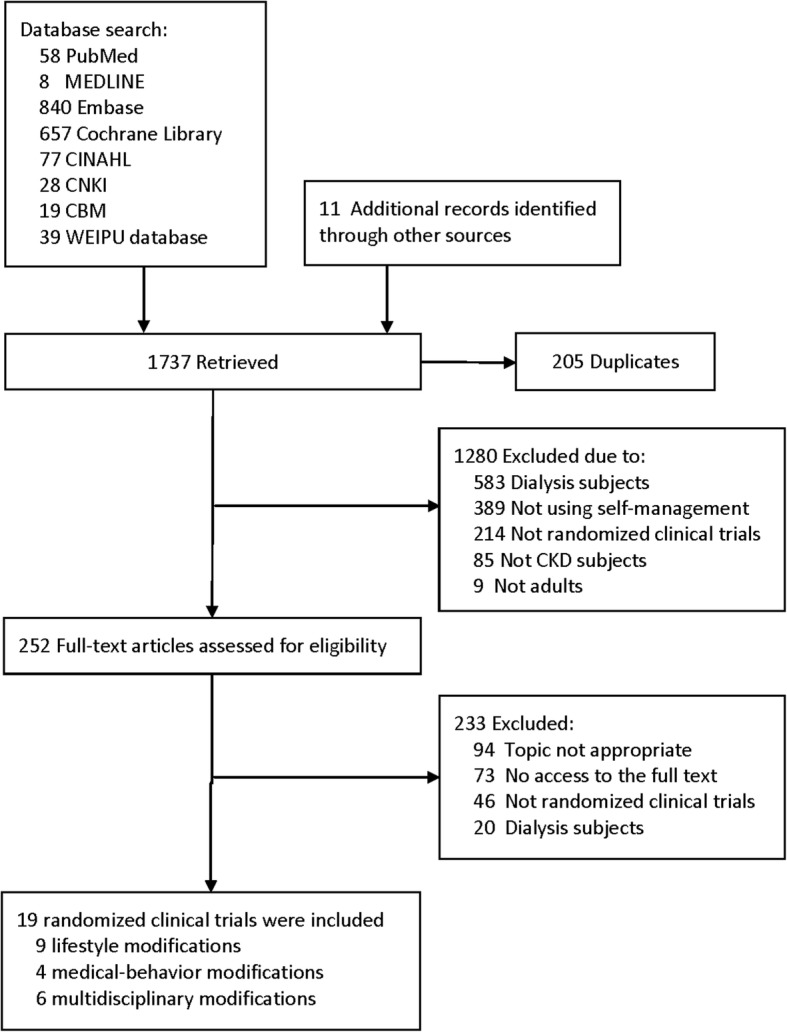
We conducted a comprehensive search for randomized controlled trials addressing our objective. We searched for studies up to May 12, 2018. Two reviewers independently evaluated study quality and extracted characteristics and outcomes among patients with CKD within the intervention phase for each trial. Meta-regression and subgroup analyses were conducted to explore heterogeneity.
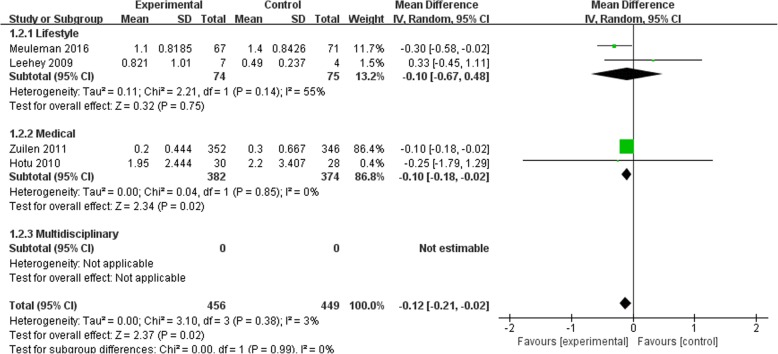
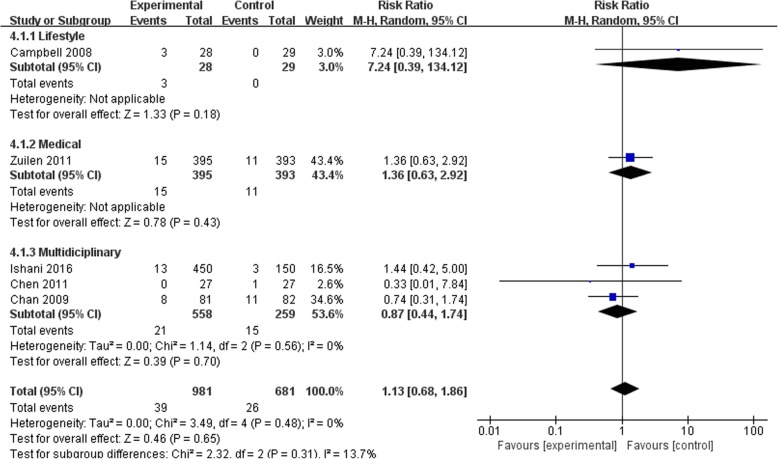
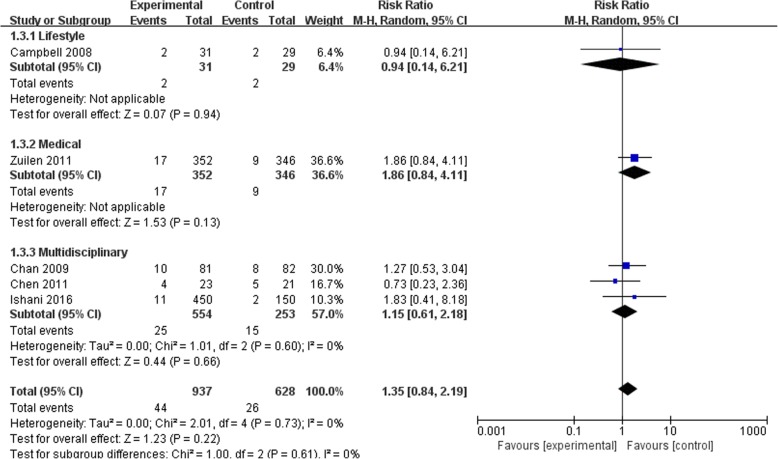
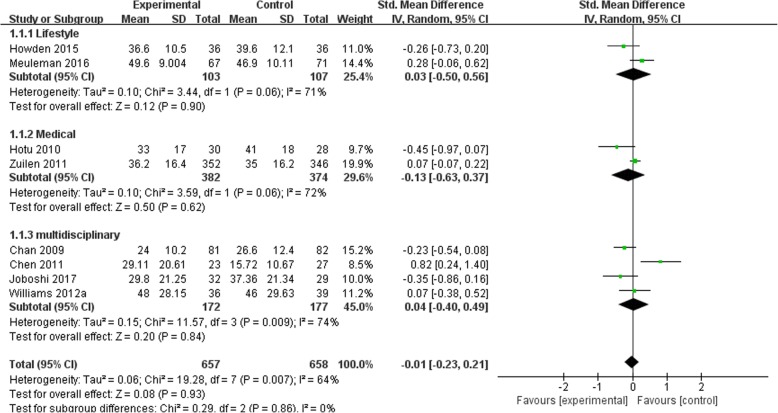
We identified 19 studies with a total of 2540 CKD patients and a mean follow-up of 13.44 months. Compared with usual care, self-management intervention did not show a significant difference for risk of all-cause mortality (5 studies, 1662 participants; RR 1.13; 95% CI 0.68 to 1.86; I = 0%), risk of dialysis (5 studies, 1565 participants; RR 1.35; 95% CI 0.84 to 2.19; I = 0%), or change in eGFR (8 studies, 1315 participants; SMD -0.01; 95% CI -0.23 to 0.21; I = 64%). Moreover, self-management interventions were associated with a lower 24 h urinary protein excretion (4 studies, 905 participants; MD - 0.12 g/24 h; 95% CI -0.21 to - 0.02; I = 3%), a lower blood pressure level (SBP: 7 studies, 1201 participants; MD - 5.68 mmHg; 95%CI - 9.68 to - 1.67; I = 60%; DBP: 7 studies, 1201 participants; MD - 2.64 mmHg, 95% CI -3.78 to - 1.50; I = 0%), a lower C-reactive Protein (CRP) level (3 studies, 123 participants; SMD -2.8; 95% CI -2.90 to - 2.70; I = 0%) and a longer distance on the 6-min walk (3 studies, 277 participants; SMD 0.70; 95% CI 0.45 to 0.94; I = 0%) when compared with the control group.
We observed that self-management intervention was beneficial for urine protein decline, blood pressure level, exercise capacity and CRP level, compared with the standard treatment, during a follow-up of 13.44 months in patients with CKD non-dialysis. However, it did not provide additional benefits for renal outcomes and all-cause mortality.
自我管理干预旨在促进个体做出生活方式改变的能力。这种干预在非透析慢性肾脏病(CKD)患者中的有效性有限。在本研究中,我们进行了一项系统评价和荟萃分析,以调查自我管理干预是否能改善非透析慢性肾脏病的肾脏保护作用。
我们针对我们的目标进行了全面的随机对照试验检索。我们检索了截至2018年5月12日的研究。两名研究者独立评估研究质量,并提取每个试验干预阶段内CKD患者的特征和结局。进行了荟萃回归和亚组分析以探讨异质性。
我们纳入了19项研究,共2540例CKD患者,平均随访13.44个月。与常规治疗相比,自我管理干预在全因死亡率风险方面无显著差异(5项研究,1662名参与者;RR 1.13;95%CI 0.68至1.86;I² = 0%)、透析风险方面无显著差异(5项研究,1565名参与者;RR 1.35;95%CI 0.84至2.19;I² = 0%)或估算肾小球滤过率(eGFR)变化方面无显著差异(8项研究,1315名参与者;SMD -0.01;95%CI -0.23至0.21;I² = 64%)。此外,与对照组相比,自我管理干预与较低的24小时尿蛋白排泄量(4项研究,905名参与者;MD -0.12g/24小时;95%CI -0.21至 -0.02;I² = 3%)、较低的血压水平(收缩压:7项研究,1201名参与者;MD -5.68mmHg;95%CI -9.68至 -1.67;I² = 60%;舒张压:7项研究,1201名参与者;MD -2.64mmHg,95%CI -3.78至 -1.50;I² = 0%)、较低的C反应蛋白(CRP)水平(3项研究,123名参与者;SMD -2.8;95%CI -2.90至 -2.70;I² = 0%)以及6分钟步行试验中更长的步行距离(3项研究,277名参与者;SMD 0.70;95%CI 0.45至0.94;I² = 0%)相关。
我们观察到,在非透析CKD患者13.44个月的随访期间,与标准治疗相比,自我管理干预有利于尿蛋白下降、血压水平、运动能力和CRP水平。然而,它并未为肾脏结局和全因死亡率带来额外益处。