Veterinary Pathology, The Royal (Dick) School of Veterinary Studies, University of Edinburgh, Edinburgh EH25 9RG, UK.
Developmental Biology Division, Roslin Institute and The Royal (Dick) School of Veterinary Studies, University of Edinburgh, Edinburgh EH25 9RG, UK.
Dis Model Mech. 2019 Apr 25;12(4):dmm037804. doi: 10.1242/dmm.037804.
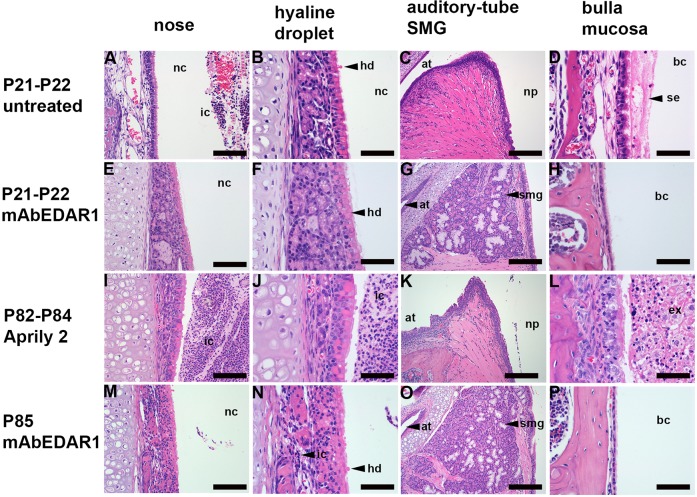
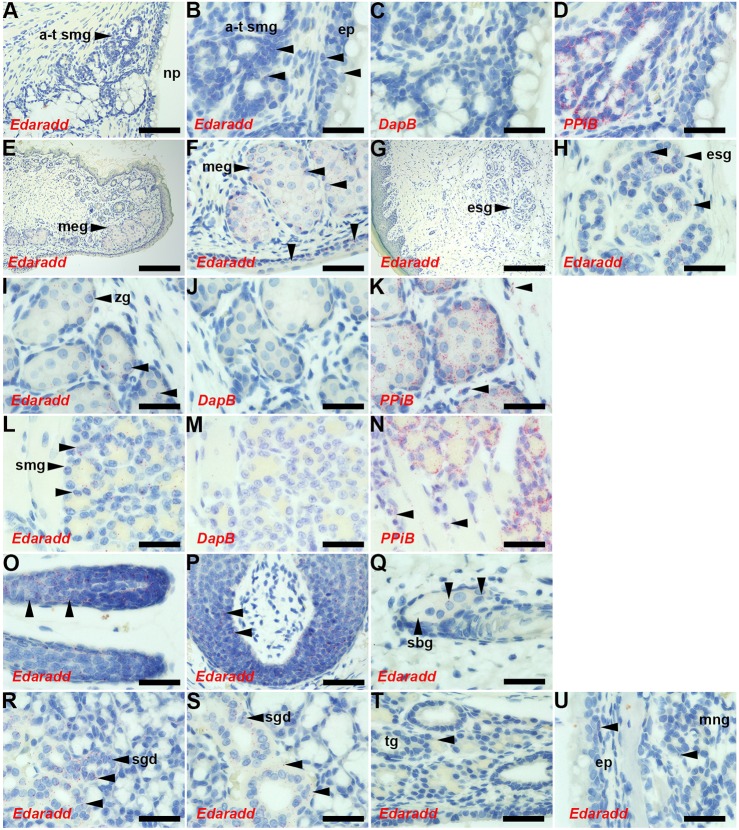
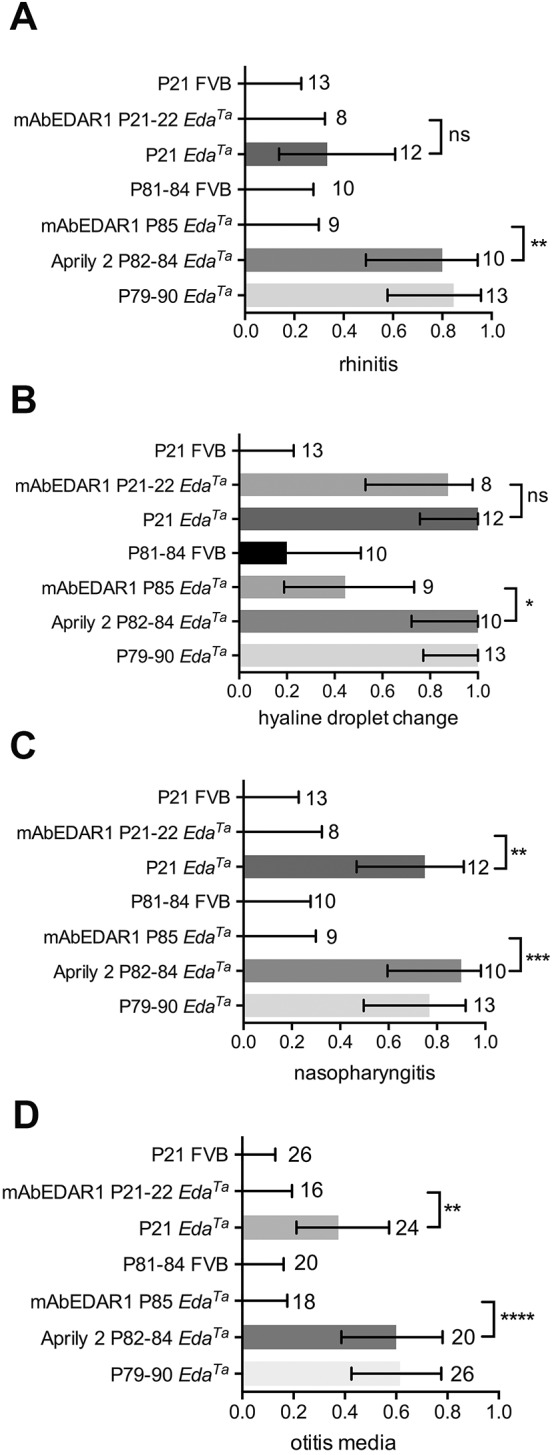
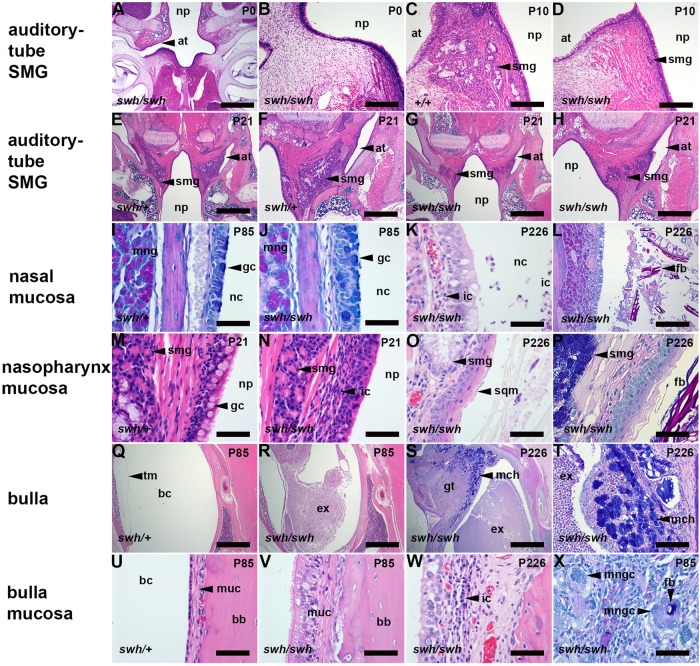
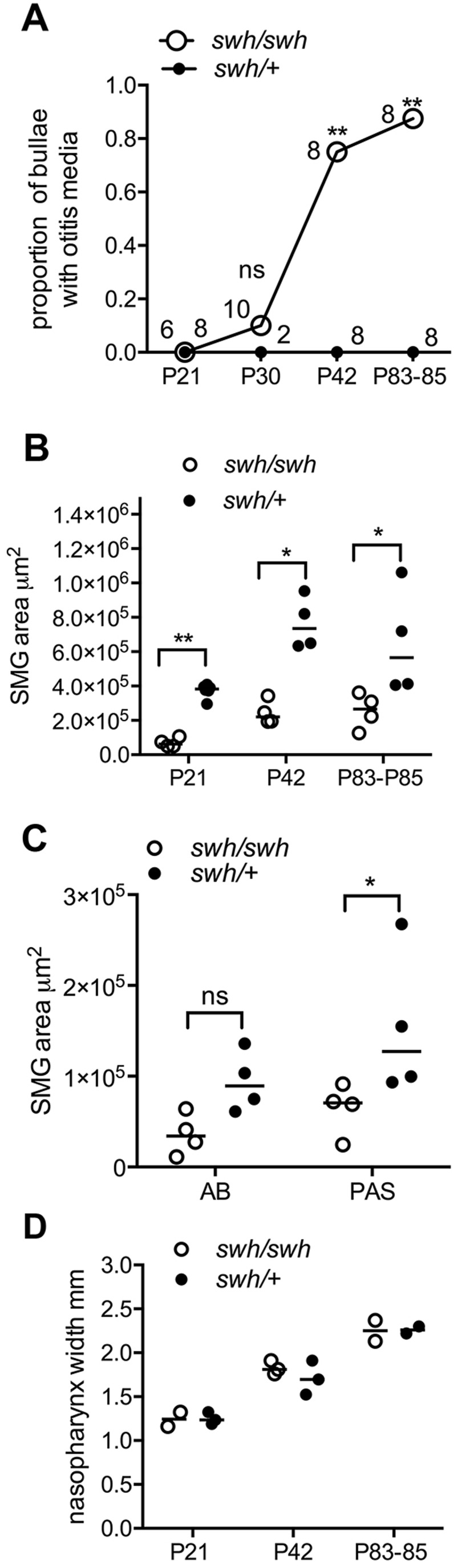
Patients with mutations in the ectodysplasin receptor signalling pathway genes - the X-linked ligand ectodysplasin-A (), the receptor or the receptor adapter - have hypohidrotic ectodermal dysplasia (HED). In addition to having impaired development of teeth, hair, eccrine sweat glands, and salivary and mammary glands, HED patients have ear, nose and throat disease. The mouse strains ( ) and ( ) have rhinitis and otitis media due to loss of submucosal glands in the upper airway. We report that prenatal correction of EDAR signalling in mice with the agonist anti-EDAR antibody rescues the auditory-tube submucosal glands and prevents otitis media, rhinitis and nasopharyngitis. The sparse- and wavy-haired () rat strain carries a mutation in the gene and has similar cutaneous HED phenotypes to mouse models. We report that auditory-tube submucosal glands are smaller in the homozygous mutant than those in unaffected heterozygous rats, and that this predisposes them to otitis media. Furthermore, the pathogenesis of otitis media in the rat HED model differs from that in mice, as otitis media is the primary pathology, and rhinitis is a later-onset phenotype. These findings in rodent HED models imply that hypomorphic as well as null mutations in EDAR signalling pathway genes may predispose to otitis media in humans. In addition, this work suggests that the recent successful prenatal treatment of X-linked HED (XLHED) in humans may also prevent ear, nose and throat disease, and provides diagnostic criteria that distinguish HED-associated otitis media from chronic otitis media with effusion, which is common in children.
患有外胚层发育不良受体信号通路基因突变的患者 - X 连锁配体外胚层发育不良 A ()、受体 或受体适配器 - 患有少汗性外胚层发育不良 (HED)。除了牙齿、头发、汗腺、唾液腺和乳腺发育不良外,HED 患者还患有耳、鼻和喉疾病。小鼠品系 ()和 ()由于上呼吸道黏膜下腺丧失而患有鼻炎和中耳炎。我们报告称,用激动剂抗 EDAR 抗体对 小鼠进行产前 EDAR 信号转导纠正可挽救听管黏膜下腺并预防中耳炎、鼻炎和鼻咽炎。稀疏毛和波浪毛()大鼠品系携带 基因的突变,具有与小鼠模型相似的皮肤 HED 表型。我们报告称,同型纯合突变 的听管黏膜下腺比未受影响的杂合 大鼠中的小,这使它们易患中耳炎。此外,大鼠 HED 模型中的中耳炎发病机制与小鼠不同,因为中耳炎是主要的病理学,而鼻炎是后期发病的表型。这些啮齿动物 HED 模型的发现表明,EDAR 信号通路基因突变的低功能和缺失突变可能使人类易患中耳炎。此外,这项工作表明,最近对人类 X 连锁 HED (XLHED) 的成功产前治疗也可能预防耳、鼻和喉疾病,并提供了区分与 HED 相关的中耳炎与儿童中常见的慢性分泌性中耳炎的诊断标准。