Nhokaew Wilasinee, Kleebkaow Pilaiwan, Chaisuriya Nipon, Kietpeerakool Chumnan
Department of Obstetrics and Gynaecology, Faculty of Medicine, Khon Kaen University, Thailand. Email:
Department of Pathology, Faculty of Medicine, Khon Kaen University, Thailand.
Asian Pac J Cancer Prev. 2019 Apr 29;20(4):1161-1169. doi: 10.31557/APJCP.2019.20.4.1161.
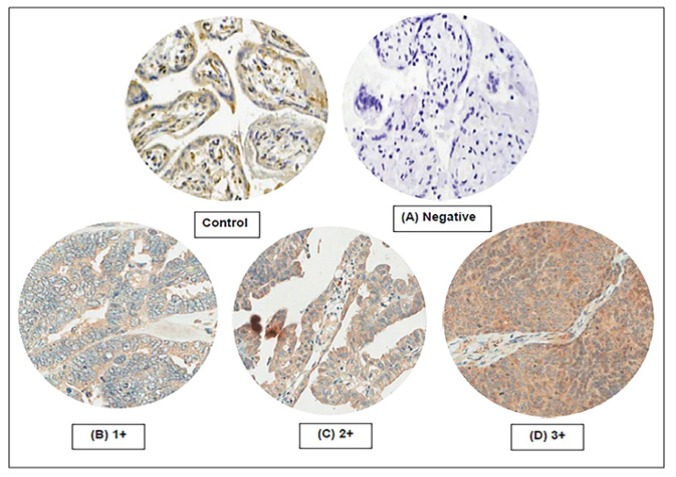
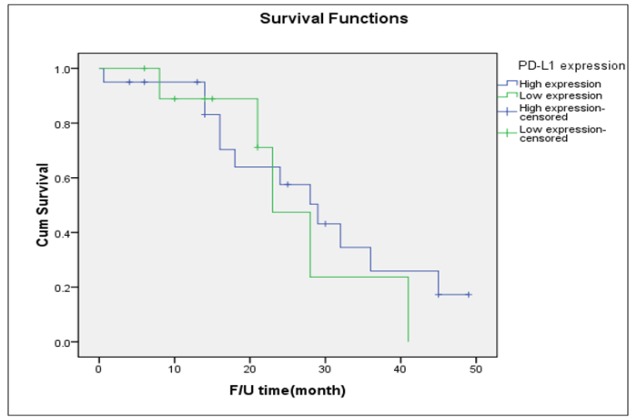
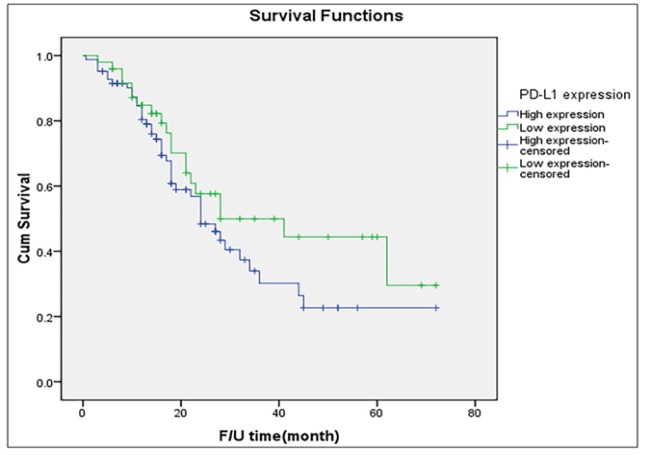
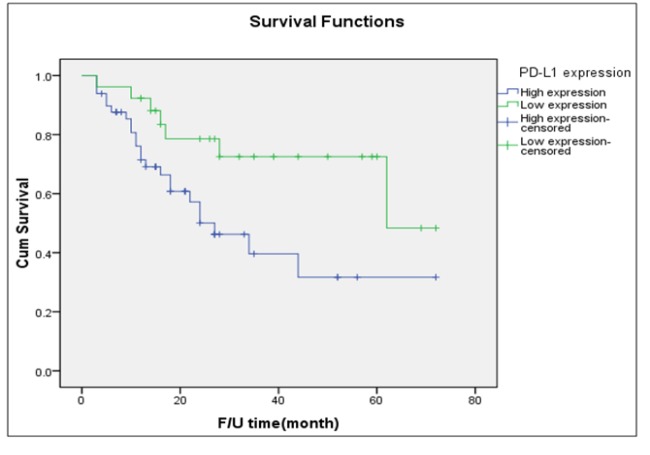
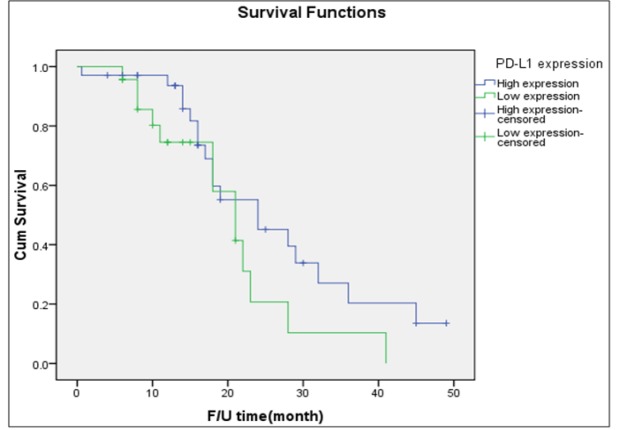
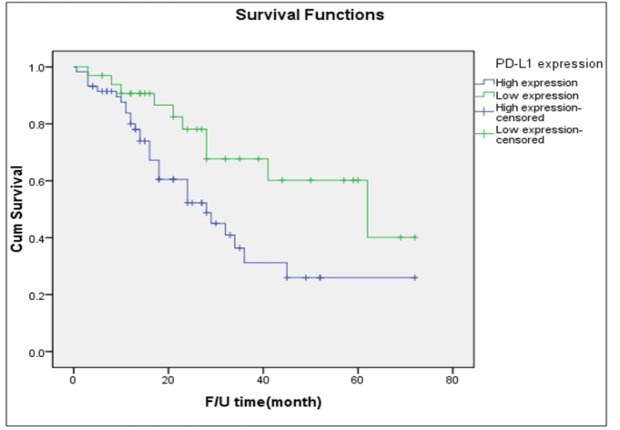
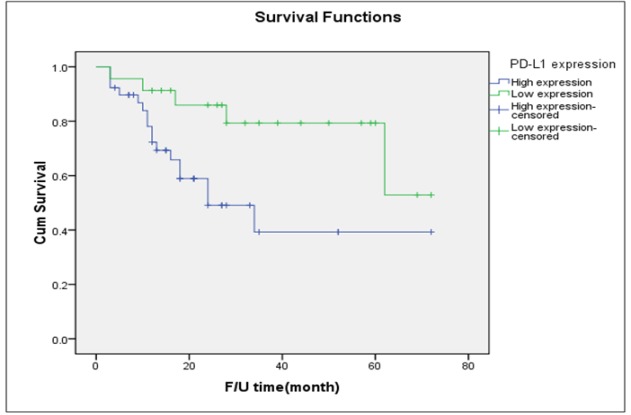
Objective: To examine the expression of programmed death ligand 1 (PD-L1) in type I and type II epithelial ovarian cancers (EOC) and its associations with outcomes. Methods: Records of 132 women with EOC were reviewed. Immunostaining of PD-L1 was performed with formalin-fixed, paraffin-embedded specimens. Expression of PD-L1 was classified into four categories (0; 1+; 2+; 3+) according to intensity of expression. Expression of PD-L1 ≥2+ was deemed to be high. Results: Of the 132 women, 75 (56.8%) and 57 (43.2%) women had type I and type II tumors, respectively. Approximately 70% of cases exhibited high PD-L1 expression. There was no significant difference in the rate of high PD-L1 expression between the two EOC types (65.3% versus 59.6%). In type I tumors, high PD-L1 expression was associated with more advanced stages (51.0% versus 34.6%), greater recurrence (46.9% versus 26.9%), and shorter median progression-free survival (27 months versus 62 months) than low expression. In type II tumors, there were no apparent differences between high and low expression of PD-L1 in terms of the percentage of advanced-stage tumors (82.6% versus 79.4%), recurrence (56.5% versus 58.8%), and median progression-free survival (21 months versus 24 months). Conclusion: high PD-L1 expression is associated with worse oncological outcomes in type I EOC. This finding emphasizes the merit of further studies to confirm this promising result and to determine the potential role of PD-L1 blockade therapy in type I EOC.
检测程序性死亡配体1(PD-L1)在I型和II型上皮性卵巢癌(EOC)中的表达及其与预后的关系。方法:回顾132例EOC患者的病历。采用福尔马林固定、石蜡包埋标本进行PD-L1免疫染色。根据表达强度将PD-L1表达分为四类(0;1+;2+;3+)。PD-L1表达≥2+被视为高表达。结果:132例患者中,分别有75例(56.8%)和57例(43.2%)患有I型和II型肿瘤。约70%的病例表现为PD-L1高表达。两种EOC类型之间的PD-L1高表达率无显著差异(65.3%对59.6%)。在I型肿瘤中,与低表达相比,PD-L1高表达与更晚期别(51.0%对34.6%)、更高的复发率(46.9%对26.9%)以及更短的无进展生存期中位数(27个月对62个月)相关。在II型肿瘤中,PD-L1高表达和低表达在晚期肿瘤百分比(82.6%对79.4%)、复发率(56.5%对58.8%)以及无进展生存期中位数(21个月对24个月)方面无明显差异。结论:PD-L1高表达与I型EOC更差的肿瘤学预后相关。这一发现强调了进一步研究以证实这一有前景的结果并确定PD-L1阻断治疗在I型EOC中的潜在作用的价值。