School of Medicine, Stanford University, Stanford, CA, United States.
Data Science Institute, Columbia University, New York, NY, United States.
JMIR Mhealth Uhealth. 2019 Apr 29;7(4):e13447. doi: 10.2196/13447.
Studies have demonstrated that surgical safety checklists (SSCs) can significantly reduce surgical complications and mortality rates. Such lists rely on traditional posters or paper, and their contents are generic regarding the type of surgery being performed. SSC completion rates and uniformity of content have been reported as modest and widely variable.
This study aimed to investigate the feasibility and potential of using smart glasses in the operating room to increase the benefits of SSCs by improving usability through contextualized content and, ideally, resulting in improved completion rates.
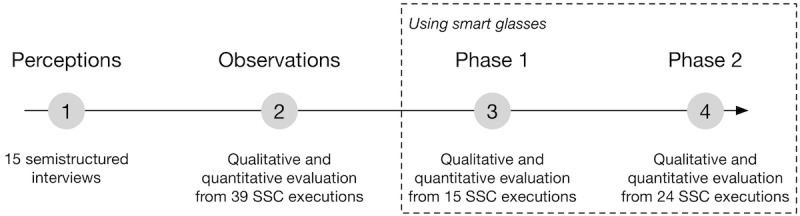
We prospectively evaluated and compared 80 preoperative time-out events with SSCs at a major academic medical center between June 2016 and February 2017. Participants were assigned to either a conventional checklist approach (poster, memory, or both) or a smart glasses app running on Google Glass.
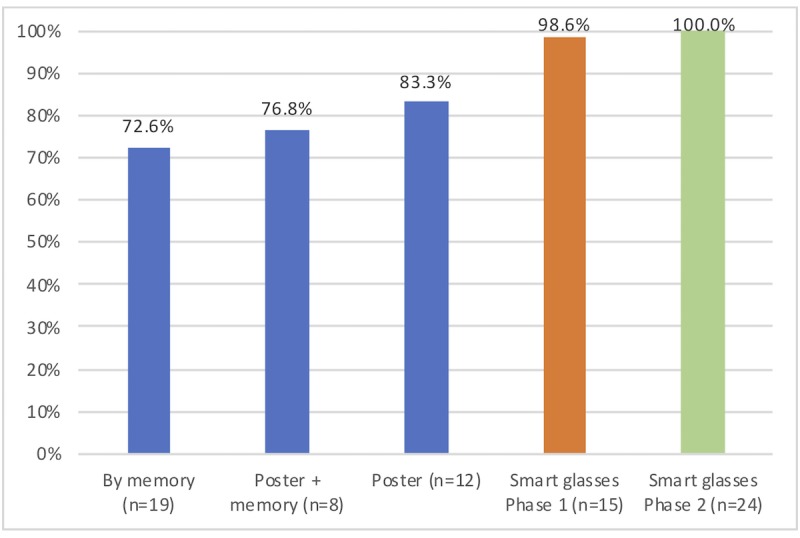
Four different surgeons conducted 41 checklists using conventional methods (ie, memory or poster) and 39 using the smart glasses app. The average checklist completion rate using conventional methods was 76%. Smart glasses allowed a completion rate of up to 100% with a decrease in average checklist duration of 18%.
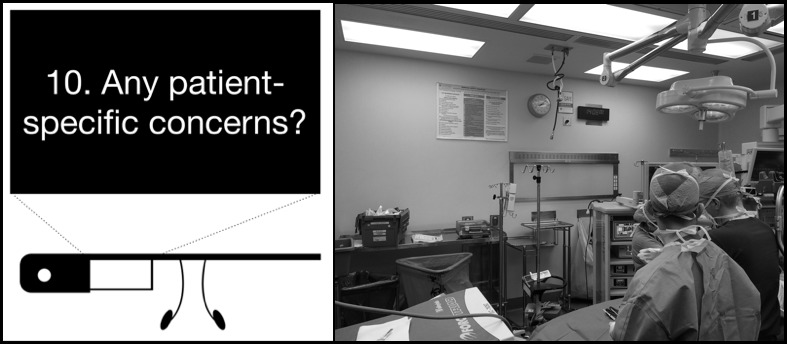
Compared with alternatives such as posters, paper, and memory, smart glasses checklists are easier to use and follow. The glasses allowed surgeons to use contextualized time-out checklists, which increased the completion rate to 100% and reduced the checklist execution time and time required to prepare the equipment during surgical cases.
研究表明,手术安全检查表(SSC)可以显著降低手术并发症和死亡率。这些清单依赖于传统的海报或纸张,其内容对于所进行的手术类型是通用的。SSC 的完成率和内容的一致性被报道为适度和广泛变化。
本研究旨在探讨在手术室中使用智能眼镜的可行性和潜力,通过上下文相关的内容提高 SSCs 的效益,从而提高可用性,并理想情况下提高完成率。
我们在 2016 年 6 月至 2017 年 2 月期间,在一家主要的学术医疗中心前瞻性地评估和比较了 80 次术前超时事件与 SSCs 的关系。参与者被分配到传统检查表方法(海报、记忆或两者兼有)或在 Google Glass 上运行的智能眼镜应用程序。
四位不同的外科医生使用传统方法(即记忆或海报)进行了 41 次检查表检查,使用智能眼镜应用程序进行了 39 次检查表检查。使用传统方法的检查表平均完成率为 76%。智能眼镜可以达到 100%的完成率,平均检查表持续时间减少 18%。
与海报、纸张和记忆等替代方案相比,智能眼镜检查表更易于使用和遵循。这些眼镜允许外科医生使用上下文相关的超时检查表,从而将完成率提高到 100%,并减少手术过程中准备设备所需的检查表执行时间和时间。