Dallas-Orr David, Penev Yordan, Schultz Robert, Courtier Jesse
Department of Bioengineering and Therapeutic Sciences, University of California, San Francisco, San Francisco, CA, United States.
Department of Bioengineering, University of California, Berkeley, Berkeley, CA, United States.
JMIR Perioper Med. 2020 Sep 24;3(2):e18367. doi: 10.2196/18367.
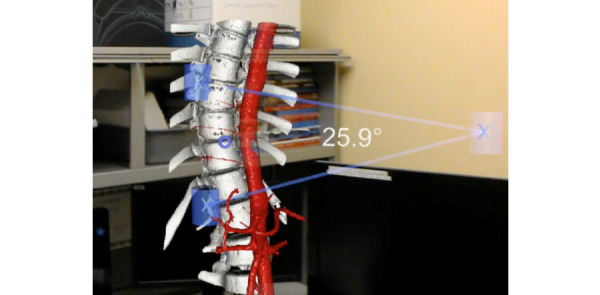
Picture archiving and communication systems (PACS) are ubiquitously used to store, share, and view radiological information for preoperative planning across surgical specialties. Although traditional PACS software has proven reliable in terms of display accuracy and ease of use, it remains limited by its inherent representation of medical imaging in 2 dimensions. Augmented reality (AR) systems present an exciting opportunity to complement traditional PACS capabilities.
This study aims to evaluate the technical feasibility of using a novel AR platform, with holograms derived from computed tomography (CT) imaging, as a supplement to traditional PACS for presurgical planning in complex surgical procedures.
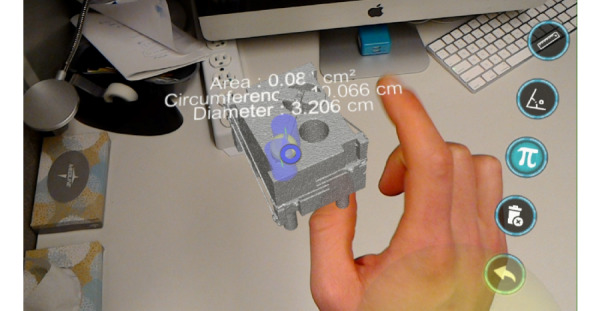
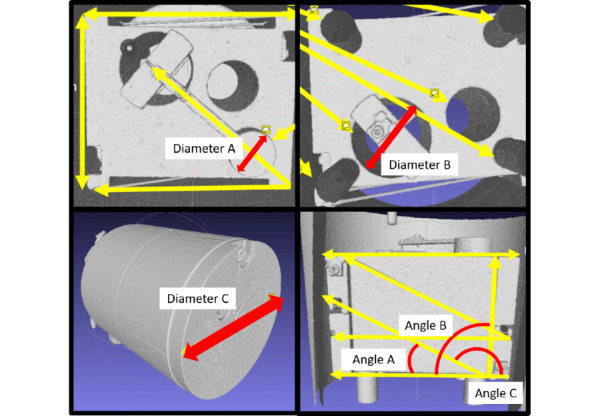
Independent readers measured objects of predetermined, anthropomorphically correlated sizes using the circumference and angle tools of standard-of-care PACS software and a newly developed augmented reality presurgical planning system (ARPPS).
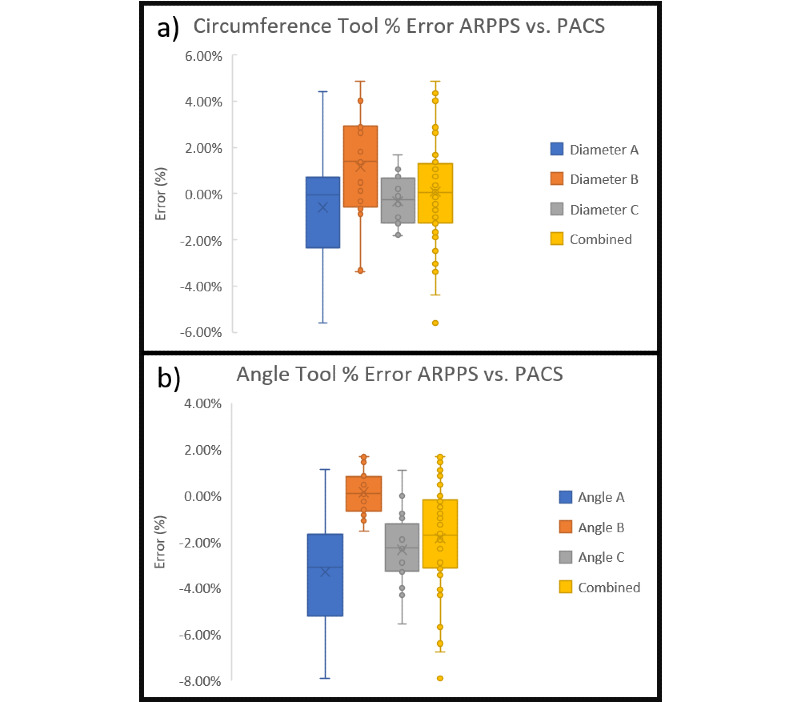
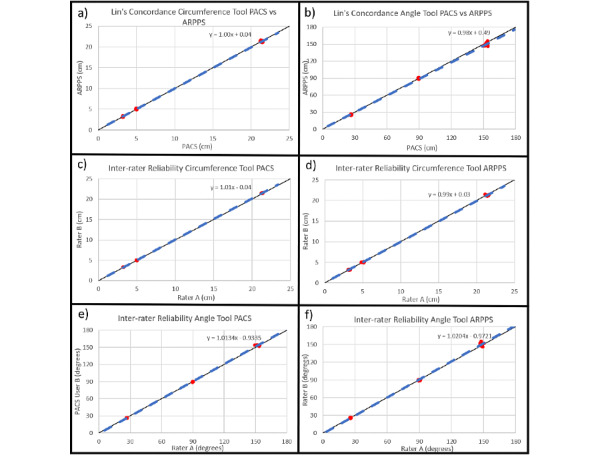
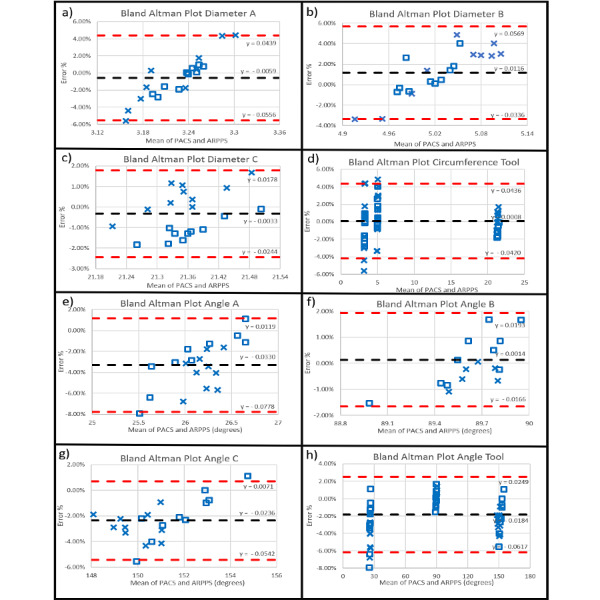
Measurements taken with the standard PACS and the ARPPS showed no statistically significant differences. Bland-Altman analysis showed a mean difference of 0.08% (95% CI -4.20% to 4.36%) for measurements taken with PACS versus ARPPS' circumference tools and -1.84% (95% CI -6.17% to 2.14%) for measurements with the systems' angle tools. Lin's concordance correlation coefficients were 1.00 and 0.98 for the circumference and angle measurements, respectively, indicating almost perfect strength of agreement between ARPPS and PACS. Intraclass correlation showed no statistically significant difference between the readers for either measurement tool on each system.
ARPPS can be an effective, accurate, and precise means of 3D visualization and measurement of CT-derived holograms in the presurgical care timeline.
图像存档与通信系统(PACS)被广泛用于存储、共享和查看放射学信息,以用于各外科专业的术前规划。尽管传统的PACS软件在显示准确性和易用性方面已被证明是可靠的,但它仍然受到其二维医学成像固有表示方式的限制。增强现实(AR)系统为补充传统PACS功能提供了一个令人兴奋的机会。
本研究旨在评估使用一种新型AR平台的技术可行性,该平台具有源自计算机断层扫描(CT)成像的全息图,作为传统PACS在复杂手术术前规划中的补充。
独立读者使用标准护理PACS软件和新开发的增强现实术前规划系统(ARPPS)的周长和角度工具测量预定的、与人体相关大小的物体。
使用标准PACS和ARPPS进行的测量在统计学上没有显著差异。Bland-Altman分析显示,使用PACS与ARPPS的周长工具进行测量的平均差异为0.08%(95%CI -4.20%至4.36%),使用系统角度工具进行测量的平均差异为-1.84%(95%CI -6.17%至2.14%)。周长和角度测量的Lin一致性相关系数分别为1.00和0.98,表明ARPPS与PACS之间的一致性强度几乎完美。组内相关性显示,每个系统上的两种测量工具在读者之间没有统计学上的显著差异。
在术前护理流程中,ARPPS可以成为对CT衍生全息图进行三维可视化和测量的有效、准确和精确的手段。