Unidad de Infección Viral e Inmunidad, Centro Nacional de Microbiología, Instituto de Salud Carlos III, Majadahonda, 28220 Madrid, Spain.
Biomolecules. 2019 Apr 28;9(5):165. doi: 10.3390/biom9050165.
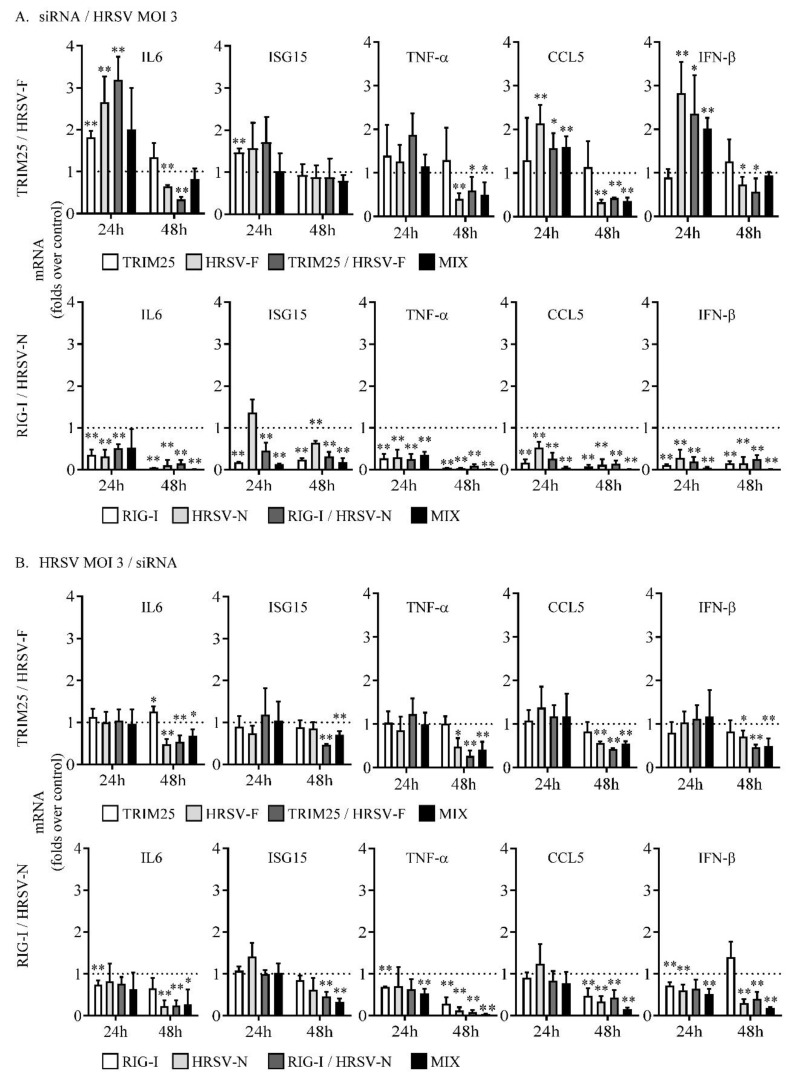
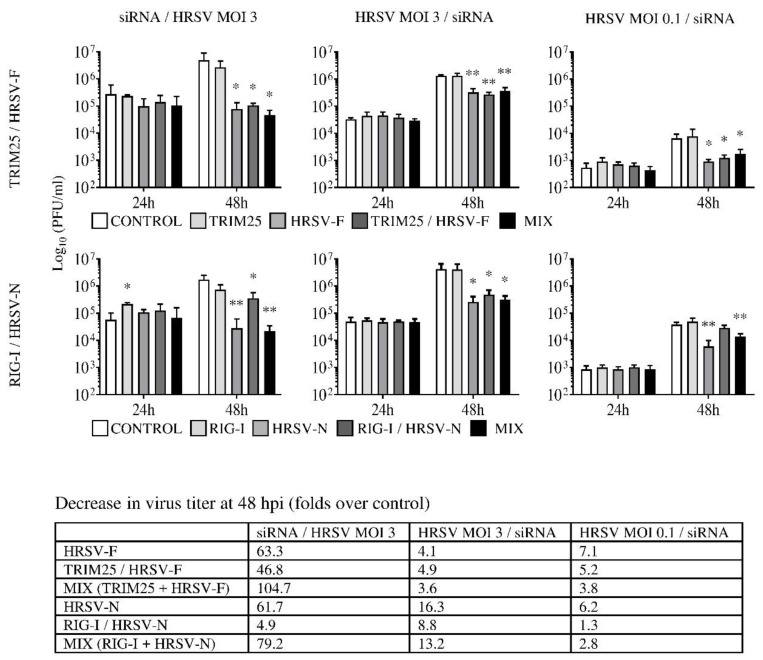
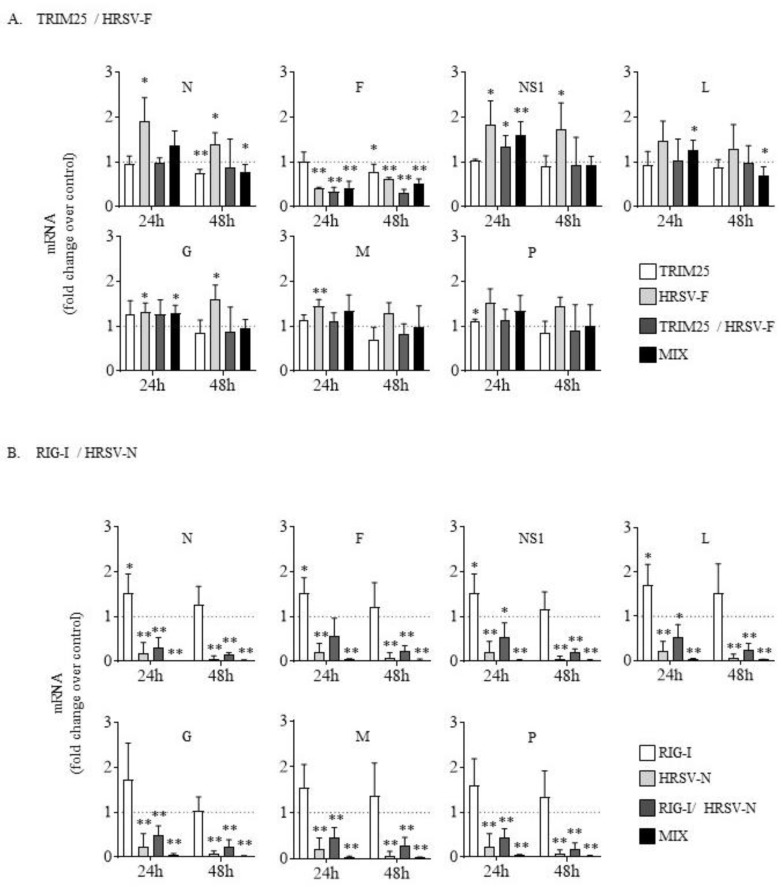
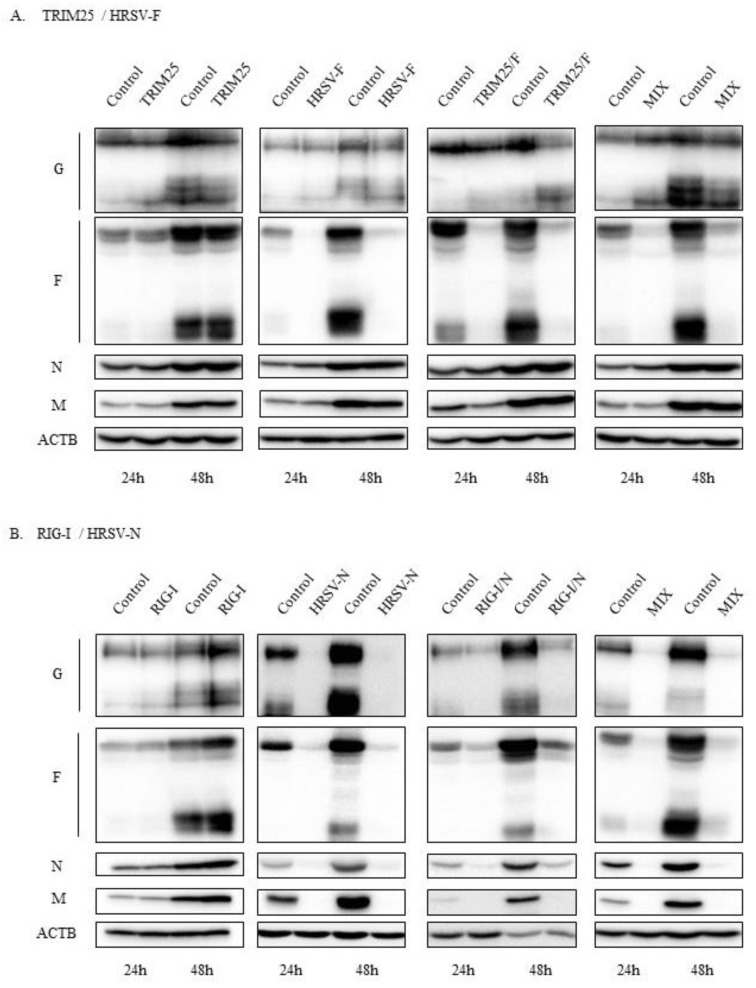
Human respiratory syncytial virus (HRSV) infection is a common cause of severe lower respiratory tract diseases such as bronchiolitis and pneumonia. Both virus replication and the associated inflammatory immune response are believed to be behind these pathologies. So far, no vaccine or effective treatment is available for this viral infection. With the aim of finding new strategies to counteract HRSV replication and modulate the immune response, specific small interfering RNAs (siRNAs) were generated targeting the mRNA coding for the viral fusion (F) protein or nucleoprotein (N), or for two proteins involved in intracellular immune signaling, which are named tripartite motif-containing protein 25 (TRIM25) and retinoic acid-inducible gene-I (RIG-I). Furthermore, two additional bispecific siRNAs were designed that silenced F and TRIM25 (TRIM25/HRSV-F) or N and RIG-I (RIG-I/HRSV-N) simultaneously. All siRNAs targeting N or F, but not those silencing TRIM25 or RIG-I alone, significantly reduced viral titers. However, while siRNAs targeting F inhibited only the expression of the F mRNA and protein, the siRNAs targeting N led to a general inhibition of viral mRNA and protein expression. The N-targeting siRNAs also induced a drastic decrease in the expression of genes of the innate immune response. These results show that both virus replication and the early innate immune response can be regulated by targeting distinct viral products with siRNAs, which may be related to the different role of each protein in the life cycle of the virus.
人呼吸道合胞病毒(HRSV)感染是细支气管炎和肺炎等严重下呼吸道疾病的常见病因。病毒复制和相关炎症免疫反应被认为是这些病理学的原因。到目前为止,针对这种病毒感染还没有疫苗或有效的治疗方法。为了寻找对抗 HRSV 复制和调节免疫反应的新策略,针对编码病毒融合(F)蛋白或核蛋白(N)的 mRNA 或两种参与细胞内免疫信号的蛋白质,生成了特定的小干扰 RNA(siRNA),这两种蛋白质分别命名为三部分基序蛋白 25(TRIM25)和视黄酸诱导基因-I(RIG-I)。此外,还设计了另外两种双特异性 siRNA,同时沉默 F 和 TRIM25(TRIM25/HRSV-F)或 N 和 RIG-I(RIG-I/HRSV-N)。针对 N 或 F 的所有 siRNA 都显著降低了病毒滴度,但仅靶向 TRIM25 或 RIG-I 的 siRNA 没有降低病毒滴度。然而,虽然针对 F 的 siRNA 仅抑制 F mRNA 和蛋白的表达,但针对 N 的 siRNA 导致病毒 mRNA 和蛋白的表达普遍受到抑制。靶向 N 的 siRNA 还诱导先天免疫反应基因的表达急剧下降。这些结果表明,通过用 siRNA 靶向不同的病毒产物,可以调节病毒复制和早期先天免疫反应,这可能与每种蛋白质在病毒生命周期中的不同作用有关。