Department of Chemistry, University of Delhi, Delhi, 110007, India.
Special Center for Molecular Medicine, Jawaharlal Nehru University, New Delhi, 110067, India.
Retrovirology. 2019 Apr 29;16(1):12. doi: 10.1186/s12977-019-0474-1.
The different interactions between viral proteins and cellular host proteins are required for efficient replication of HIV-1. Various reports implicated host cellular proteins as a key factor that either interact directly with HIV-1 integrase (IN) or get involved in the integration process of virus resulting in the modulation of integration step. Polypyrimidine tract binding protein and associated splicing factor (PSF) has diverse functions inside the cell such as transcriptional regulation, DNA repair, acts as nucleic acids binding protein and regulate replication and infectivity of different viruses.
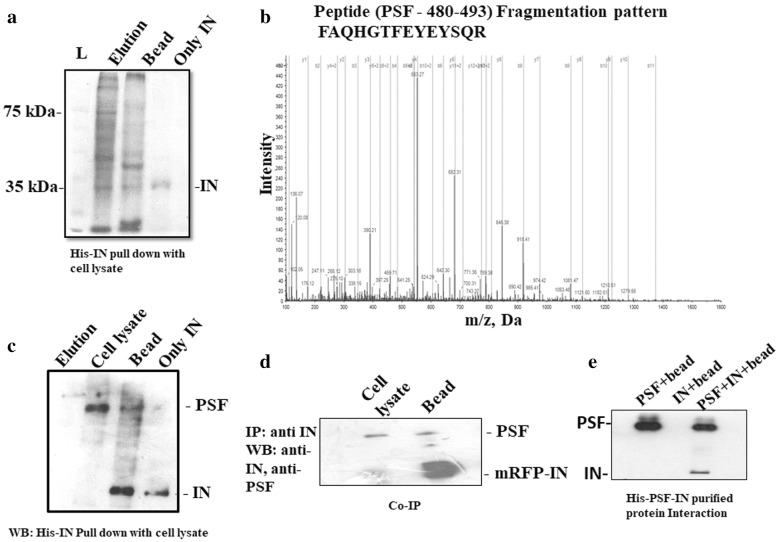
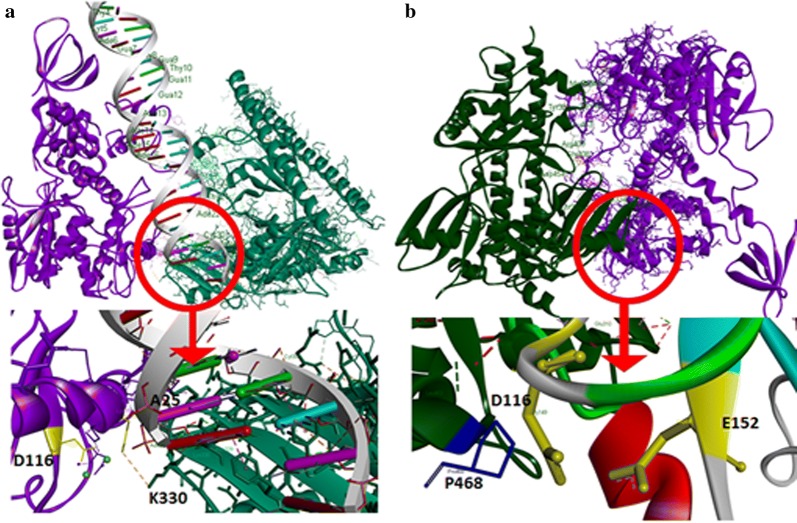
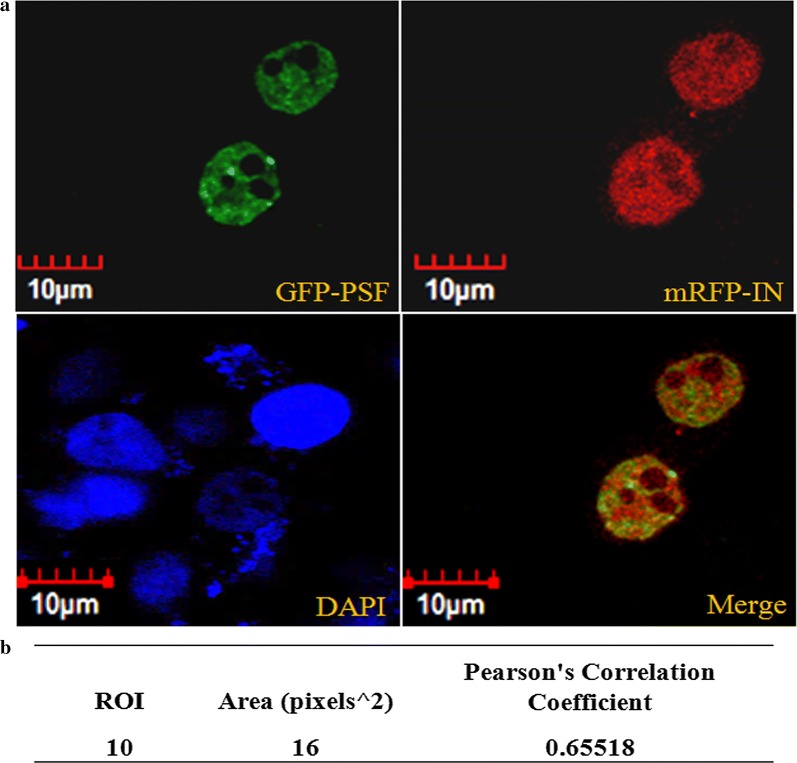
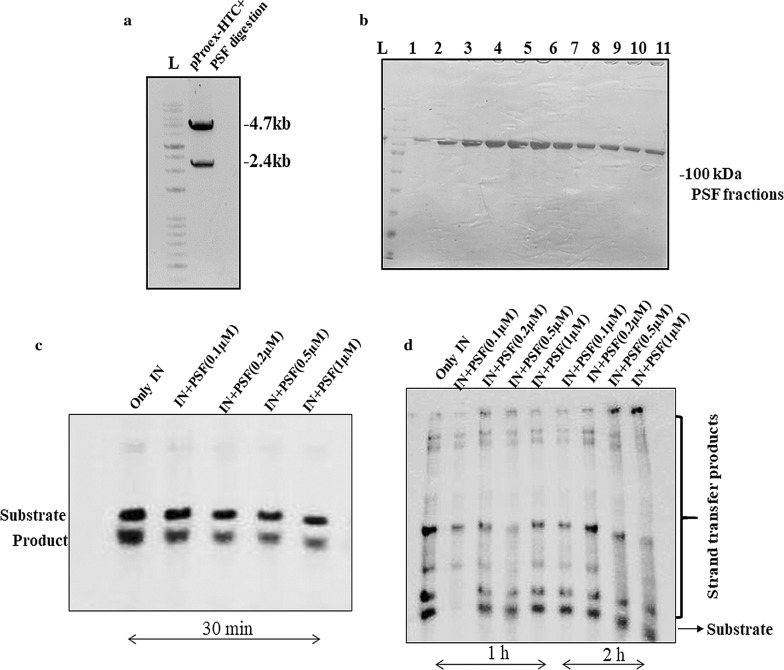
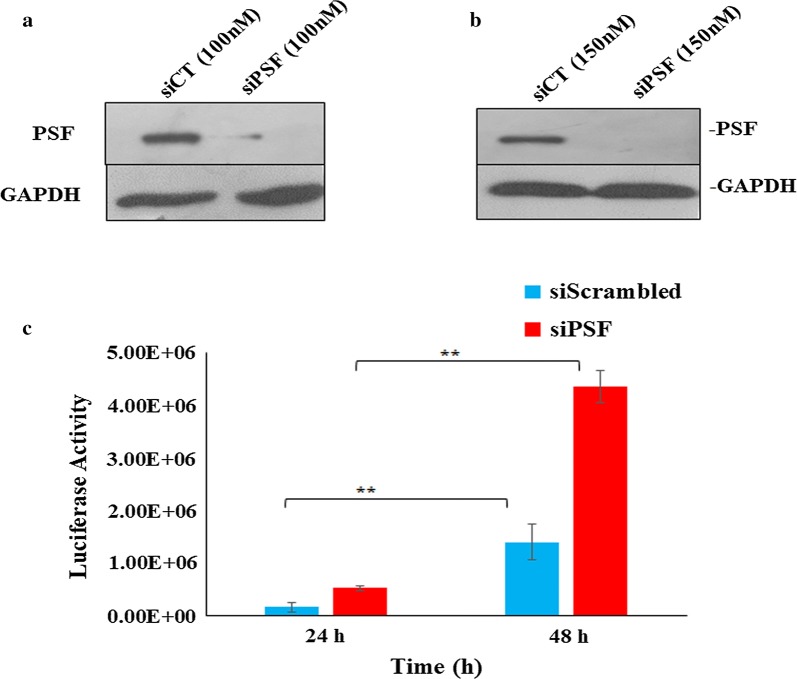
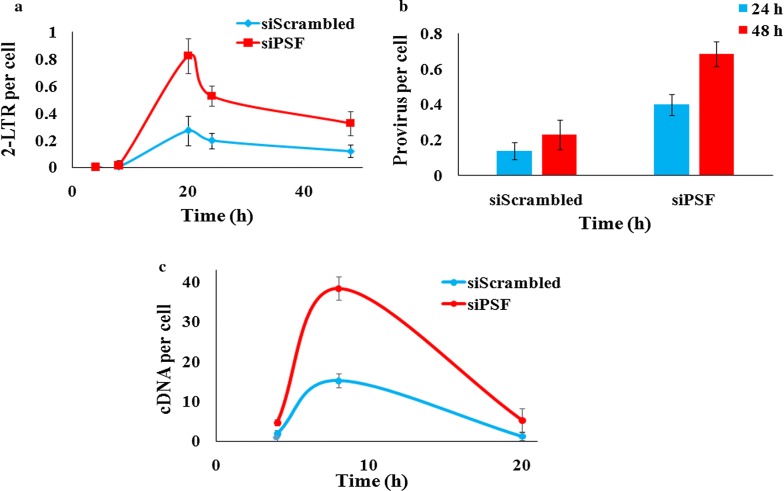
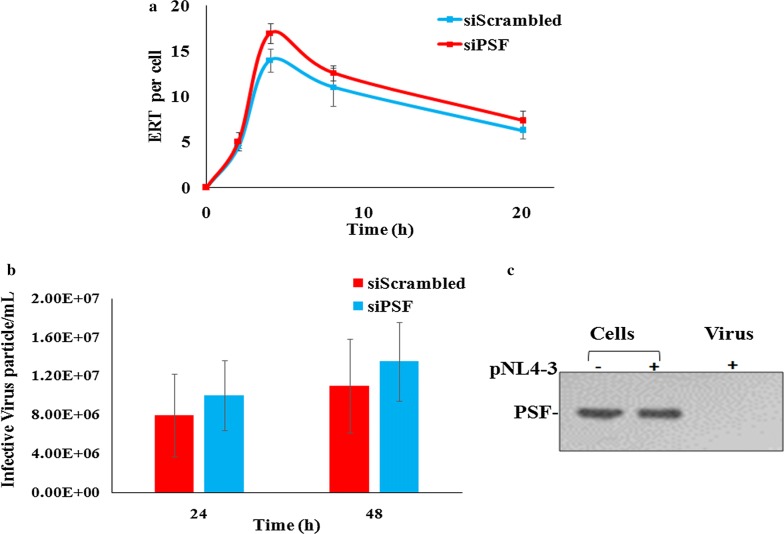
The protein binding study identified the association of host protein PSF with HIV-1 integrase. The siRNA knockdown (KD) of PSF resulted in increased viral replication in TZM-bl cells, suggesting PSF has negative influence on viral replication. The quantitative PCR of virus infected PSF knockdown TZM-bl cells showed more integrated DNA and viral cDNA as compared to control cells. We did not observe any significant difference between the amount of early reverse transcription products as well as infectivity of virus in the PSF KD and control TZM-bl cells. Molecular docking study supported the argument that PSF hinders the binding of viral DNA with IN.
In an attempt to study the host interacting protein of IN, we have identified a new interacting host protein PSF which is a splicing factor and elucidated its role in integration and viral replication. Experimental as well as in silico analysis inferred that the host protein causes not only change in the integration events but also targets the incoming viral DNA or the integrase-viral DNA complex. The role of PSF was also investigated at early reverse transcript production as well as late stages. The PSF is causing changes in integration events, but it does not over all make any changes in the virus infectivity. MD trajectory analyses provided a strong clue of destabilization of Integrase-viral DNA complex occurred due to PSF interaction with the conserved bases of viral DNA ends that are extremely crucial contact points with integrase and indispensable for integration. Thus our study emphasizes the negative influence of PSF on HIV-1 replication.
病毒蛋白与细胞宿主蛋白之间的不同相互作用是 HIV-1 有效复制所必需的。各种报告表明,宿主细胞蛋白是一种关键因素,它可以直接与 HIV-1 整合酶 (IN) 相互作用,或者参与病毒的整合过程,从而调节整合步骤。多嘧啶 tract 结合蛋白和相关剪接因子 (PSF) 在细胞内具有多种功能,如转录调节、DNA 修复、作为核酸结合蛋白,并调节不同病毒的复制和感染性。
蛋白质结合研究鉴定了宿主蛋白 PSF 与 HIV-1 整合酶的关联。PSF 的 siRNA 敲低 (KD) 导致 TZM-bl 细胞中的病毒复制增加,表明 PSF 对病毒复制有负面影响。与对照细胞相比,感染 PSF KD 的 TZM-bl 细胞的病毒定量 PCR 显示出更多的整合 DNA 和病毒 cDNA。我们没有观察到 PSF KD 和对照 TZM-bl 细胞之间早期逆转录产物的数量以及病毒感染性之间有任何显著差异。分子对接研究支持了 PSF 阻碍病毒 DNA 与 IN 结合的论点。
在试图研究 IN 的宿主相互作用蛋白时,我们已经鉴定出一种新的宿主相互作用蛋白 PSF,它是一种剪接因子,并阐明了它在整合和病毒复制中的作用。实验和计算分析推断,宿主蛋白不仅会改变整合事件,还会针对传入的病毒 DNA 或整合酶-病毒 DNA 复合物。还研究了 PSF 在早期逆转录产物以及晚期的作用。PSF 会改变整合事件,但不会改变病毒感染力。MD 轨迹分析提供了一个强有力的线索,即由于 PSF 与病毒 DNA 末端的保守碱基相互作用,导致整合酶-病毒 DNA 复合物不稳定,这些碱基是与整合酶极其关键的接触点,对整合是不可或缺的。因此,我们的研究强调了 PSF 对 HIV-1 复制的负面影响。