Department of Clinical Gerontology and Geriatric Rehabilitation, Robert-Bosch-Hospital, Auerbachstrasse 110, 70376, Stuttgart, Germany.
Agaplesion Bethanien Hospital, Heidelberg, Germany.
BMC Geriatr. 2019 Apr 30;19(1):125. doi: 10.1186/s12877-019-1133-z.
A hip or pelvic fracture is a major fall-related injury which often causes a decline in mobility performance and physical activity. Over 40% of patients with hip fracture have cognitive impairment or dementia and poorer rehabilitation outcomes than those without cognitive impairment. In this subgroup, there is a lack of evidence on the best practices supporting recovery. The main aim of this study is to investigate the effects of a transitional care intervention after inpatient rehabilitation on physical activity and functional performance in this group of cognitively impaired patients.
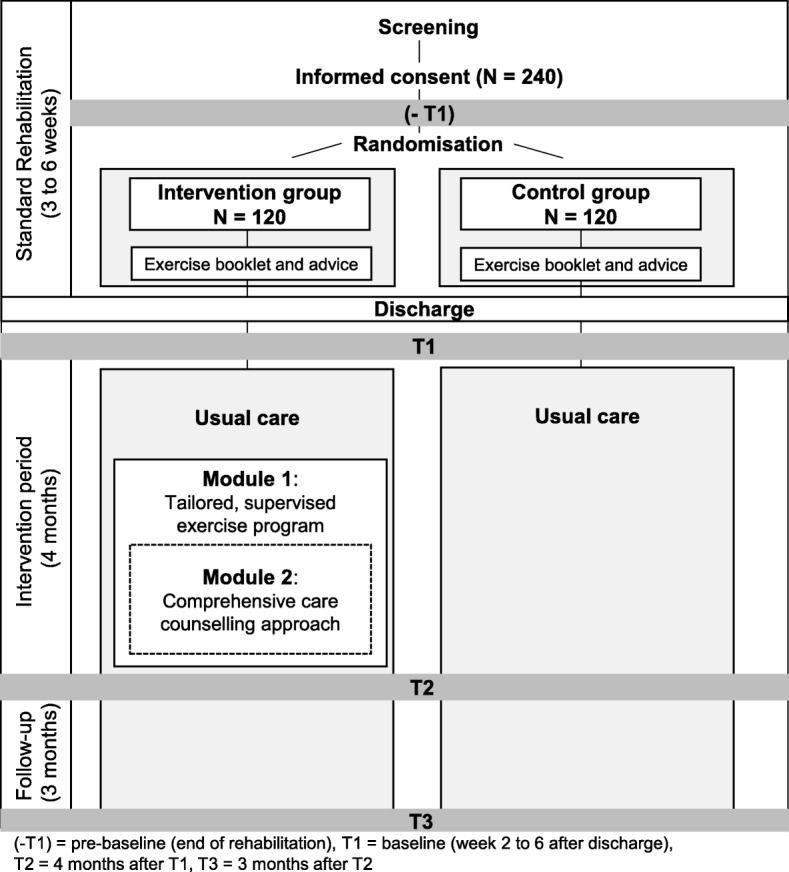
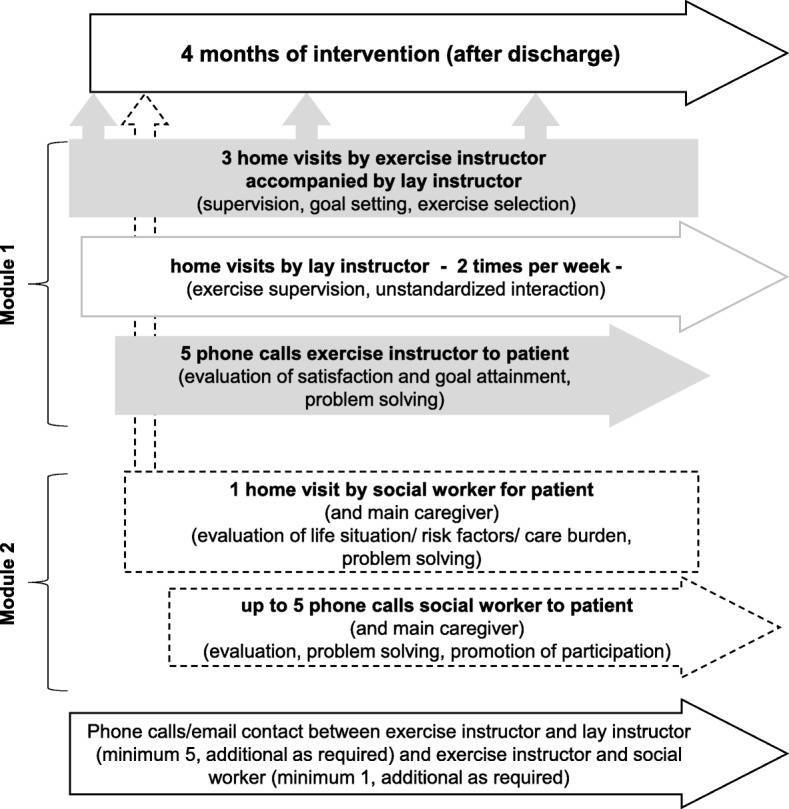
METHODS/DESIGN: This dual-centre, randomised controlled trial compares a multifactorial intervention with usual care as control condition. Two hundred and forty community-dwellers (≥ 65 years) with a hip or pelvic fracture and mild to moderate cognitive impairment (MMSE 17-26) are recruited at the end of inpatient rehabilitation. The four-month intervention consists of (a) an individually tailored, progressive home exercise program and physical activity promotion delivered by professional instructors and lay instructors (two home visits per week) and (b) a long-term care counselling approach addressing unmet care needs, pleasurable activities, and caregiver issues if needed. Primary outcome parameters are physical activity, measured as daily walking duration with an accelerometer-based activity monitor (activPAL™) over 72 h, and functional performance, assessed with Short Physical Performance Battery sum scores. Secondary outcome parameters are fear of falling, fall related self-efficacy, falls, quality of life, depression and activity of daily living. Data are collected at the end of rehabilitation, before the intervention at the patient's home (baseline), after four months (post-intervention), and seven months (follow-up). In addition to completer and intent-to-treat analyses of outcomes, economic data and incremental cost-effectiveness are analysed.
Existing service models of volunteer services and legal counselling provided by care counsellors were considered when developing the intervention protocol. Therefore, it should be feasible to translate and deliver the intervention into real-world practice if it has been demonstrated to be effective.
German Clinical Trials Register, DRKS00008863 (Accessed 17 Apr 2019), ISRCTN registry, ISRCTN69957256 (Accessed 17 Apr 2019).
髋部或骨盆骨折是一种与跌倒相关的重大损伤,常导致活动能力下降和身体活动减少。超过 40%的髋部骨折患者存在认知障碍或痴呆,康复效果不如无认知障碍的患者。在这个亚组中,缺乏支持康复的最佳实践证据。本研究的主要目的是调查住院康复后过渡性护理干预对这组认知障碍患者身体活动和功能表现的影响。
方法/设计:这是一项双中心、随机对照试验,将多因素干预与常规护理作为对照条件进行比较。在住院康复结束时,招募了 240 名居住在社区的(≥ 65 岁)髋部或骨盆骨折且有轻度至中度认知障碍(MMSE 17-26)的患者。为期四个月的干预包括:(a)由专业指导员和指导员(每周两次家访)提供个性化的渐进式家庭锻炼计划和身体活动促进;(b)长期护理咨询,解决未满足的护理需求、愉快活动以及必要时的照顾者问题。主要结局参数是身体活动,用基于加速度计的活动监测器(activPAL™)测量 72 小时内的日常步行时间;以及功能表现,用简短身体表现电池总分评估。次要结局参数是跌倒恐惧、跌倒相关自我效能感、跌倒、生活质量、抑郁和日常生活活动。在康复结束时、干预前在家中(基线)、四个月后(干预后)和七个月后(随访)收集数据。除了对结局进行完整病例分析和意向性治疗分析外,还分析了经济数据和增量成本效益。
在制定干预方案时,考虑了志愿者服务和法律咨询的现有服务模式。因此,如果证明该干预措施有效,那么将其转化为现实实践应该是可行的。
德国临床试验注册处,DRKS00008863(2019 年 4 月 17 日访问),ISRCTN 注册处,ISRCTN69957256(2019 年 4 月 17 日访问)。