Department of Anesthesiology, International Peace Maternity and Child Health Hospital, Shanghai Jiao Tong University School of Medicine, Shanghai, China (mainland).
Department of Anesthesiology and Surgical Intensive Care Unit, Xinhua Hospital, Shanghai Jiao Tong University School of Medicine, Shanghai, China (mainland).
Med Sci Monit. 2019 May 1;25:3199-3211. doi: 10.12659/MSM.915417.
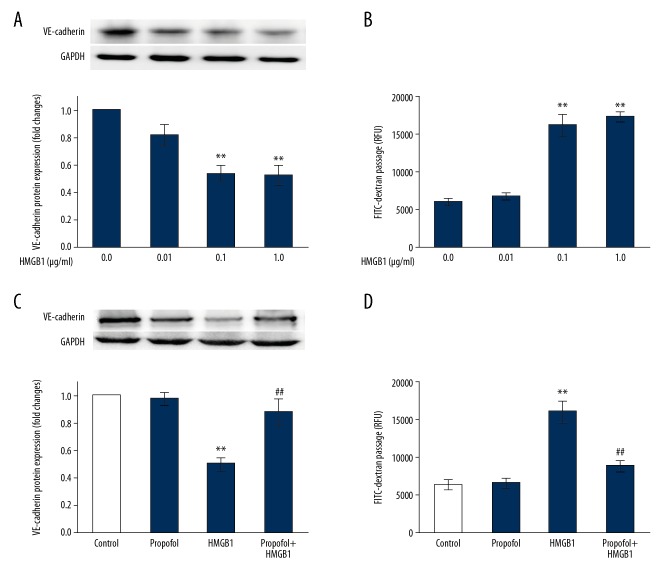
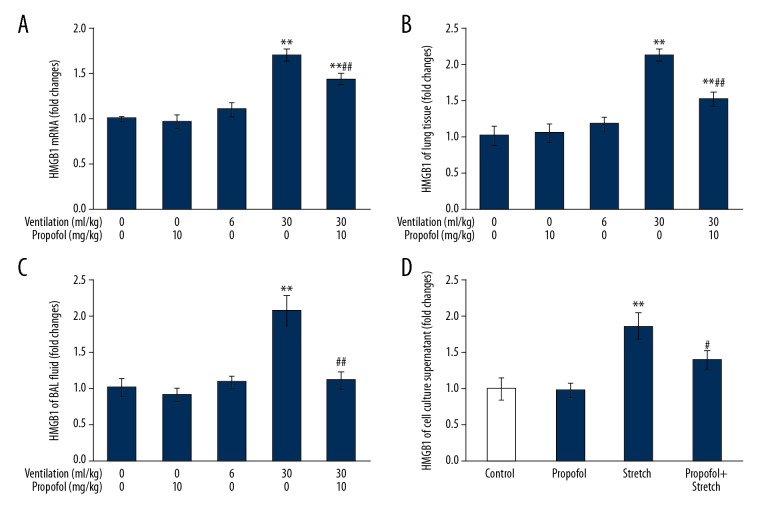
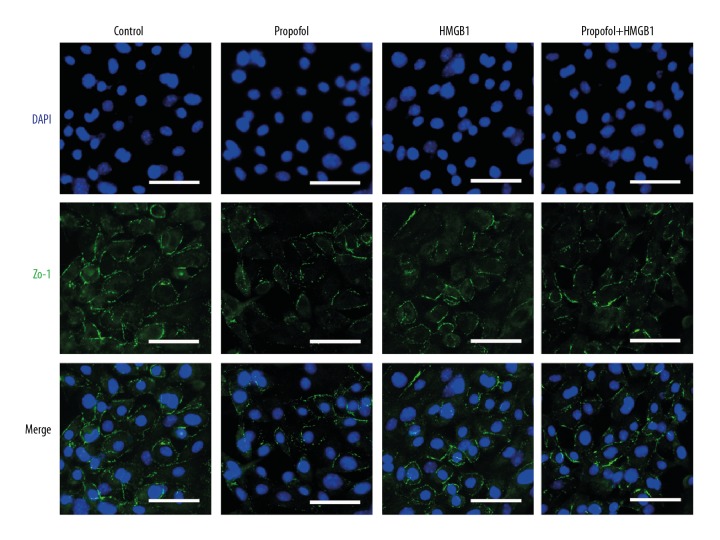
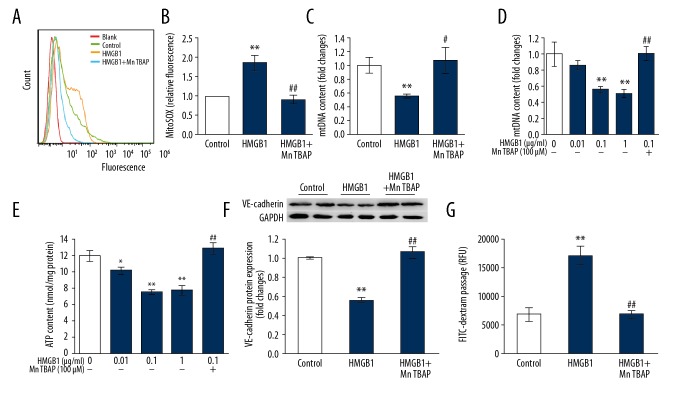
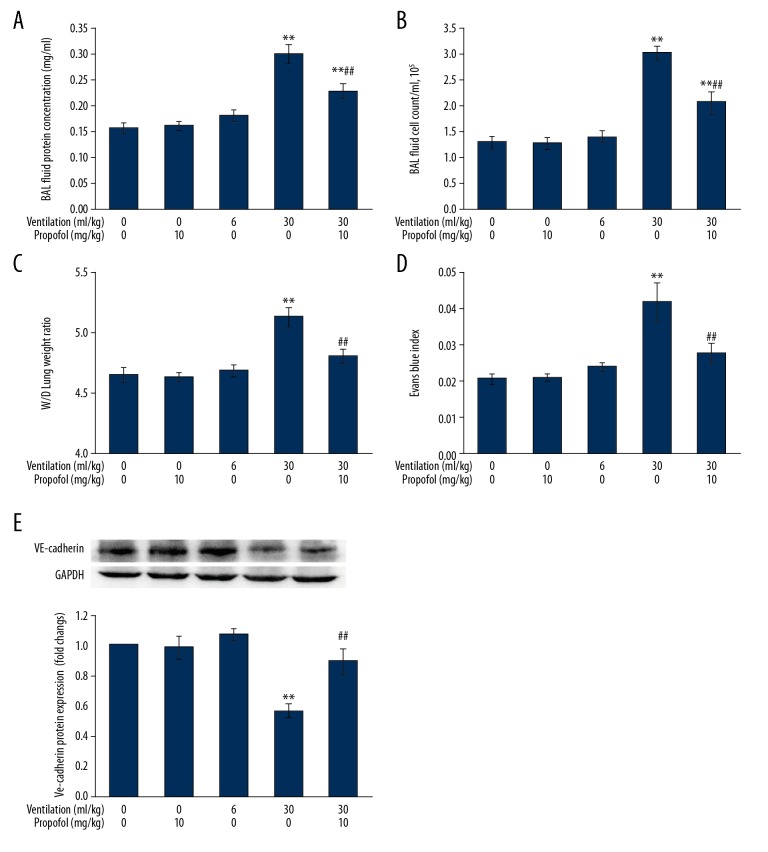
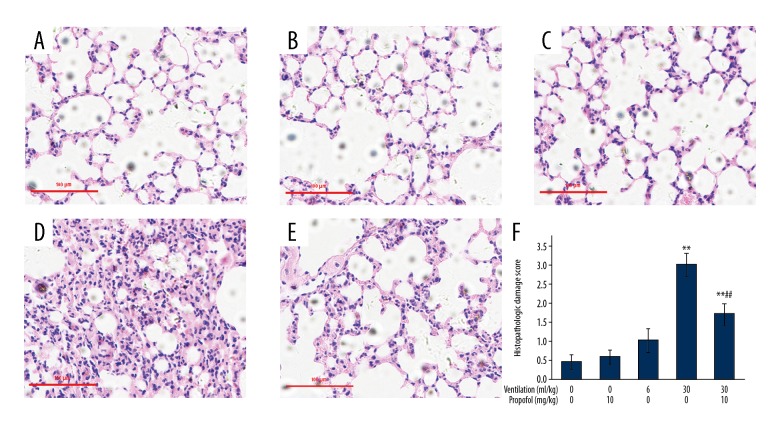
BACKGROUND The processes of mechanical ventilation-induced lung injury (VILI) triggers the release of high-mobility group box 1 (HMGB1), a prominent damage-associated molecular pattern (DAMP) family member, which can cause damage to pulmonary vascular endothelial cells. We aimed to determine whether propofol protected against endothelial cell injury induced by HMGB1 in vitro and in vivo. MATERIAL AND METHODS ICR mice (male) were mechanically ventilated for 4 h after anesthetization at both low tidal volume (LVT, 6 ml/kg) and high tidal volume (HVT, 30 ml/kg). A propofol bolus (10 mg/kg) was administered to the animals prior to the onset of ventilation, followed by infusion at 5 mg/(kg·h). We obtained confluent cultures of mouse lung vascular endothelial cells (MLVECs) and then performed cyclic stretching at 20% stretch for 4 h with or without propofol. RESULTS HMGB1 reduced the expression of tight junctions between endothelial cells, including VE-cadherin and ZO-1, and increased endothelial permeability, and both were blocked by propofol. We found that MLVECs exhibited mitochondrial oxidative damage by HMGB1, which was successfully suppressed through administration of MnTBAP as well as propofol. Propofol ameliorated HVT-associated lung vascular hyperpermeability and HMGB1 production in vivo. Propofol also inhibited HMBG1 release caused by cyclic stretching in MLVECs in vitro. CONCLUSIONS Our results prove that the cyto-protective function of propofol protects against lung ventilation-induced dysfunction of the lung endothelial barrier. This function of propofol is mediated through inhibition of HMGB1 release caused by mechanical stretching and mitochondrial oxidative damage triggered by HMGB1.
机械通气引起的肺损伤(VILI)的过程会触发高迁移率族蛋白 B1(HMGB1)的释放,HMGB1 是一种重要的损伤相关分子模式(DAMP)家族成员,可导致肺血管内皮细胞损伤。我们旨在确定异丙酚是否可以防止 HMGB1 体外和体内诱导的内皮细胞损伤。
ICR 小鼠(雄性)在麻醉后分别进行低潮气量(LVT,6ml/kg)和大潮气量(HVT,30ml/kg)机械通气 4 小时。在通气开始前,给动物注射异丙酚(10mg/kg),然后以 5mg/(kg·h)的速度输注。我们获得了培养的小鼠肺血管内皮细胞(MLVECs),然后在有或没有异丙酚的情况下进行 4 小时 20%拉伸的循环拉伸。
HMGB1 降低了内皮细胞之间的紧密连接表达,包括 VE-钙粘蛋白和 ZO-1,并增加了内皮通透性,这些都被异丙酚阻断。我们发现 HMGB1 导致 MLVECs 线粒体氧化损伤,MnTBAP 和异丙酚均可抑制这种损伤。异丙酚改善了体内 HVT 相关的肺血管高通透性和 HMGB1 产生。异丙酚还抑制了 MLVECs 中由循环拉伸引起的 HMGB1 释放。
我们的研究结果证明了异丙酚的细胞保护功能可以防止肺通气引起的肺内皮屏障功能障碍。异丙酚的这种功能是通过抑制机械拉伸引起的 HMGB1 释放和 HMGB1 触发的线粒体氧化损伤来介导的。