Joelsson Jon Petur, Ingthorsson Saevar, Kricker Jennifer, Gudjonsson Thorarinn, Karason Sigurbergur
Stem Cell Research Unit, BioMedical Center, School of Health Sciences, University of Iceland, Reykjavik, Iceland.
Department of Laboratory Hematology, Landspitali-University Hospital, Reykjavik, Iceland.
Lab Anim Res. 2021 Oct 29;37(1):30. doi: 10.1186/s42826-021-00108-x.
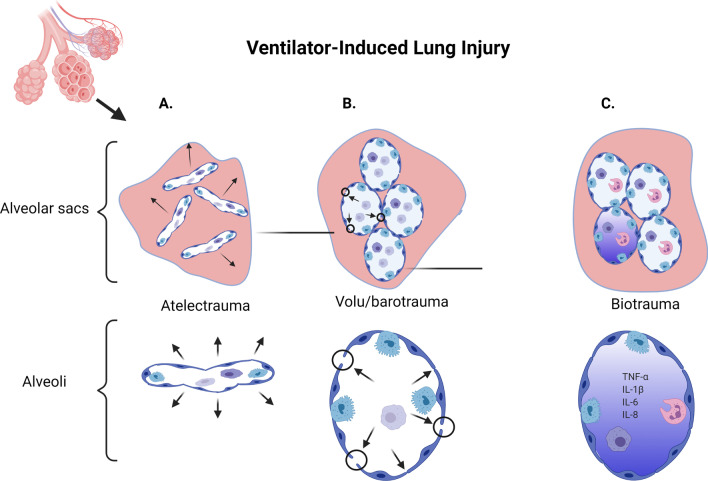
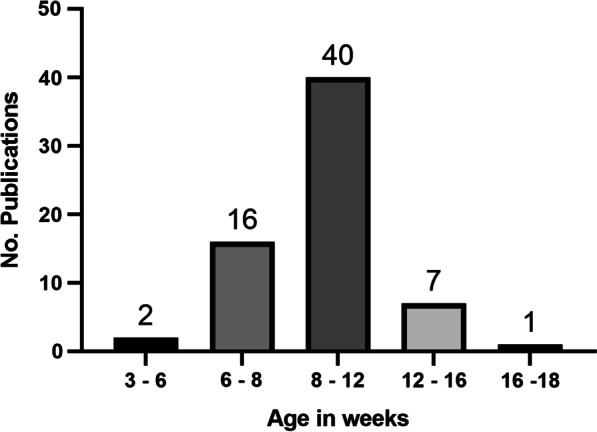
Ventilator-induced lung injury (VILI) is a serious acute injury to the lung tissue that can develop during mechanical ventilation of patients. Due to the mechanical strain of ventilation, damage can occur in the bronchiolar and alveolar epithelium resulting in a cascade of events that may be fatal to the patients. Patients requiring mechanical ventilation are often critically ill, which limits the possibility of obtaining patient samples, making VILI research challenging. In vitro models are very important for VILI research, but the complexity of the cellular interactions in multi-organ animals, necessitates in vivo studies where the mouse model is a common choice. However, the settings and duration of ventilation used to create VILI in mice vary greatly, causing uncertainty in interpretation and comparison of results. This review examines approaches to induce VILI in mouse models for the last 10 years, to our best knowledge, summarizing methods and key parameters presented across the studies. The results imply that a more standardized approach is warranted.
呼吸机相关性肺损伤(VILI)是一种在患者机械通气期间可能发生的对肺组织的严重急性损伤。由于通气的机械性牵张,细支气管和肺泡上皮会发生损伤,从而引发一系列可能对患者致命的事件。需要机械通气的患者通常病情危急,这限制了获取患者样本的可能性,使得VILI研究颇具挑战性。体外模型对VILI研究非常重要,但多器官动物中细胞相互作用的复杂性使得有必要进行体内研究,其中小鼠模型是常用的选择。然而,用于在小鼠中制造VILI的通气设置和持续时间差异很大,导致结果的解释和比较存在不确定性。本综述探讨了过去10年中在小鼠模型中诱导VILI的方法,据我们所知,总结了各项研究中提出的方法和关键参数。结果表明需要一种更标准化的方法。