Nordin Muhammad Luqman, Othman Abdul Aziz, Kadir Arifah Abdul, Shaari Rumaizi, Osman Abdinasir Yusuf, Mohamed Maizan
Department of Clinical, Faculty of Veterinary Medicine, Universiti Malaysia Kelantan, Pengkalan Chepa, 16100 Kota Bharu, Kelantan, Malaysia.
Department of Veterinary Preclinical Sciences, Faculty of Veterinary Medicine, Universiti Putra Malaysia, 43400 Serdang, Selangor, Malaysia.
Vet World. 2019;12(2):236-242. doi: 10.14202/vetworld.2019.236-242. Epub 2019 Feb 12.
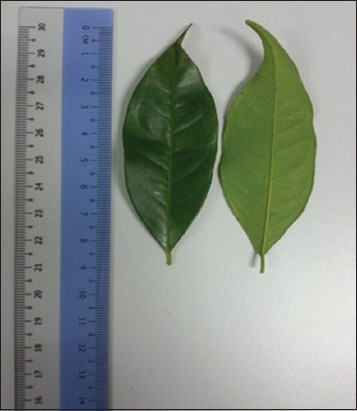
The increasing prevalence of drug resistance eventually leads scientist to discover new drugs that could solve the problem. Since ancient immemorial times, medicinal plants generally known as herbs were widely used in every culture throughout the world. In fact, currently up to 70,000 plant species have been screened for biological activities and about 70% ends up for commercialization. Therefore, this study was aimed to evaluate the potential cytotoxic and antibacterial effect of leaves which are local Malaysia plants, against 4T1 and MCF-7 mammary carcinoma cells, respectively, and also against bacteria causing mastitis in cows.
The cytotoxic effect of hydromethanolic extract of against 4T1 and MCF-7 mammary carcinoma cells was evaluated using 3-(4, 5-dimethylthiazol-2-yl)-2,5-diphenyltetrazolium bromide) assay. The cells were treated with the concentration of extracts ranging from 15.63 µg/mL to 1000 µg/ml for 72 h, and the percentage of cell survivability was determined based on minimum concentration that was able to allow at least 50% growth of cancer cells (IC) after 72 h. The antibacterial activity was tested against common bacteria causing mastitis in cow. The bacteria were isolated from milk samples. The antibacterial activity of the extract was determined by disk diffusion method and susceptibility test based on minimum inhibitory concentration (MIC).
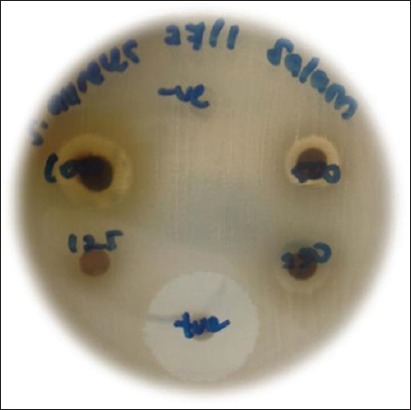
, , and were isolated from the milk samples that positive for mastitis. The MIC values range from 7.12 mm to 13.5 mm. The extract exhibits the widest zone of inhibition (13.5±0.20 mm) at 1000 mg/ml of concentrations. The extract relatively has low cytotoxicity effect against 4T1 and MCF-7 cells with IC values ranging from 672.57±59.42 and 126.05±50.89 µg/ml, respectively.
exerts weak antibacterial activity and cytotoxic effect to mammary carcinoma cells. The extract does not toxic to cells. However, further study is recommended, especially, this plant should be tested for .
耐药性的日益普遍最终促使科学家去发现能够解决这一问题的新药。自古以来,通常被称为草药的药用植物在世界各地的每种文化中都被广泛使用。事实上,目前已对多达70000种植物进行了生物活性筛选,其中约70%最终实现了商业化。因此,本研究旨在评估马来西亚本土植物的叶子分别对4T1和MCF - 7乳腺癌细胞以及引起奶牛乳腺炎的细菌的潜在细胞毒性和抗菌作用。
使用3 -(4,5 - 二甲基噻唑 - 2 - 基)- 2,5 - 二苯基四氮唑溴盐(MTT)法评估[植物名称未给出]水甲醇提取物对4T1和MCF - 7乳腺癌细胞的细胞毒性作用。将细胞用浓度范围为15.63μg/mL至1000μg/mL的提取物处理72小时,并根据72小时后能够使癌细胞至少生长50%的最低浓度(IC)来确定细胞存活率百分比。针对引起奶牛乳腺炎的常见细菌测试抗菌活性。这些细菌从牛奶样本中分离得到。通过纸片扩散法和基于最低抑菌浓度(MIC)的药敏试验来确定提取物的抗菌活性。
从乳腺炎呈阳性的牛奶样本中分离出了[细菌名称未给出]、[细菌名称未给出]和[细菌名称未给出]。MIC值范围为7.12mm至13.5mm。提取物在浓度为1000mg/mL时表现出最宽的抑菌圈(13.5±0.20mm)。该提取物对4T1和MCF - 7细胞的细胞毒性相对较低,IC值分别为672.57±59.42和126.05±50.89μg/mL。
[植物名称未给出]对乳腺癌细胞具有较弱的抗菌活性和细胞毒性作用。该提取物对细胞无毒。然而,建议进一步研究,特别是应对这种植物进行[具体研究方向未给出]测试。