Zhang Cuiling, Ren Weigang, Liu Qingxin, Tan Zhikai, Li Junwei, Tong Chunyi
College of Veterinary Medicine, Qingdao Agricultural University, Qingdao 266109, People's Republic of China,
Jiangsu Vocational College of Agriculture and Forestry, Jurong 212400, People's Republic of China.
Drug Des Devel Ther. 2019 Apr 4;13:1059-1068. doi: 10.2147/DDDT.S195481. eCollection 2019.
In this study, we report on the development of an effective delivery system for siRNAs; a novel cell-penetrating peptide (CPP), T9(dR), obtained from transportan (TP), was used for in vivo and in vitro testing.
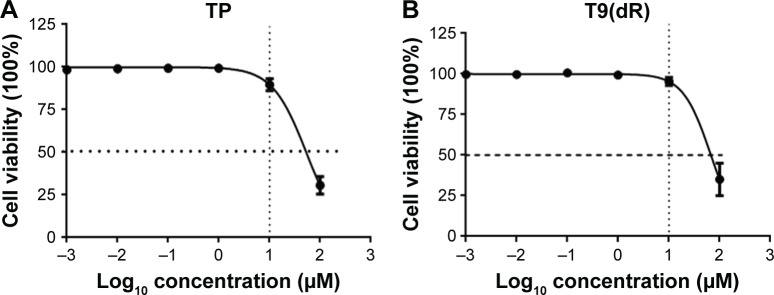
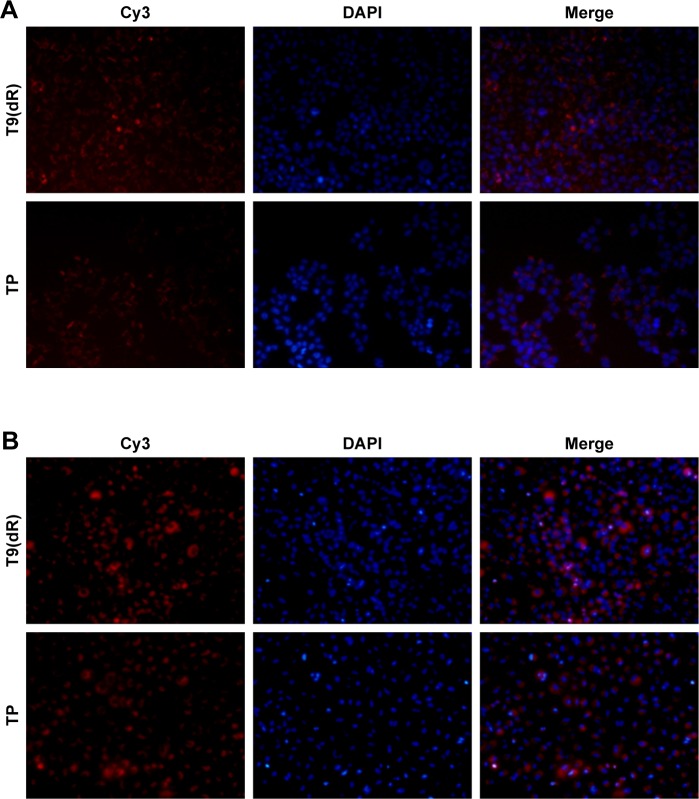
In this study, toxicity of T9(dR) and TP and efficient delivery of siRNA were tested in 293T, MDCK, RAW, and A549 cells. Furthermore, T9(dR)- and TP-delivered siRNAs against nucleoprotein (NP) gene segment of influenza virus (siNP) were studied in both cell lines and mice.
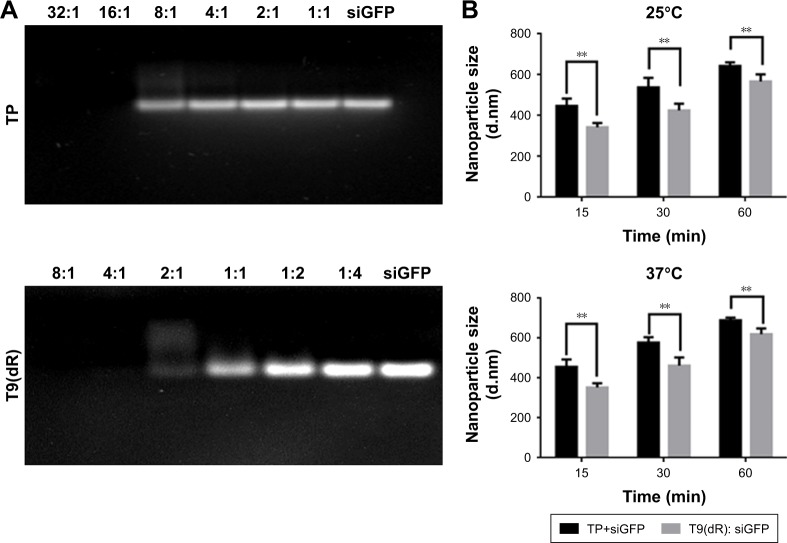
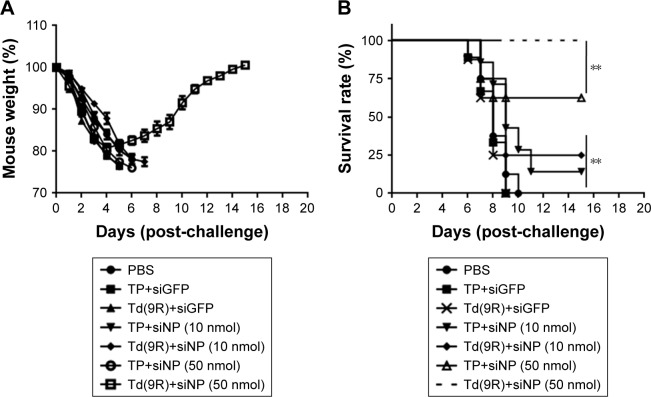
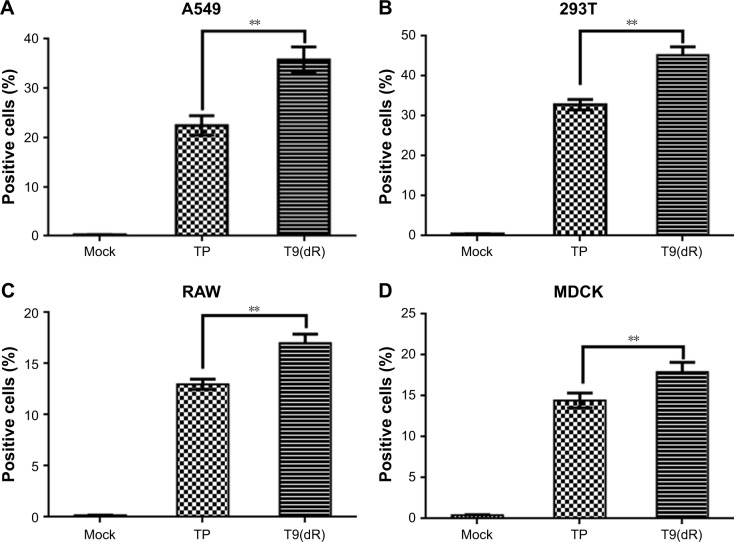
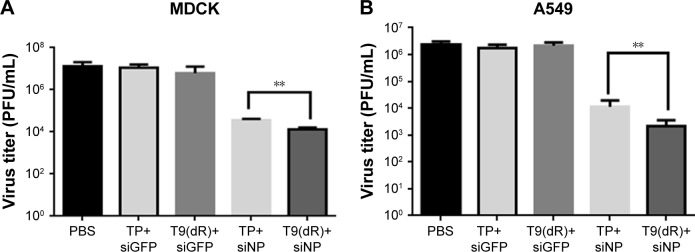
Gel retardation showed that T9(dR) effectively condensed siRNA into nanoparticles sized between 350 and 550 nm when the mole ratio of T9(dR) to siRNA was ≥4:1. In vitro studies demonstrated that T9(dR) successfully delivered siRNA with low cellular toxicity into several cell lines. It was also observed that T9(dR)-delivered siRNAs inhibited replication of influenza virus more efficiently as compared to that delivered by TP into the MDCK and A549 cells. It was also noticed that when given a combined tail vein injection of siNP and T9(dR) or TP, all mice in the 50 nmol siNP group infected with PR8 influenza virus survived and showed weight recovery at 2 weeks post-infection.
This study indicates that T9(dR) is a promising siRNA delivery tool with potential application for nucleotide drug delivery.
在本研究中,我们报告了一种针对小干扰RNA(siRNA)的有效递送系统的开发情况;一种从转运蛋白(TP)衍生而来的新型细胞穿透肽(CPP),即T9(dR),用于体内和体外测试。
在本研究中,对T9(dR)和TP的毒性以及siRNA的有效递送在293T、MDCK、RAW和A549细胞中进行了测试。此外,在细胞系和小鼠中研究了T9(dR)和TP递送的针对流感病毒核蛋白(NP)基因片段的siRNA(siNP)。
凝胶阻滞实验表明,当T9(dR)与siRNA的摩尔比≥4:1时,T9(dR)能有效地将siRNA浓缩成大小在350至550纳米之间的纳米颗粒。体外研究表明,T9(dR)成功地将具有低细胞毒性的siRNA递送至多种细胞系。还观察到,与TP递送的相比,T9(dR)递送的siRNA在MDCK和A549细胞中更有效地抑制流感病毒的复制。还注意到,当联合尾静脉注射siNP和T9(dR)或TP时,感染PR8流感病毒的50 nmol siNP组中的所有小鼠均存活,且在感染后2周体重恢复。
本研究表明,T9(dR)是一种有前景的siRNA递送工具,在核苷酸药物递送方面具有潜在应用价值。