Baily Malorie P, Avila Felipe, Das Pranab J, Kutzler Michelle A, Raudsepp Terje
School of Veterinary Medicine, University of California, Davis, Davis, CA, United States.
ICAR-National Research Centre on Pig, Assam, India.
Front Genet. 2019 Apr 16;10:344. doi: 10.3389/fgene.2019.00344. eCollection 2019.
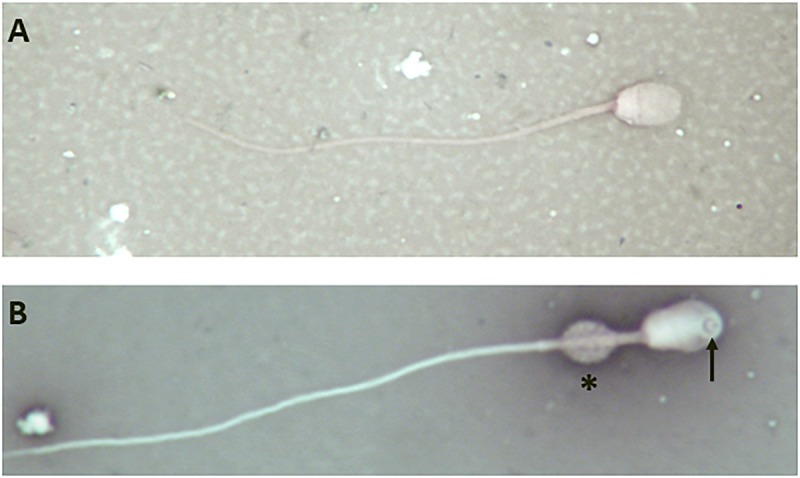
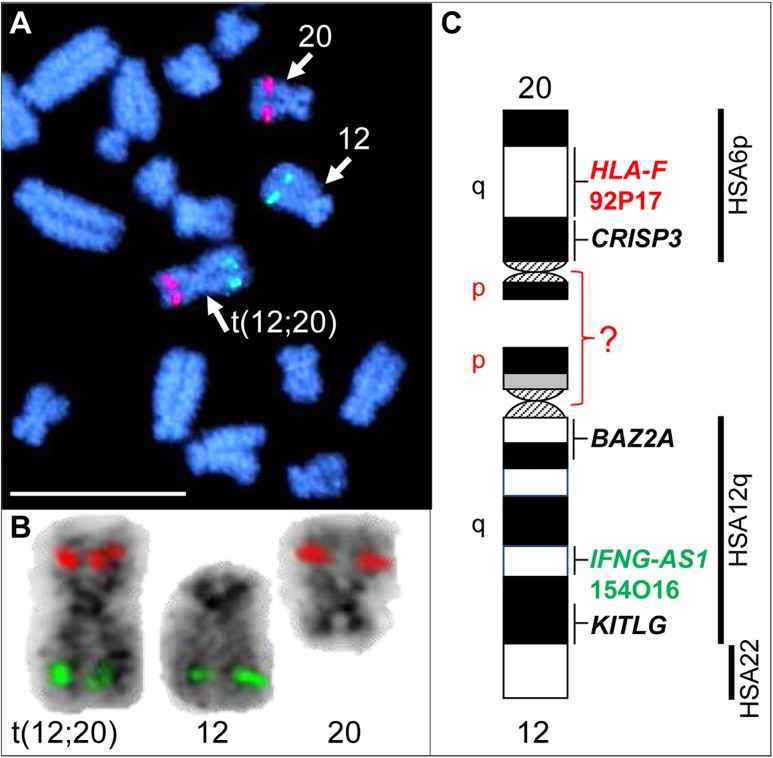
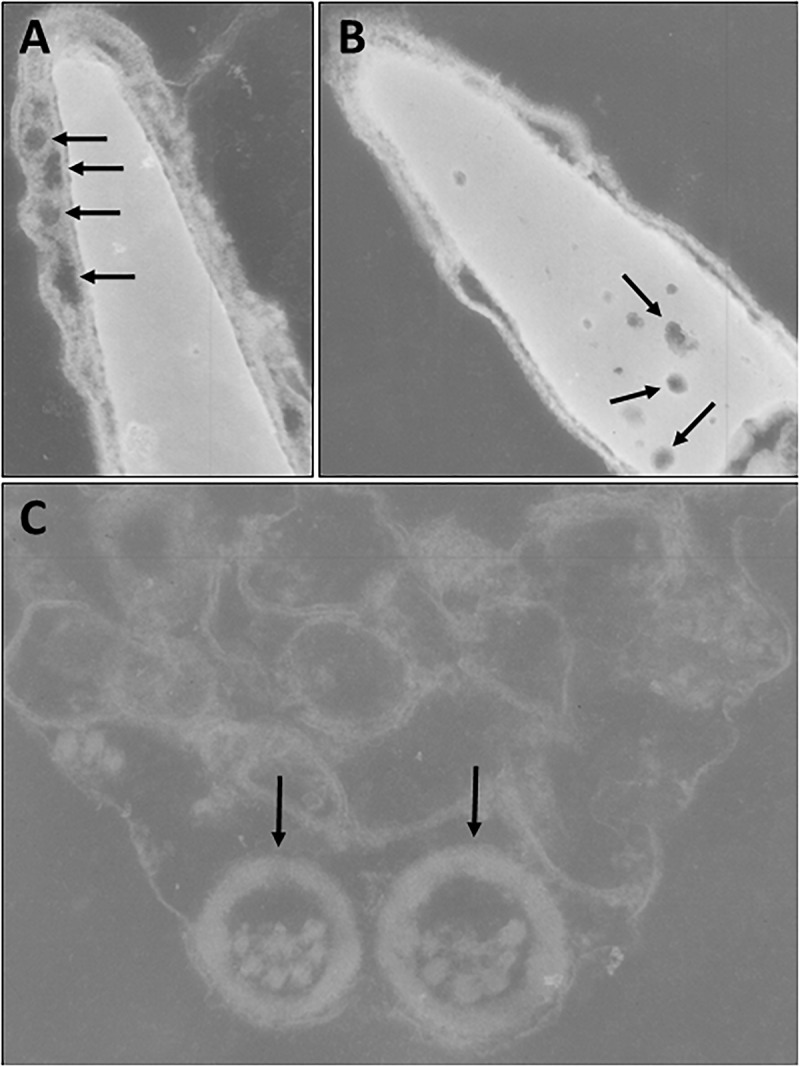
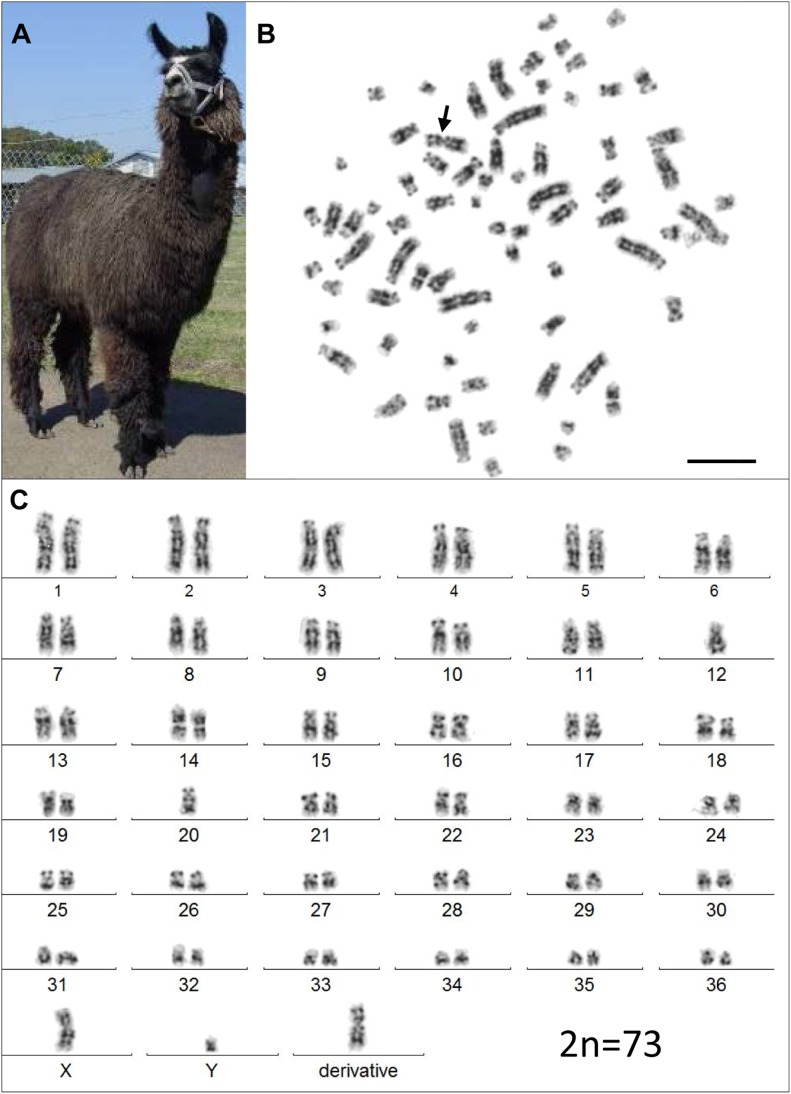
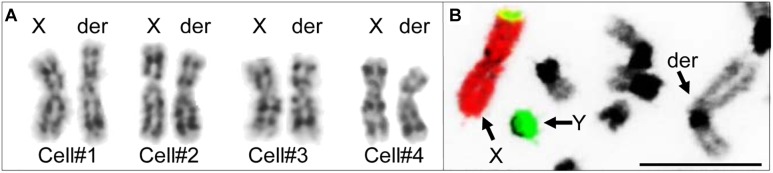
Structural chromosome abnormalities, such as translocations and inversions occasionally occur in all livestock species and are typically associated with reproductive and developmental disorders. Curiously, only a few structural chromosome aberrations have been reported in camelids, and most involved sex chromosomes. This can be attributed to a high diploid number (2n = 74) and complex chromosome morphology, which makes unambiguous identification of camelid chromosomes difficult. Additionally, molecular tools for camelid cytogenetics are sparse and have become available only recently. Here we present a case report about an infertile male llama with teratozoospermia and abnormal chromosome number 2n = 73,XY. This llama carries an autosomal translocation of chromosomes 12 and 20, which is the likely cause of defective spermatogenesis and infertility in this individual. Our analysis underlines the power of molecular cytogenetics methods over conventional banding-based chromosome analysis for explicit identification of normal and aberrant chromosomes in camelid karyotypes. This is the first case of a translocation and the first autosomal aberration reported in any camelid species. It is proof of principle that, like in other mammalian species, structural chromosome abnormalities contribute to reproductive disorders in camelids.
结构染色体异常,如易位和倒位,偶尔会出现在所有家畜物种中,通常与生殖和发育障碍有关。奇怪的是,骆驼科动物中仅报道了少数结构染色体畸变,且大多数涉及性染色体。这可能归因于其二倍体数目高(2n = 74)和复杂的染色体形态,这使得明确鉴定骆驼科动物染色体变得困难。此外,骆驼科细胞遗传学的分子工具稀少,且直到最近才可用。在此,我们报告一例患有畸形精子症且染色体数目异常为2n = 73,XY的不育雄性美洲驼病例。这只美洲驼携带12号和20号染色体的常染色体易位,这可能是该个体精子发生缺陷和不育的原因。我们的分析强调了分子细胞遗传学方法相对于传统基于显带的染色体分析在明确鉴定骆驼科核型中正常和异常染色体方面的优势。这是在任何骆驼科物种中报道的首例易位和首例常染色体畸变。这证明了与其他哺乳动物物种一样,结构染色体异常会导致骆驼科动物的生殖障碍这一原理。