Anesthesiology Department, Union Hospital, Tongji Medical College, Huazhong University of Science and Technology, Wuhan 430022, People's Republic of China,
Haematology Department, Union Hospital, Tongji Medical College, Huazhong University of Science and Technology, Wuhan 430022, People's Republic of China.
Int J Nanomedicine. 2019 Apr 11;14:2609-2618. doi: 10.2147/IJN.S199695. eCollection 2019.
EGFP-EGF1-conjugated poly(lactic-co-glycolic acid) (PLGA) nanoparticle (ENP) has a specific affinity to tissue factor (TF). The aim of this study was to investigate the target delivery of ENP to plaques and its uptake in a mouse model of atherosclerosis in vivo and in vitro.
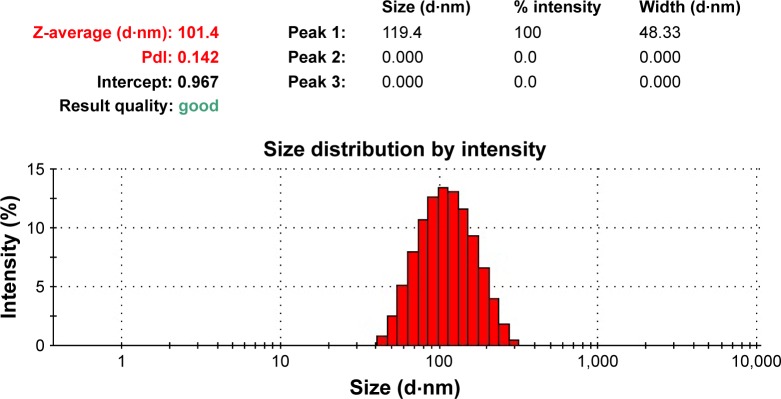
Coumarin-6- and 1,1'-dioctadecyl-3,3,3',3'-tetramethylindotricarbo cyanine iodide (DiR)-loaded ENPs were synthesized using a double-emulsion method. Mouse vascular smooth muscle cells (VSMCs) were induced with MCP-1 to obtain an increased TF expression. Fluorescence microscopy and flow cytometry assay were performed to examine the uptake of coumarin-6-loaded ENPs in cellular models. An animal model of atherosclerosis was established with an ApoE (-/-) mouse fed with continuous high-fat diets for 14 weeks. DiR-loaded ENPs (DiR-ENPs) were injected via the caudal vein. The distribution of DiR-ENPs was examined through organ imaging and confocal laser scanning microscopy.
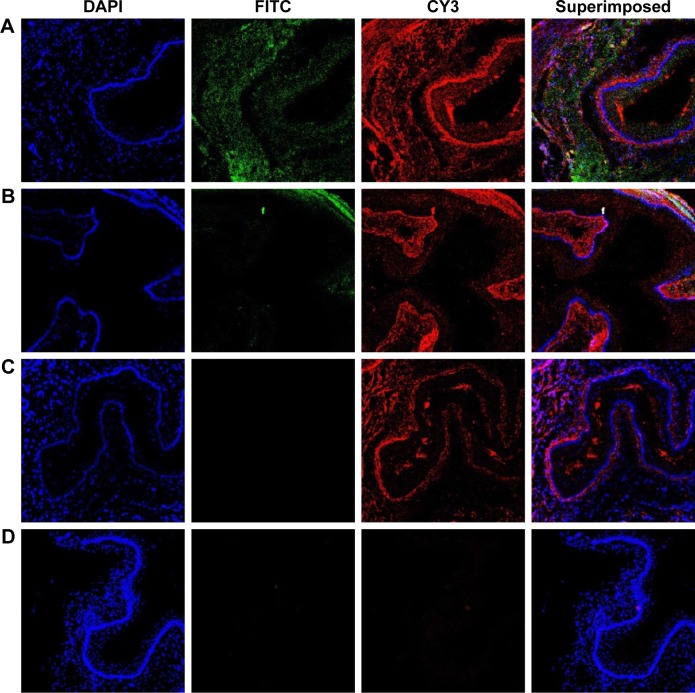
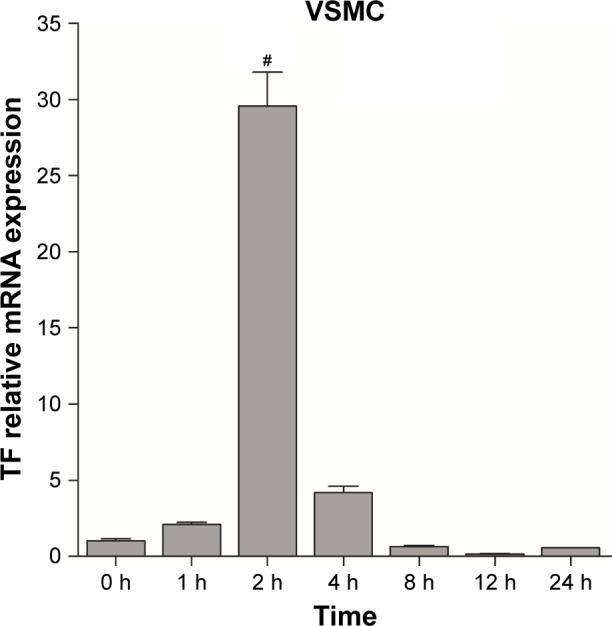
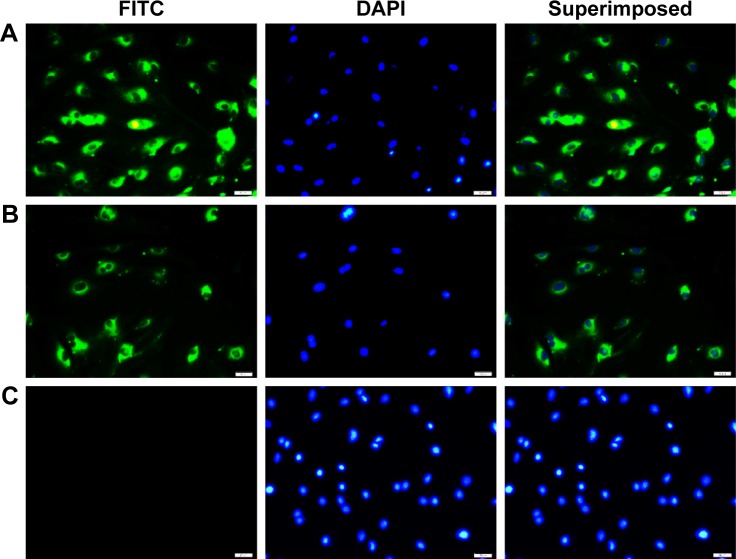
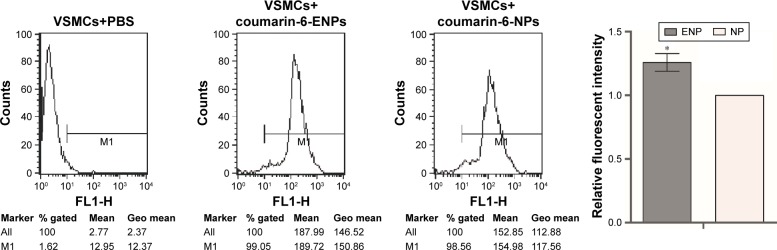
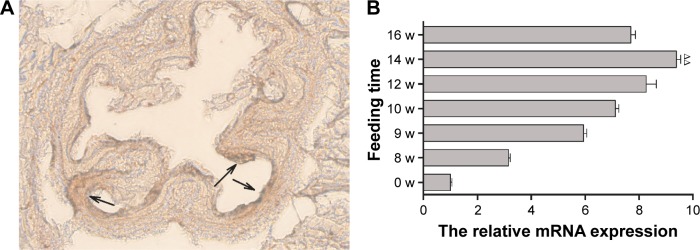
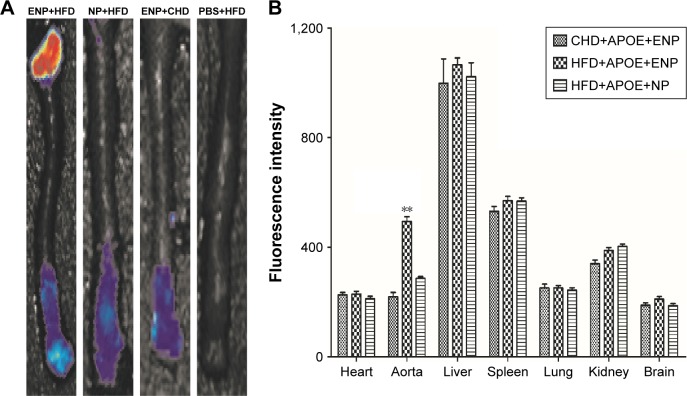
Results indicated TFs were highly expressed in the cellular model. The uptake of coumarin-6-loaded ENPs was significantly higher than that of common PLGA nanoparticles. Thickening of intima and lipid deposition in the aorta could be observed in atherosclerosis mouse models. Confocal laser scanning microscopy organ imaging showed ENPs accumulated in vessels with atherosclerotic plaques, which coincided with high expressions of TF.
This study showed that EGFP-EGF1-conjugated PLGA nanoparticles could be effectively delivered to atherosclerotic plaques in vivo and taken up by VSMCs with high TF expressions in vitro. Thus, it could be a promising carrier for targeted therapy of atherosclerosis.
表皮生长因子(EGF)-EGF1 缀合聚(乳酸-共-乙醇酸)(PLGA)纳米颗粒(ENP)对组织因子(TF)具有特异性亲和力。本研究旨在探讨 ENP 对斑块的靶向递药及其在体内和体外动脉粥样硬化小鼠模型中的摄取。
采用双乳液法合成香豆素-6 和 1,1'-二辛基-3,3,3',3'-四甲基吲哚碳菁碘化物(DiR)负载的 ENP。用单核细胞趋化蛋白-1(MCP-1)诱导小鼠血管平滑肌细胞(VSMCs)以获得 TF 表达增加。荧光显微镜和流式细胞术检测香豆素-6 负载的 ENP 在细胞模型中的摄取。用持续高脂饮食喂养 ApoE(-/-)小鼠 14 周建立动脉粥样硬化动物模型。通过尾静脉注射 DiR 负载的 ENP(DiR-ENP)。通过器官成像和共聚焦激光扫描显微镜检查 DiR-ENP 的分布。
结果表明 TF 在细胞模型中高表达。香豆素-6 负载的 ENP 的摄取明显高于普通 PLGA 纳米颗粒。在动脉粥样硬化小鼠模型中可以观察到内膜增厚和主动脉脂质沉积。共聚焦激光扫描显微镜器官成像显示,ENP 积聚在有动脉粥样硬化斑块的血管中,与 TF 的高表达一致。
本研究表明,EGF-EGF1 缀合 PLGA 纳米颗粒可以有效地递送到体内动脉粥样硬化斑块,并被体外 TF 高表达的 VSMCs 摄取。因此,它可能是动脉粥样硬化靶向治疗的一种有前途的载体。