Laboratory of Biochemistry and Molecular Biology, Graduate School of Pharmaceutical Sciences, Osaka University, 1-6 Yamadaoka, Suita, Osaka, 565-0871, Japan.
Department of Gastroenterology and Hepatology, Graduate School of Medicine, Hokkaido University, North 15, West 7, Kita-ku, Sapporo, Hokkaido, 060-8638, Japan.
Virol J. 2019 May 2;16(1):58. doi: 10.1186/s12985-019-1160-6.
MicroRNAs (miRNAs) have gained much attention as cellular factors regulating hepatitis C virus (HCV) infection. miR-27b has been shown to regulate HCV infection in the hepatocytes via various mechanisms that have not been fully elucidated. In this study, therefore, we examined the mechanisms of miR-27b-mediated regulation of HCV infection.
In silico screening analysis, transfection with miR-27b mimic, and a cell-based reporter assay were performed to identify miR-27b target genes. Cell cultured-derived HCV (HCVcc) was added to Huh7.5.1 cells knocked down for aquaporin (AQP) 11 (AQP11) and overexpressing AQP11. HCV replication levels were evaluated by real-time RT-PCR analysis of HCVcc genome.
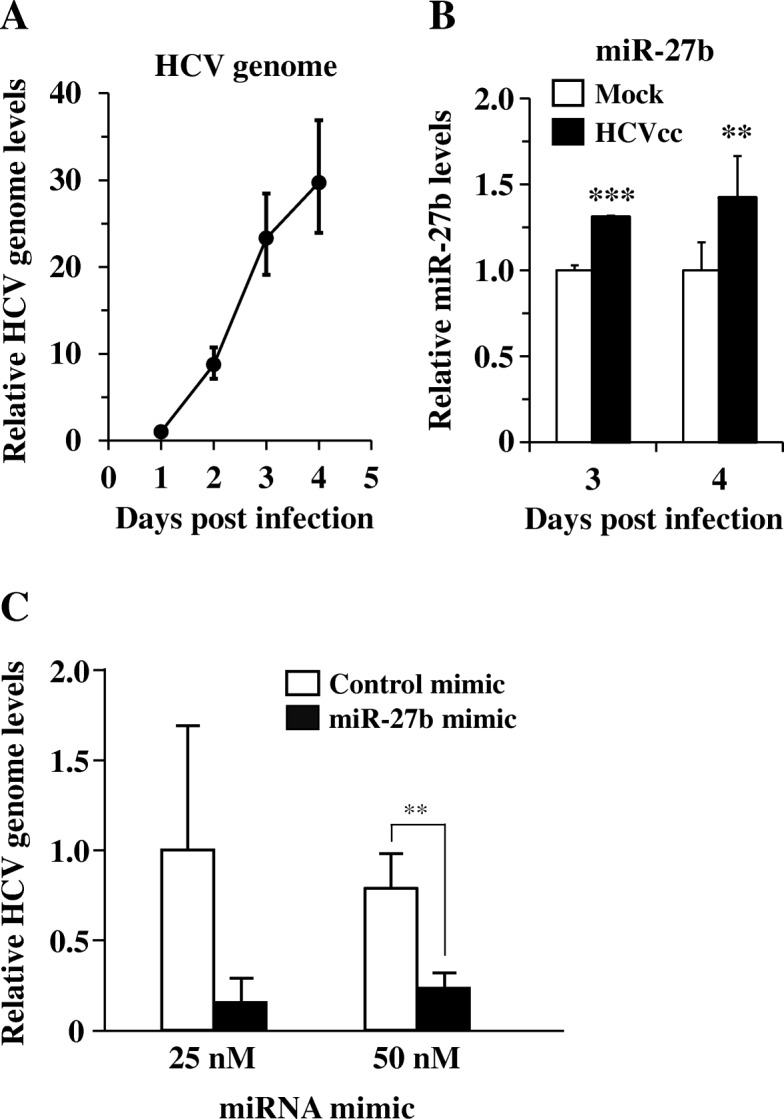
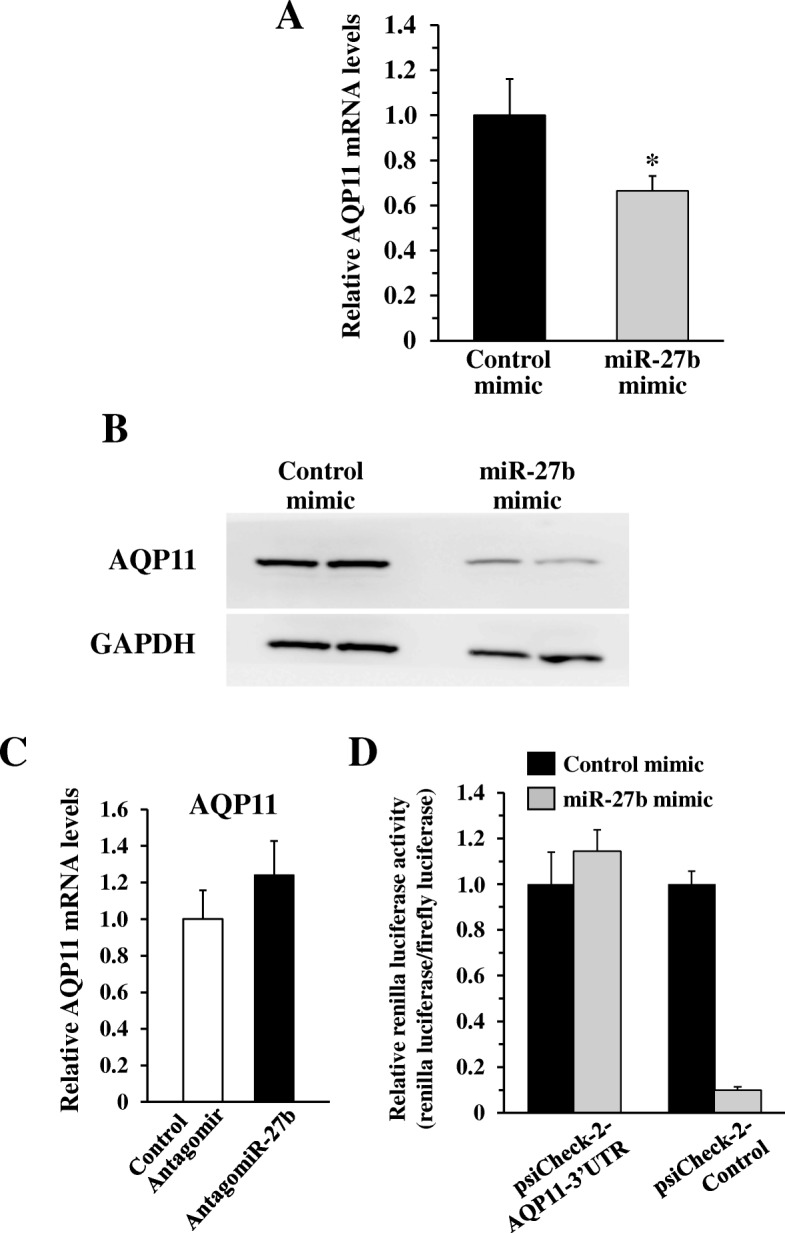
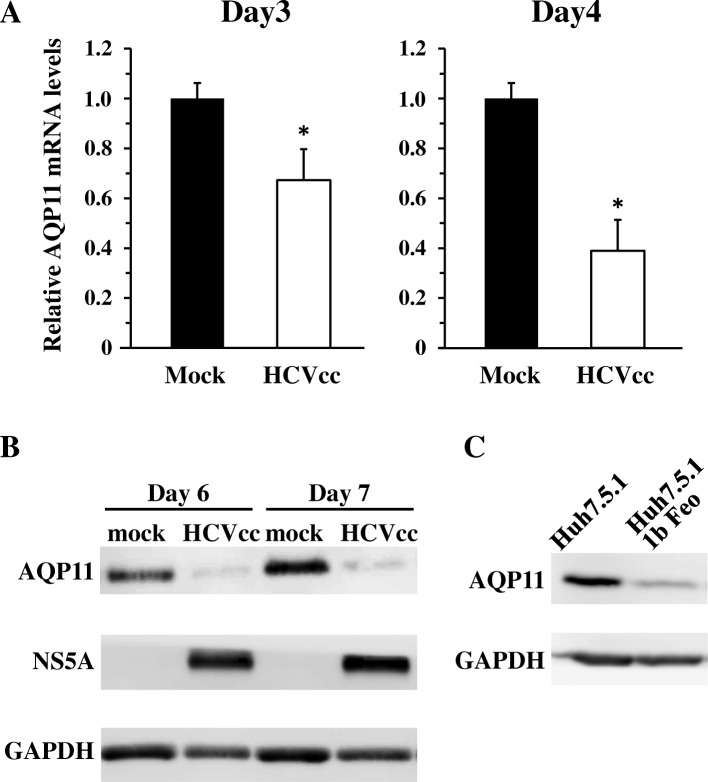
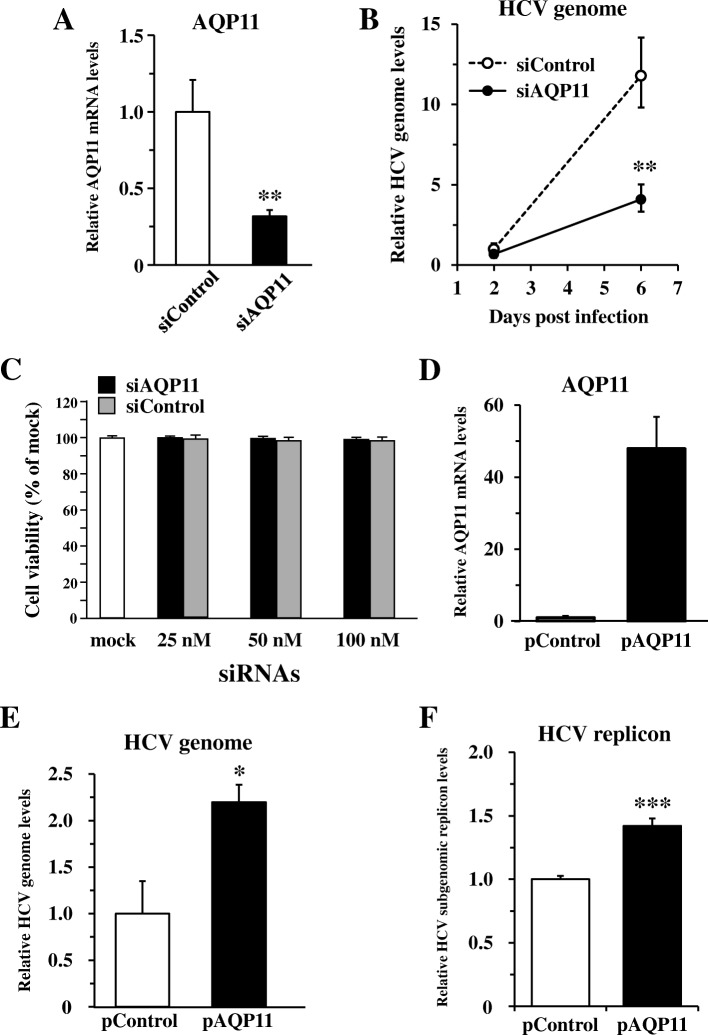
Infection of Huh7.5.1 cells with HCVcc resulted in significant elevation in miR-27b expression levels. In silico analysis revealed that AQP11, which is an AQP family member and is mainly localized in the endoplasmic reticulum (ER), was a candidate for a target gene of miR-27b. Transfection of a miR-27b mimic significantly reduced AQP11 expression, but a cell-based reporter assay demonstrated that miR-27b did not suppress the expression of a reporter gene containing the 3'-untranslated region of the AQP11 gene, suggesting that miR-27b indirectly suppressed AQP11 expression. AQP11 expression levels were significantly reduced by infection with HCVcc in Huh7.5.1 cells. Knockdown and over-expression of AQP11 significantly reduced and increased HCVcc genome levels in the cells following infection, respectively, however, AQP11 knockdown did not show significant effects on the HCVcc titers in the culture supernatants.
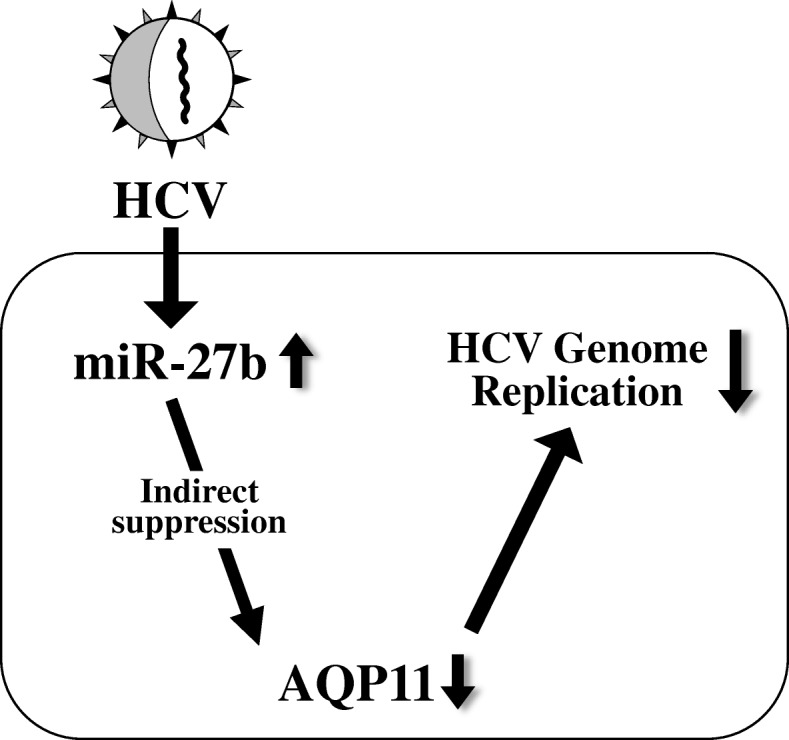
These results indicated that HCV infection induced a miR-27b-mediated reduction in AQP11 expression, leading to a modest reduction in HCV genome levels in the cells, not HCV titers in the culture supernatants.
微小 RNA(miRNA)作为调节丙型肝炎病毒(HCV)感染的细胞因子受到了广泛关注。miR-27b 已被证明通过多种尚未完全阐明的机制调节肝细胞中的 HCV 感染。因此,在本研究中,我们研究了 miR-27b 介导的 HCV 感染调节机制。
通过计算机筛选分析、miR-27b 模拟物转染和基于细胞的报告基因检测,鉴定 miR-27b 的靶基因。将培养细胞衍生的 HCV(HCVcc)添加到敲低水通道蛋白 11(AQP11)并过表达 AQP11 的 Huh7.5.1 细胞中。通过实时 RT-PCR 分析 HCVcc 基因组评估 HCV 复制水平。
HCVcc 感染 Huh7.5.1 细胞导致 miR-27b 表达水平显著升高。计算机分析显示,AQP11 是 AQP 家族成员,主要定位于内质网(ER),是 miR-27b 的候选靶基因。转染 miR-27b 模拟物可显著降低 AQP11 表达,但基于细胞的报告基因检测表明 miR-27b 并未抑制包含 AQP11 基因 3'-非翻译区的报告基因的表达,表明 miR-27b 间接抑制 AQP11 表达。HCVcc 感染 Huh7.5.1 细胞后 AQP11 表达水平显著降低。AQP11 的敲低和过表达分别显著降低和增加了感染后细胞中的 HCVcc 基因组水平,但 AQP11 敲低对培养上清液中的 HCVcc 滴度没有显著影响。
这些结果表明,HCV 感染诱导 miR-27b 介导的 AQP11 表达降低,导致细胞内 HCV 基因组水平适度降低,而不是培养上清液中的 HCV 滴度降低。