Department of Dermatology, University of California, Davis, Sacramento, CA.
Dermatology Section, VA Northern California Health Care System, Mather, CA.
Diabetes. 2019 Jul;68(7):1499-1507. doi: 10.2337/db18-1146. Epub 2019 May 2.
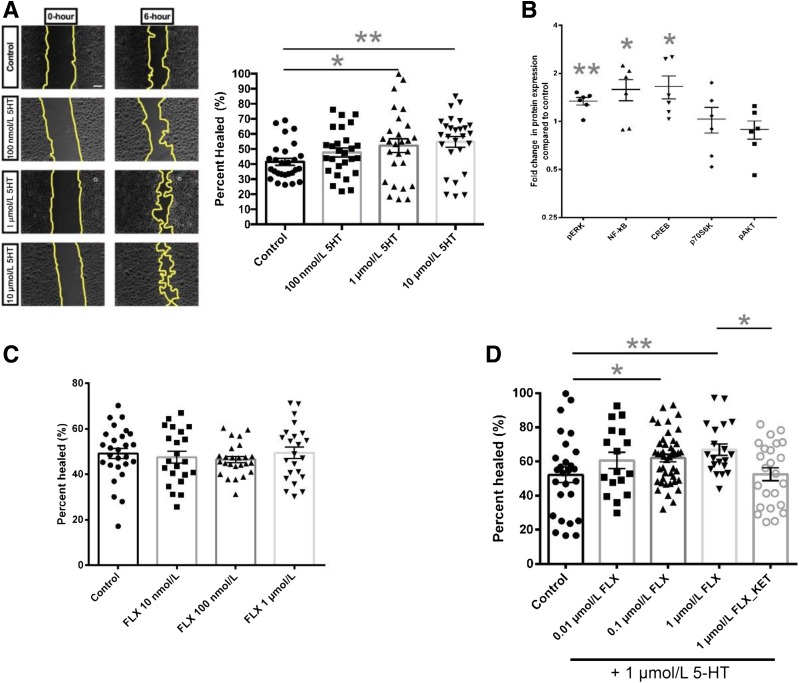
Diabetic foot ulcers represent a significant source of morbidity in the U.S., with rapidly escalating costs to the health care system. Multiple pathophysiological disturbances converge to result in delayed epithelialization and persistent inflammation. Serotonin (5-hydroxytryptamine [5-HT]) and the selective serotonin reuptake inhibitor fluoxetine (FLX) have both been shown to have immunomodulatory effects. Here we extend their utility as a therapeutic alternative for nonhealing diabetic wounds by demonstrating their ability to interact with multiple pathways involved in wound healing. We show that topically applied FLX improves cutaneous wound healing in vivo. Mechanistically, we demonstrate that FLX not only increases keratinocyte migration but also shifts the local immune milieu toward a less inflammatory phenotype in vivo without altering behavior. By targeting the serotonin pathway in wound healing, we demonstrate the potential of repurposing FLX as a safe topical for the challenging clinical problem of diabetic wounds.
糖尿病足溃疡是美国发病率较高的疾病,给医疗系统带来了巨大的经济负担。多种病理生理紊乱导致上皮细胞延迟增殖和持续炎症。血清素(5-羟色胺[5-HT])和选择性 5-羟色胺再摄取抑制剂氟西汀(FLX)都具有免疫调节作用。在这里,我们通过证明它们能够与参与伤口愈合的多种途径相互作用,将它们作为治疗非愈合性糖尿病伤口的一种替代疗法进一步扩展了它们的用途。我们发现局部应用 FLX 可改善体内皮肤伤口愈合。从机制上讲,我们证明 FLX 不仅可以增加角质形成细胞的迁移,而且可以在不改变行为的情况下将局部免疫微环境向炎症表型转变。通过靶向伤口愈合中的血清素途径,我们证明了将 FLX 重新用于治疗糖尿病伤口这一具有挑战性的临床难题的潜力。