Laboratory of Neuro Imaging, USC Mark and Mary Stevens Neuroimaging and Informatics Institute, Keck School of Medicine of USC, University of Southern California, Los Angeles, USA.
Laboratory of Neuro Imaging, USC Mark and Mary Stevens Neuroimaging and Informatics Institute, Keck School of Medicine of USC, University of Southern California, Los Angeles, USA.
Neuroimage. 2019 Aug 15;197:243-254. doi: 10.1016/j.neuroimage.2019.04.070. Epub 2019 Apr 30.
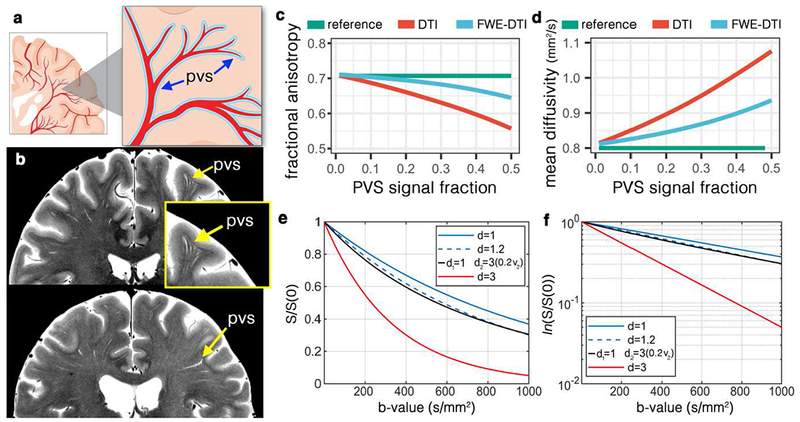
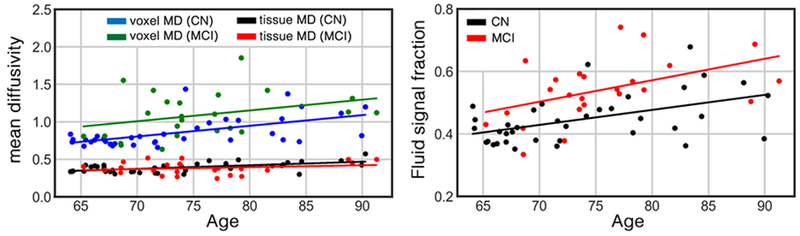
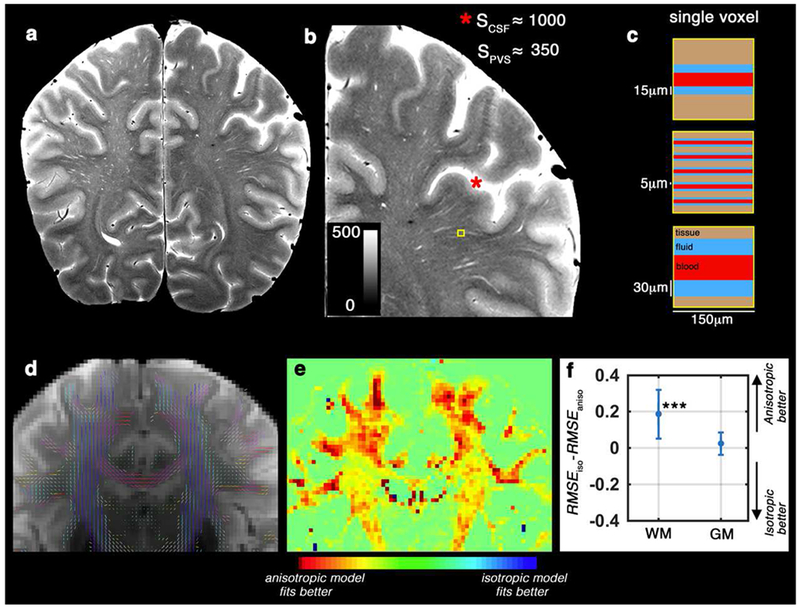
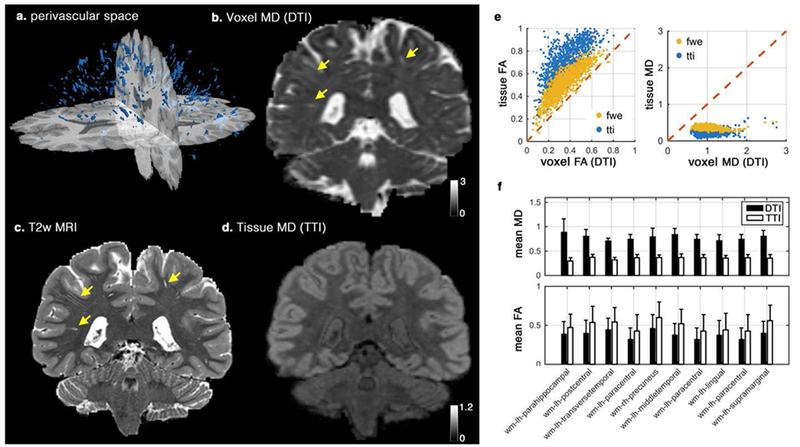
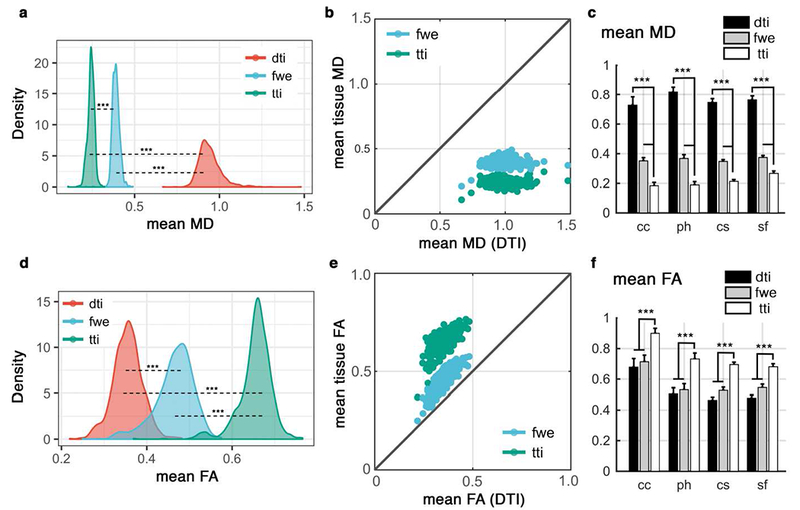
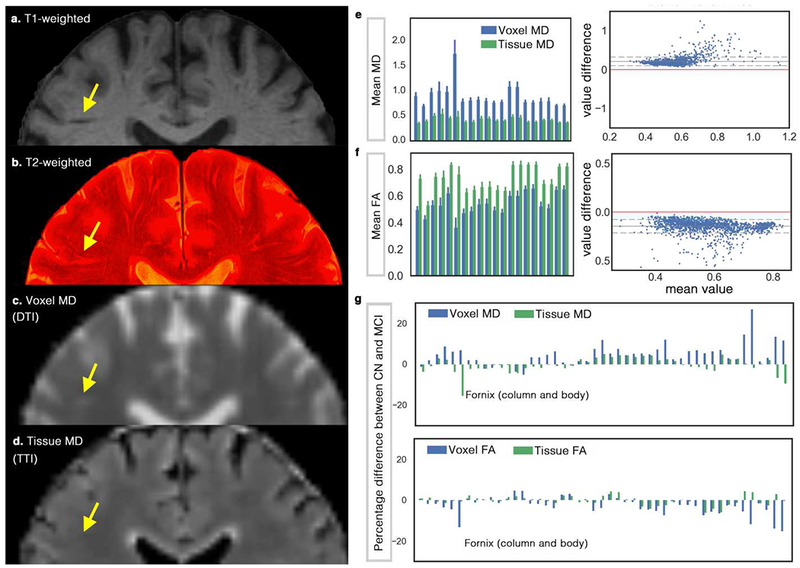
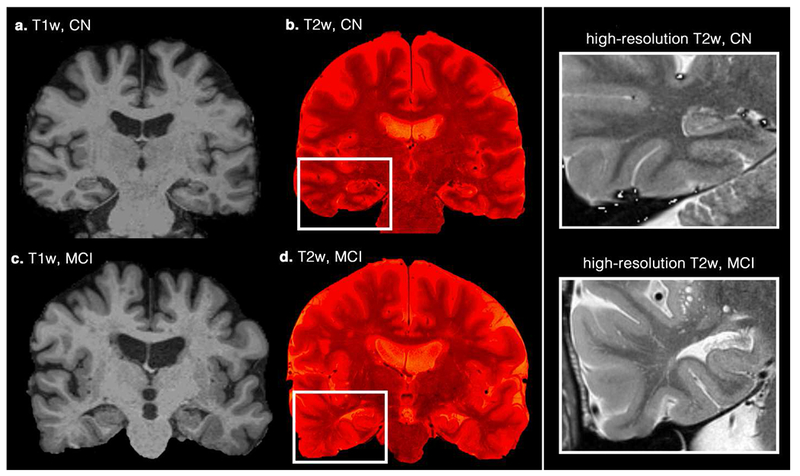
Diffusion tensor imaging (DTI) has been extensively used to map changes in brain tissue related to neurological disorders. Among the most widespread DTI findings are increased mean diffusivity and decreased fractional anisotropy of white matter tissue in neurodegenerative diseases. Here we utilize multi-shell diffusion imaging to separate diffusion signal of the brain parenchyma from non-parenchymal fluid within the white matter. We show that unincorporated anisotropic water in perivascular space (PVS) significantly, and systematically, biases DTI measures, casting new light on the biological validity of many previously reported findings. Despite the challenge this poses for interpreting these past findings, our results suggest that multi-shell diffusion MRI provides a new opportunity for incorporating the PVS contribution, ultimately strengthening the clinical and scientific value of diffusion MRI.
弥散张量成像(DTI)已广泛用于绘制与神经退行性疾病相关的脑组织变化图。在最广泛的 DTI 发现中,神经退行性疾病中的白质组织的平均弥散度增加和各向异性分数降低。在这里,我们利用多壳层扩散成像将脑实质的扩散信号与白质中的非实质流体分开。我们表明,血管周围空间(PVS)中的未结合各向异性水显著且系统地影响 DTI 测量值,这为许多先前报道的发现的生物学有效性提供了新的认识。尽管这对解释这些过去的发现提出了挑战,但我们的结果表明,多壳层扩散 MRI 为纳入 PVS 贡献提供了新的机会,最终增强了扩散 MRI 的临床和科学价值。