Berahovich Robert, Liu Xianghong, Zhou Hua, Tsadik Elias, Xu Shirley, Golubovskaya Vita, Wu Lijun
ProMab Biotechnologies, 2600 Hilltop Drive, Richmond, CA 94806, USA.
Department of Medicine, University of Oklahoma, Health Sciences Center, Oklahoma City, OK 73104, USA.
Cancers (Basel). 2019 Apr 30;11(5):602. doi: 10.3390/cancers11050602.
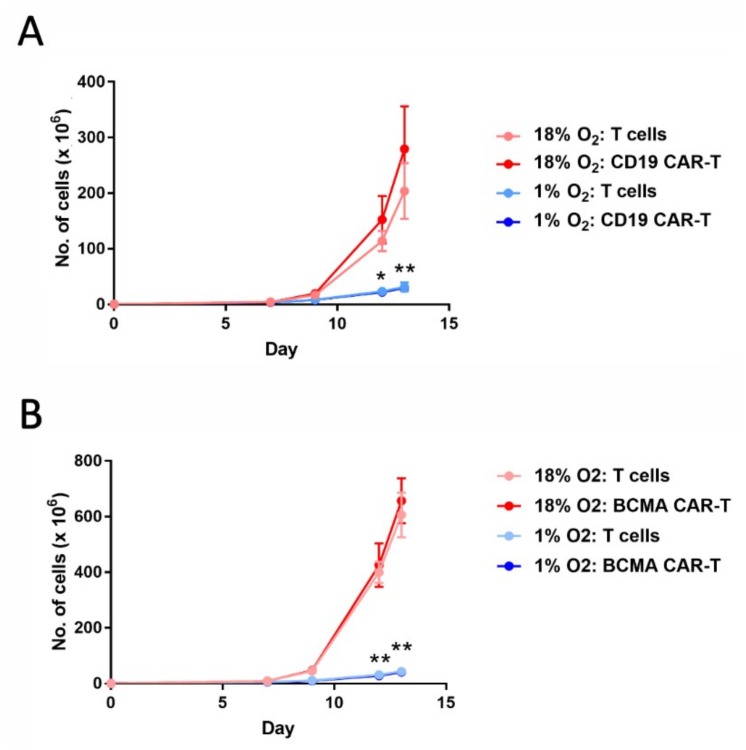
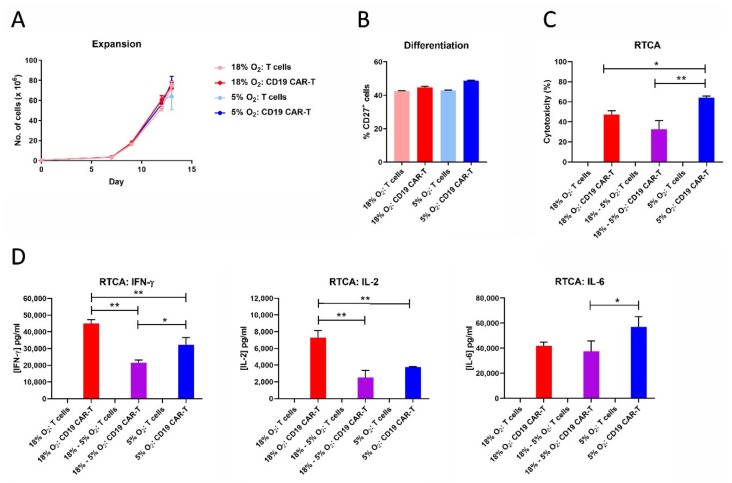
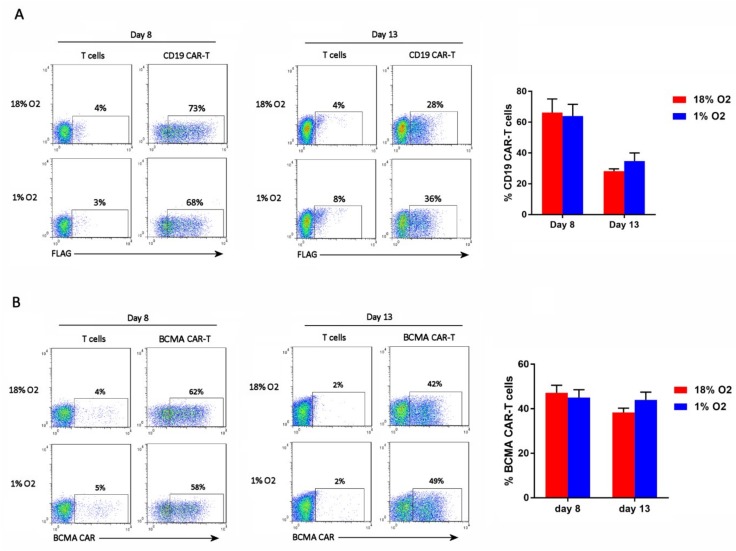
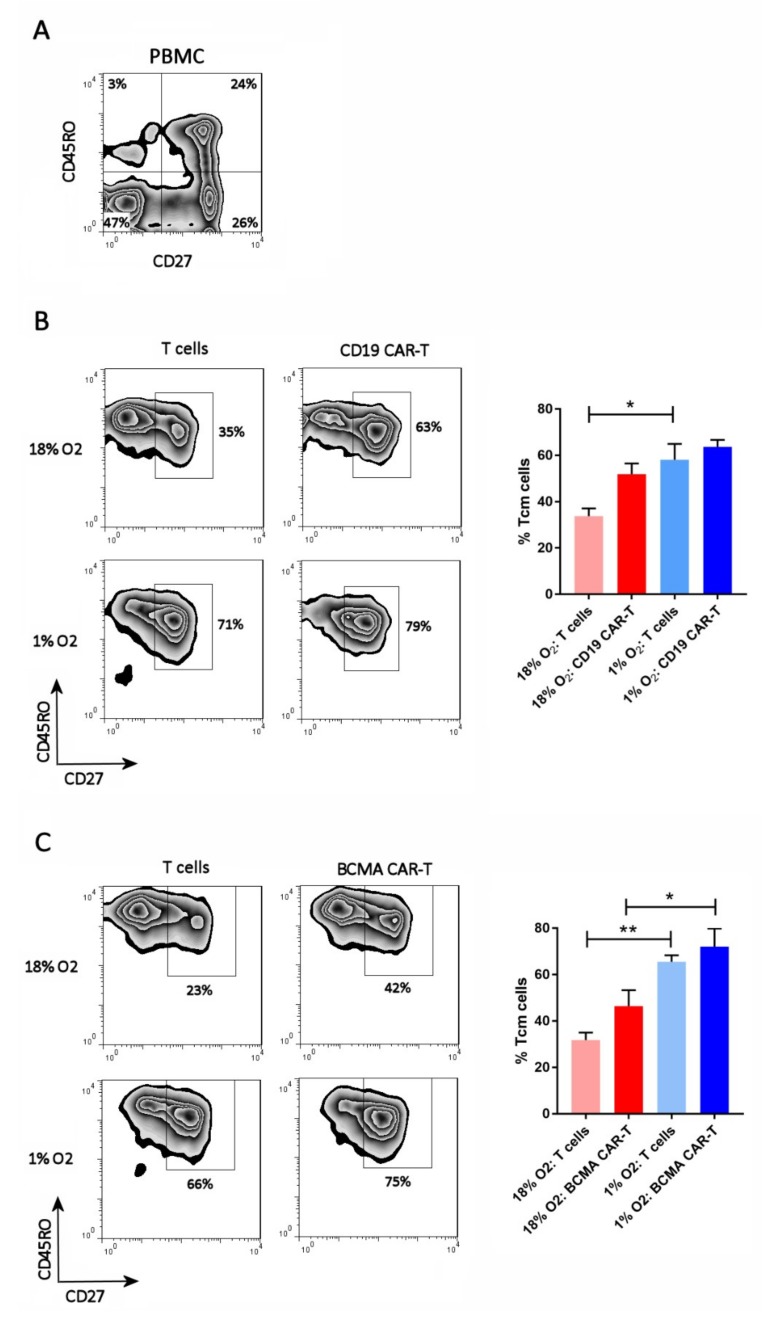
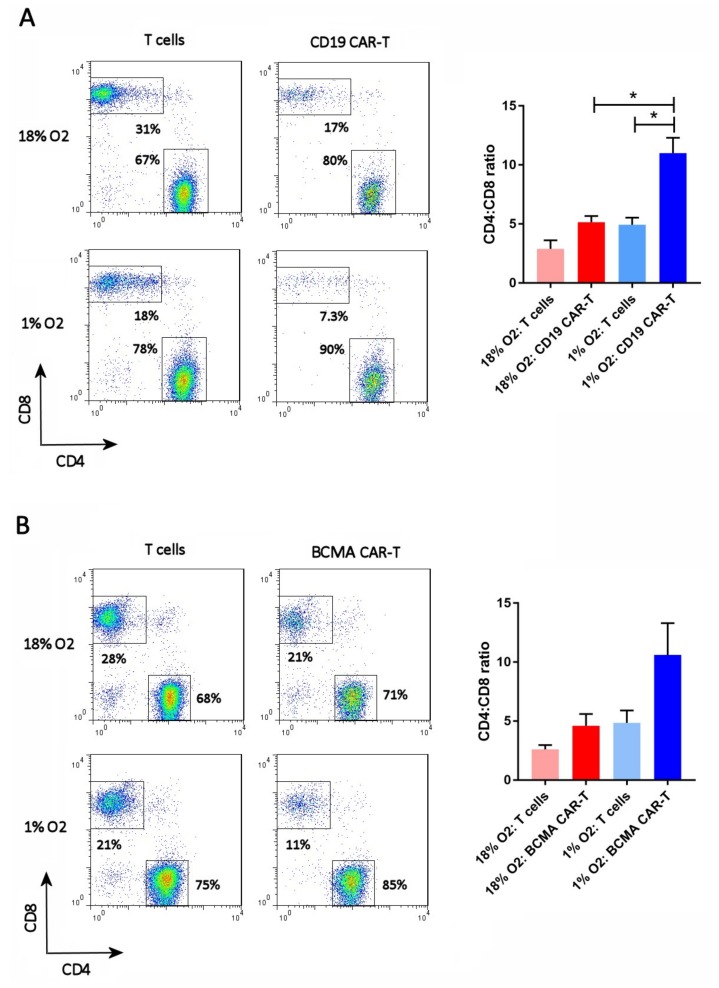
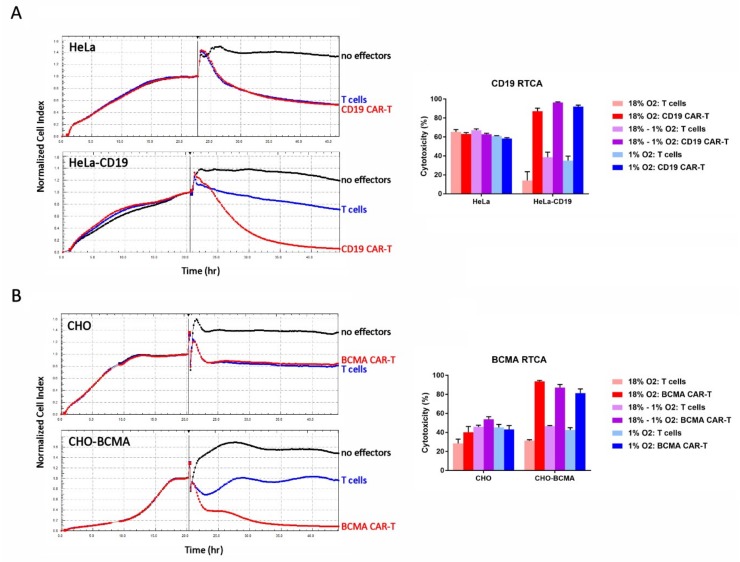
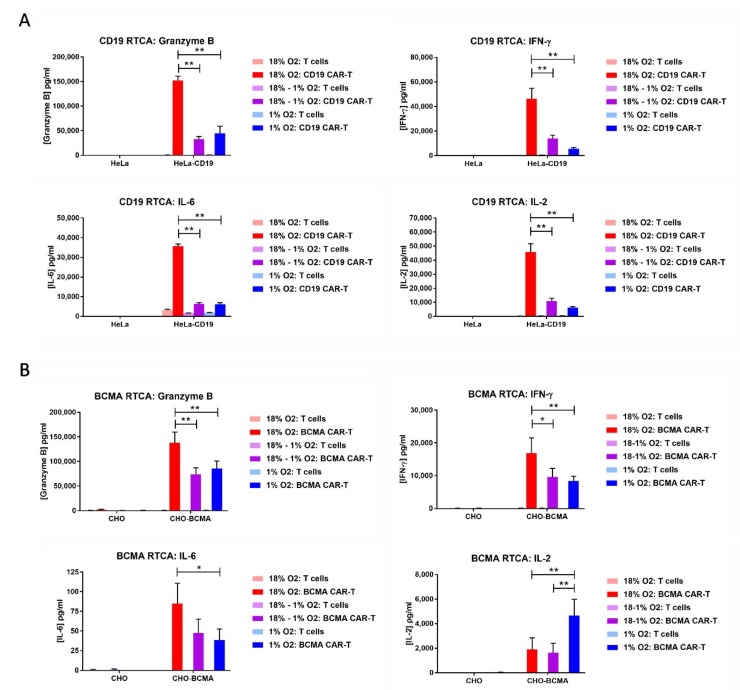
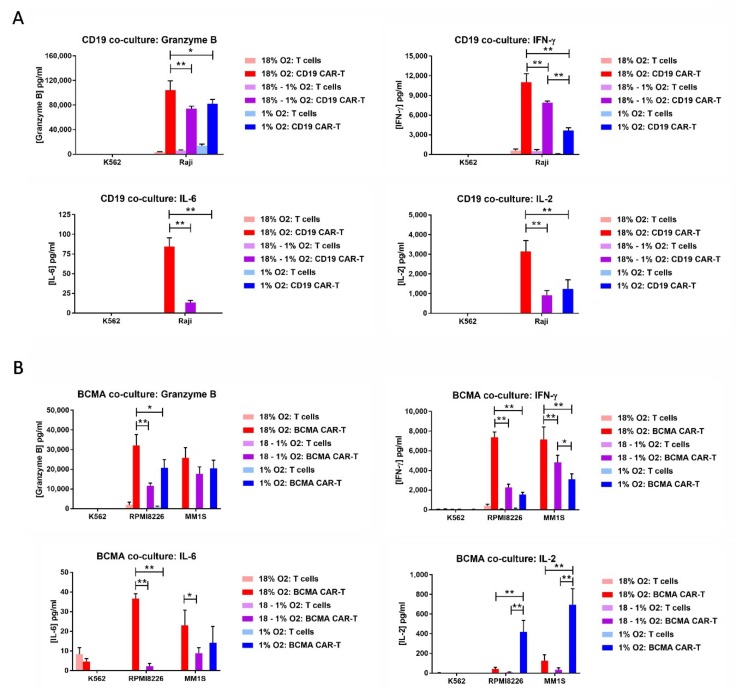
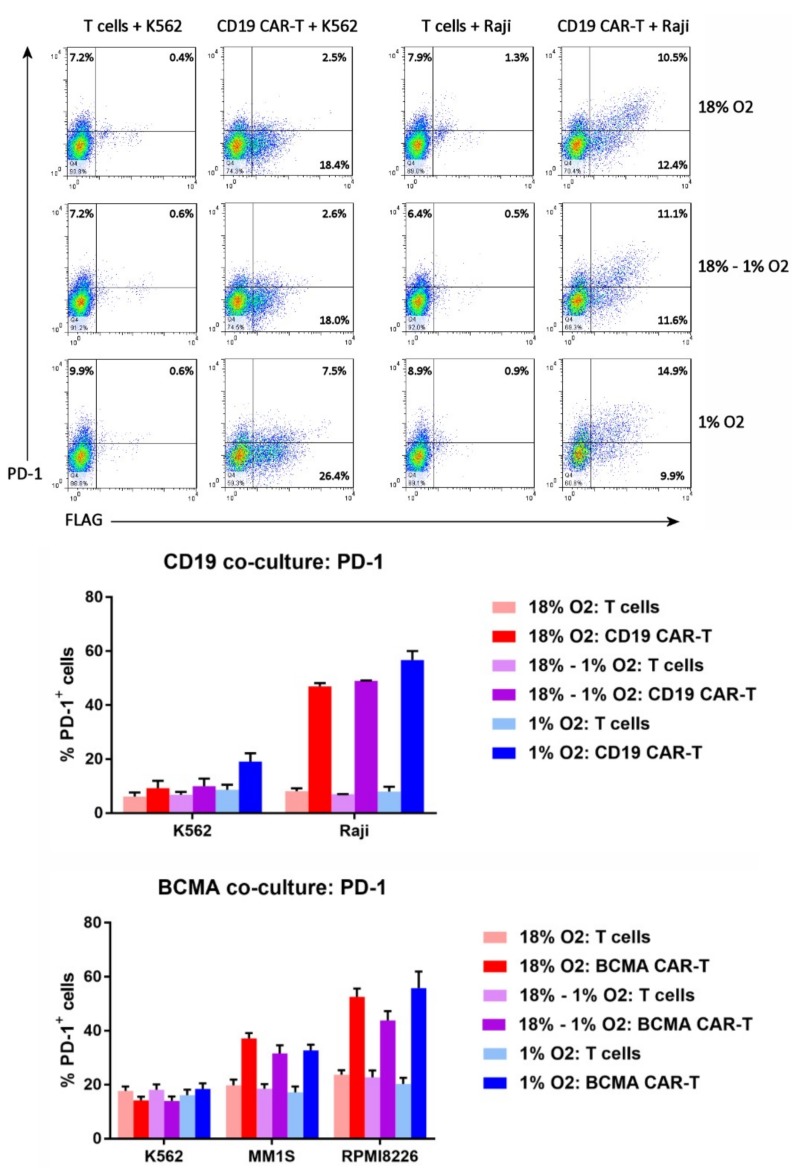
Hypoxia is a major characteristic of the solid tumor microenvironment. To understand how chimeric antigen receptor-T cells (CAR-T cells) function in hypoxic conditions, we characterized CD19-specific and BCMA-specific human CAR-T cells generated in atmospheric (18% oxygen) and hypoxic (1% oxygen) culture for expansion, differentiation status, and CD4:CD8 ratio. CAR-T cells expanded to a much lower extent in 1% oxygen than in 18% oxygen. Hypoxic CAR-T cells also had a less differentiated phenotype and a higher CD4:CD8 ratio than atmospheric CAR-T cells. CAR-T cells were then added to antigen-positive and antigen-negative tumor cell lines at the same or lower oxygen level and characterized for cytotoxicity, cytokine and granzyme B secretion, and PD-1 upregulation. Atmospheric and hypoxic CAR-T cells exhibited comparable cytolytic activity and PD-1 upregulation; however, cytokine production and granzyme B release were greatly decreased in 1% oxygen, even when the CAR-T cells were generated in atmospheric culture. Together, these data show that at solid tumor oxygen levels, CAR-T cells are impaired in expansion, differentiation and cytokine production. These effects may contribute to the inability of CAR-T cells to eradicate solid tumors seen in many patients.
缺氧是实体瘤微环境的主要特征。为了解嵌合抗原受体T细胞(CAR-T细胞)在缺氧条件下的功能,我们对在常压(18%氧气)和低氧(1%氧气)培养条件下生成的靶向CD19和靶向BCMA的人CAR-T细胞进行了表征,分析其扩增情况、分化状态以及CD4:CD8比值。与在18%氧气条件下相比,CAR-T细胞在1%氧气条件下的扩增程度要低得多。与常压培养的CAR-T细胞相比,低氧培养的CAR-T细胞还具有分化程度较低的表型以及更高的CD4:CD8比值。随后,将CAR-T细胞添加到处于相同或更低氧气水平的抗原阳性和抗原阴性肿瘤细胞系中,并对其细胞毒性、细胞因子和颗粒酶B分泌以及PD-1上调情况进行表征。常压培养和低氧培养的CAR-T细胞表现出相当的溶细胞活性和PD-1上调;然而,即使CAR-T细胞是在常压培养条件下生成的,在1%氧气条件下细胞因子的产生和颗粒酶B的释放也会大幅减少。这些数据共同表明,在实体瘤的氧气水平下,CAR-T细胞在扩增、分化和细胞因子产生方面受到损害。这些影响可能导致许多患者体内的CAR-T细胞无法根除实体瘤。