Department of Analytical, Environmental & Forensic Sciences, School of Population Health & Environmental Sciences, Faculty of Life Sciences and Medicine, King's College London, 150 Stamford Street, London SE1 9NH, UK.
Department of Analytical, Environmental & Forensic Sciences, School of Population Health & Environmental Sciences, Faculty of Life Sciences and Medicine, King's College London, 150 Stamford Street, London SE1 9NH, UK.
Environ Int. 2019 Aug;129:595-606. doi: 10.1016/j.envint.2019.04.038. Epub 2019 May 1.
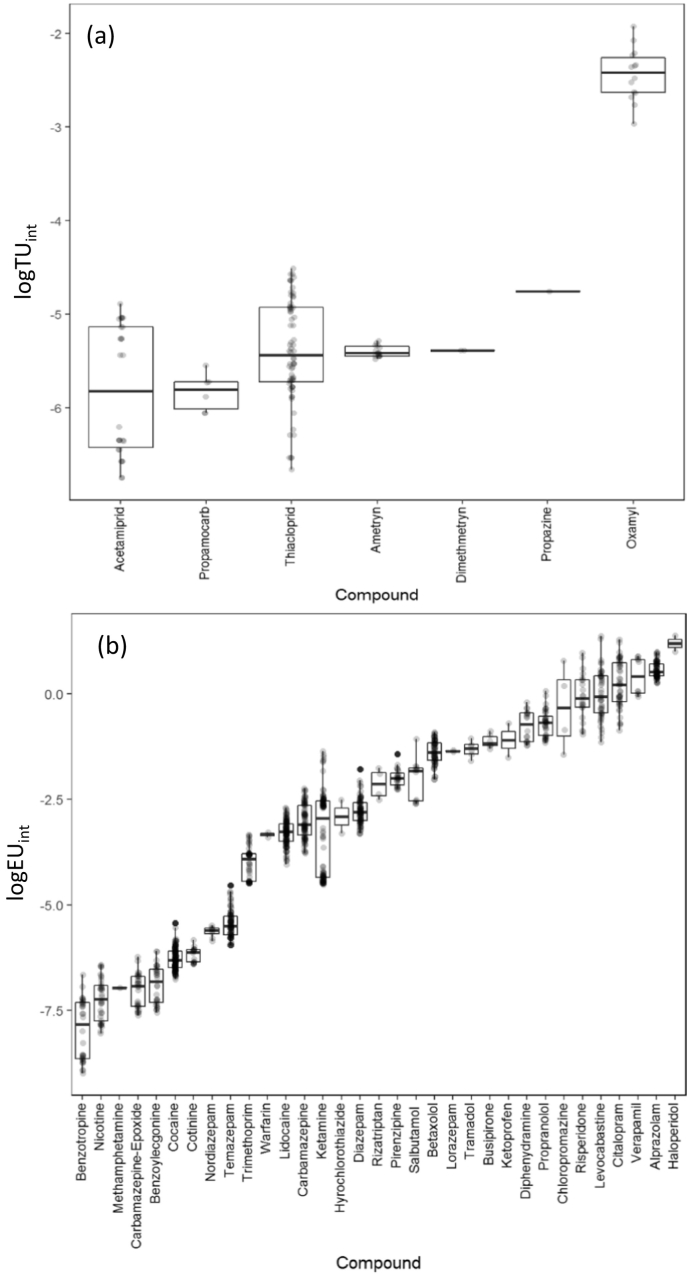
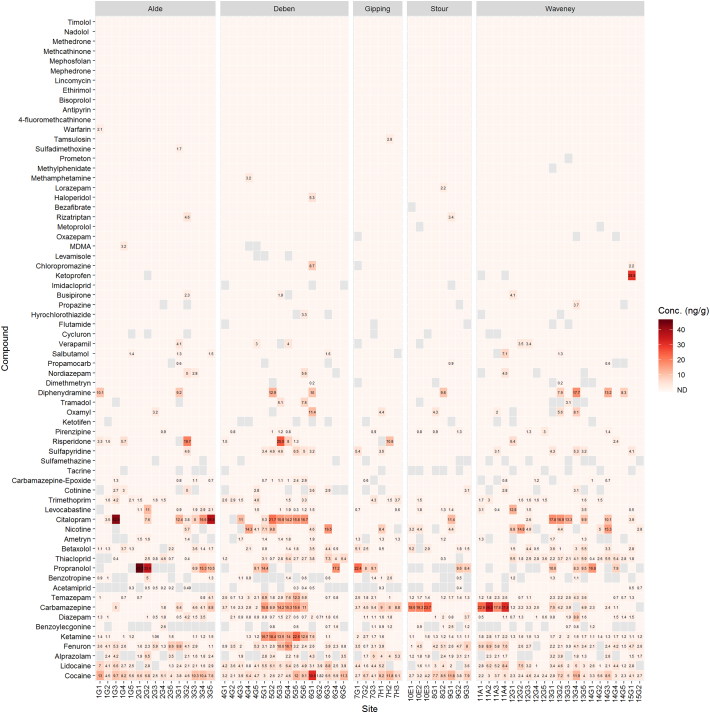
Multiple classes of environmental contaminants have been found in aquatic environments, globally. Understanding internalised concentrations in the organism could further improve the risk assessment process. The present study is concerned with the determination of several contaminant classes (107 compounds) in Gammarus pulex collected from 15 sites covering 5 river catchments across Suffolk, UK. Quantitative method performance was acceptable for 67 compounds including pharmaceuticals, pesticides, illicit drugs and drugs of abuse. A total of 56 compounds were detectable and ranged from <LOQ to 45.3 ng g, with cocaine and lidocaine being the most frequently detected compounds present in all biota samples (n = 66). For surface water, 50 compounds were detectable and ranged from <LOQ to 382.2 ng L. Additionally, some pesticides currently not approved for use were detected, including fenuron that reached a maximum of 16.1 ng g. The internal concentrations of pesticides were used to estimate toxic pressure which showed that for the measured pesticides toxic pressure was low ranging from logTU ≤-7 to ≤-2. This methodology was extended to pharmaceuticals and drugs of abuse in a novel approach that proposed the use of pharmacological data (human therapeutic plasma concentrations) to estimate the likelihood of an effect (or effect pressure) to occur based on the internal exposure of the organism. The quantified effect pressure ranged from logEU ≤-9 to ≤1 with haloperidol showing the largest likelihood for an effect. The approach showed that several pharmaceuticals have the potential to elicit effects but further investigation surrounding thresholds for effects would be required. This new approach presented showed potential to be used to improve risk assessment for pharmaceuticals in the environment.
全球范围内,水生环境中已发现多类环境污染物。了解生物体内部的浓度可进一步改善风险评估过程。本研究关注的是从英国萨福克郡 5 个河流流域的 15 个地点采集的蜾蠃蜚体内多种污染物类别(107 种化合物)的测定。67 种化合物(包括药物、农药、非法药物和滥用药物)的定量方法性能可接受。共检测到 56 种化合物,其浓度范围为<LOQ 至 45.3ng/g,所有生物样本(n=66)中均存在可卡因和利多卡因这两种最常被检测到的化合物。对于地表水,可检测到 50 种化合物,浓度范围为<LOQ 至 382.2ng/L。此外,还检测到一些目前未批准使用的农药,包括芬隆,其浓度最高达到 16.1ng/g。农药的体内浓度用于估计毒性压力,结果表明,在所测农药中,毒性压力很低,范围从 logTU ≤-7 到 ≤-2。该方法在一种新方法中扩展到药物和滥用药物,该方法建议使用药理学数据(人体治疗血浆浓度)来估计根据生物体的内部暴露发生影响(或影响压力)的可能性。量化的影响压力范围从 logEU ≤-9 到 ≤1,其中氟哌啶醇显示出最大的影响可能性。该方法表明,几种药物有可能产生影响,但需要进一步研究影响的阈值。该新方法具有用于改善环境中药物风险评估的潜力。