Department of Hematology, Tel Aviv Sourasky Medical Center, Tel Aviv, Israel.
Sackler Medical School, Tel-Aviv University, Tel Aviv, Israel.
Aging Cell. 2019 Aug;18(4):e12959. doi: 10.1111/acel.12959. Epub 2019 May 6.
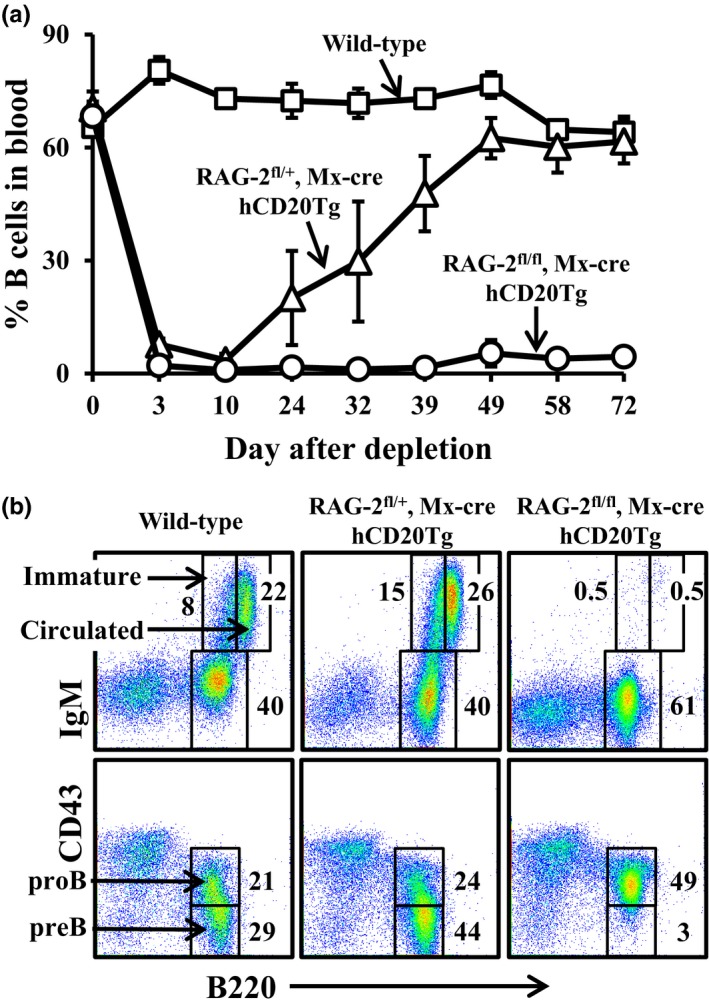
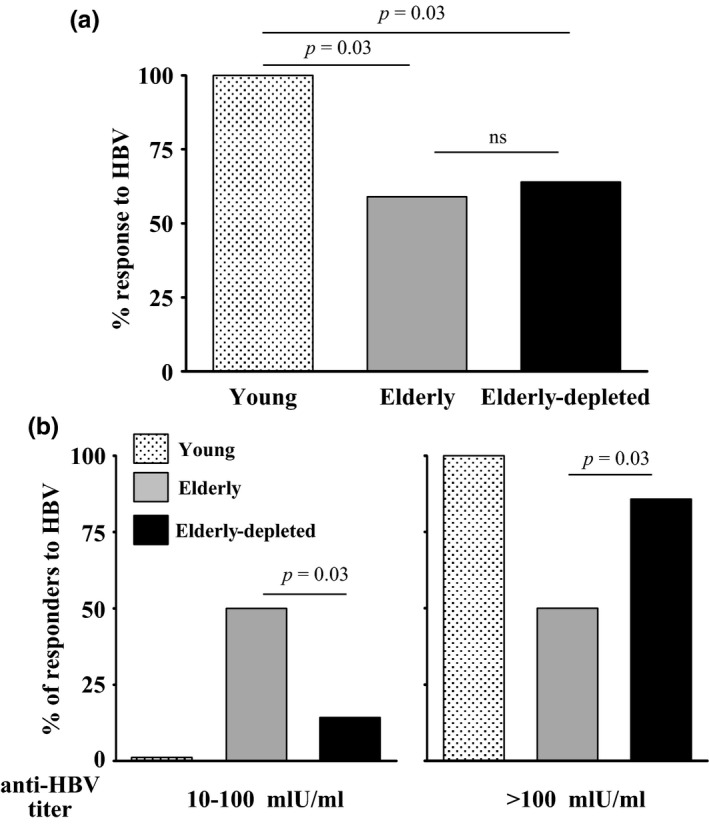
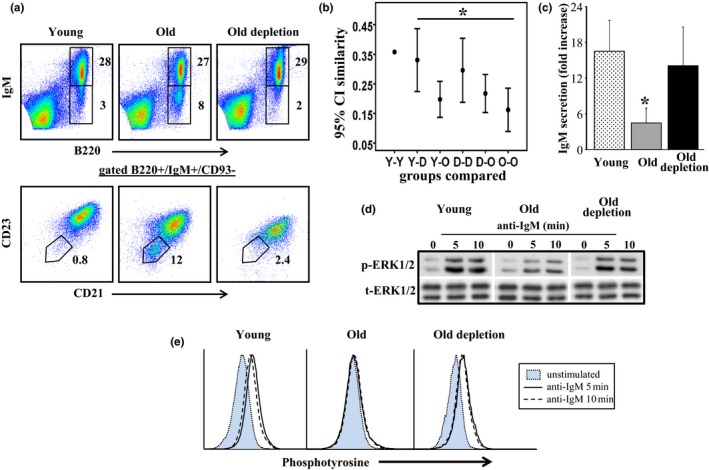
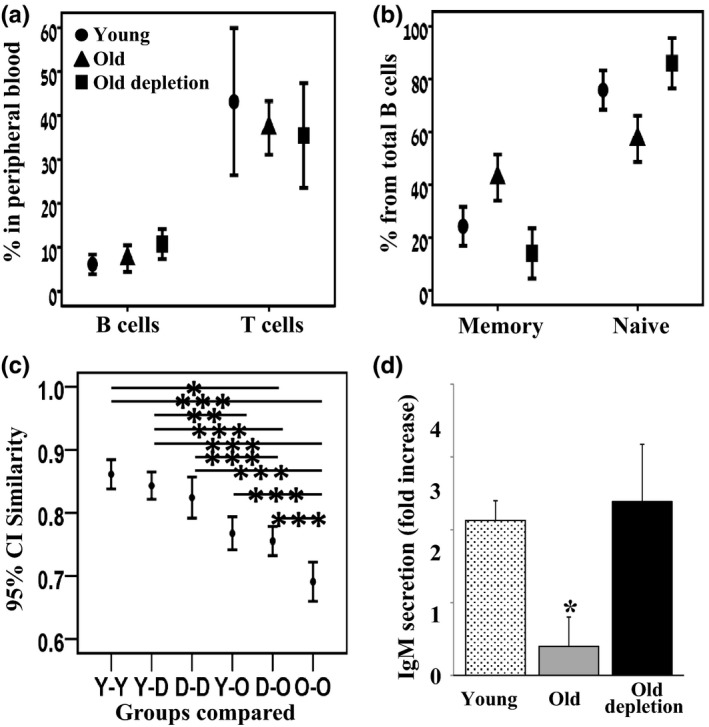
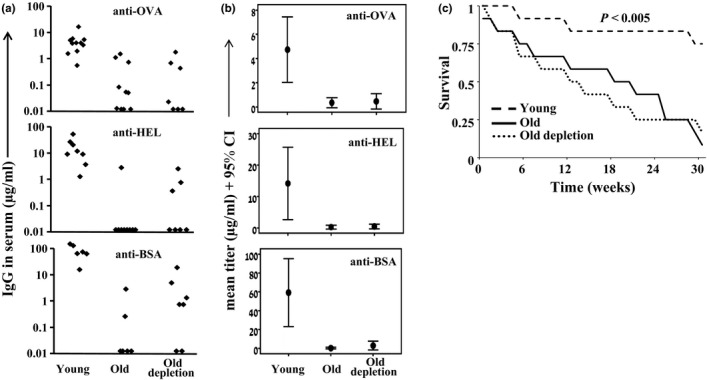
Aging is associated with increasing prevalence and severity of infections caused by a decline in bone marrow (BM) lymphopoiesis and reduced B-cell repertoire diversity. The current study proposes a strategy to enhance immune responsiveness in aged mice and humans, through rejuvenation of the B lineage upon B-cell depletion. We used hCD20Tg mice to deplete peripheral B cells in old and young mice, analyzing B-cell subsets, repertoire and cellular functions in vitro, and immune responsiveness in vivo. Additionally, elderly patients, previously treated with rituximab healthy elderly and young individuals, were vaccinated against hepatitis B (HBV) after undergoing a detailed analysis for B-cell compartments. B-cell depletion in old mice resulted in rejuvenated B-cell population that was derived from de novo synthesis in the bone marrow. The rejuvenated B cells exhibited a "young"-like repertoire and cellular responsiveness to immune stimuli in vitro. Yet, mice treated with B-cell depletion did not mount enhanced antibody responses to immunization in vivo, nor did they survive longer than control mice in "dirty" environment. Consistent with these results, peripheral B cells from elderly depleted patients showed a "young"-like repertoire, population dynamics, and cellular responsiveness to stimulus. Nevertheless, the response rate to HBV vaccination was similar between elderly depleted and nondepleted subjects, although antibody titers were higher in depleted patients. This study proposes a proof of principle to rejuvenate the peripheral B-cell compartment in aging, through B-cell depletion. Further studies are warranted in order to apply this approach for enhancing humoral immune responsiveness among the elderly population.
衰老是与骨髓(BM)淋巴生成减少和 B 细胞库多样性减少导致的感染发生率和严重程度增加相关。本研究提出了一种通过 B 细胞耗竭后 B 细胞系的再生来增强老年小鼠和人类免疫反应的策略。我们使用 hCD20Tg 小鼠在老年和年轻小鼠中耗竭外周 B 细胞,分析体外 B 细胞亚群、库和细胞功能,以及体内免疫反应。此外,对先前接受利妥昔单抗治疗的老年患者、健康老年和年轻个体进行乙型肝炎(HBV)疫苗接种,在进行 B 细胞区室的详细分析后进行疫苗接种。老年小鼠中 B 细胞的耗竭导致了源自骨髓中从头合成的再生 B 细胞群体。再生的 B 细胞表现出类似于“年轻”的库和对体外免疫刺激的细胞反应性。然而,用 B 细胞耗竭治疗的小鼠在体内对免疫接种没有增强的抗体反应,也没有比对照组小鼠在“肮脏”环境中存活更长时间。与这些结果一致,来自老年耗竭患者的外周 B 细胞表现出类似于“年轻”的库、群体动态和对刺激的细胞反应性。尽管耗竭患者的抗体滴度较高,但老年耗竭和非耗竭患者对 HBV 疫苗接种的反应率相似。本研究提出了一种通过 B 细胞耗竭使衰老过程中的外周 B 细胞区室恢复活力的原理验证。需要进一步的研究来应用这种方法来增强老年人群的体液免疫反应。