Piskor Eva-Maria, Ross Julie, Möröy Tarik, Kosan Christian
Institute of Biochemistry and Biophysics, Center for Molecular Biomedicine (CMB), Friedrich Schiller University, Hans-Knöll-Str. 2, 07745 Jena, Germany.
Hematopoiesis and Cancer Unit, Institut de Recherches Cliniques de Montréal (IRCM), 110 av. Des Pins O, Montréal, QC H2W 1R7, Canada.
Biology (Basel). 2022 Mar 24;11(4):504. doi: 10.3390/biology11040504.
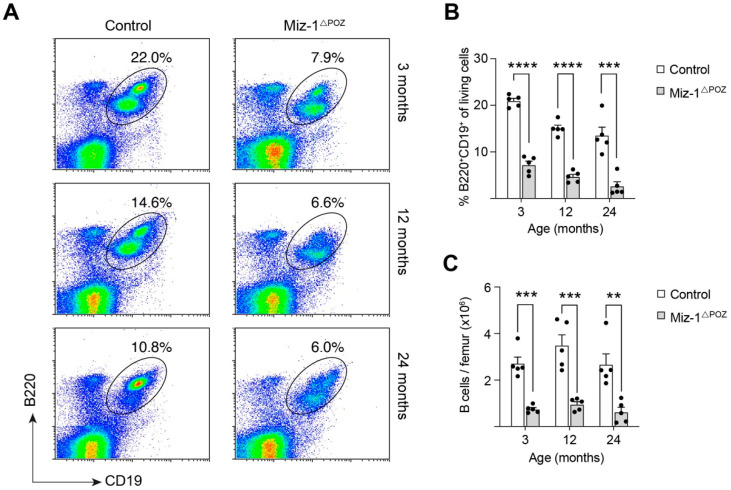
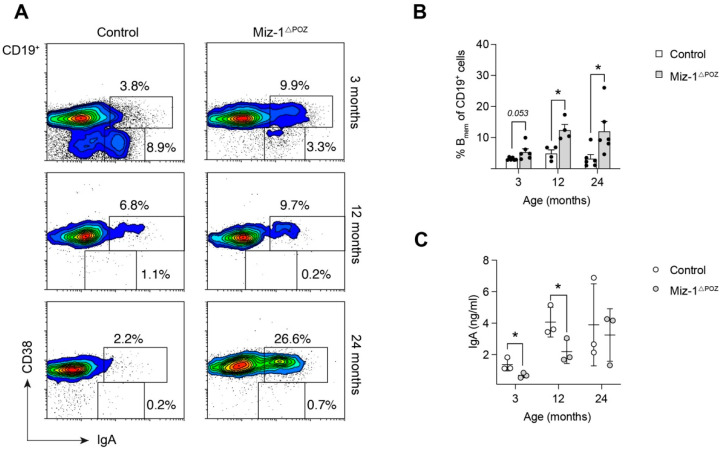
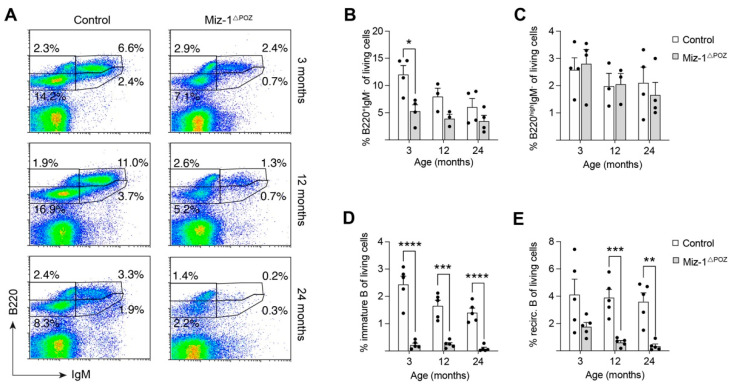
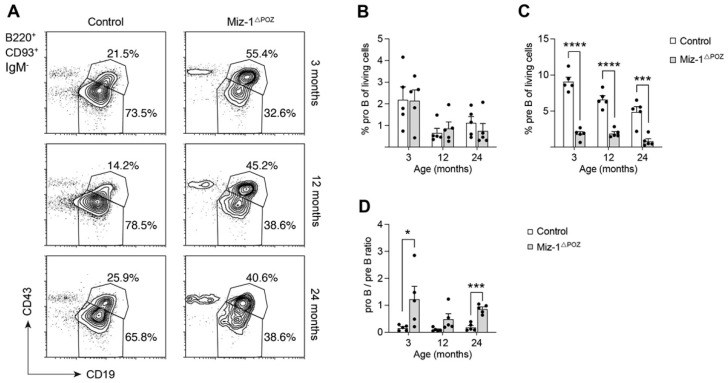
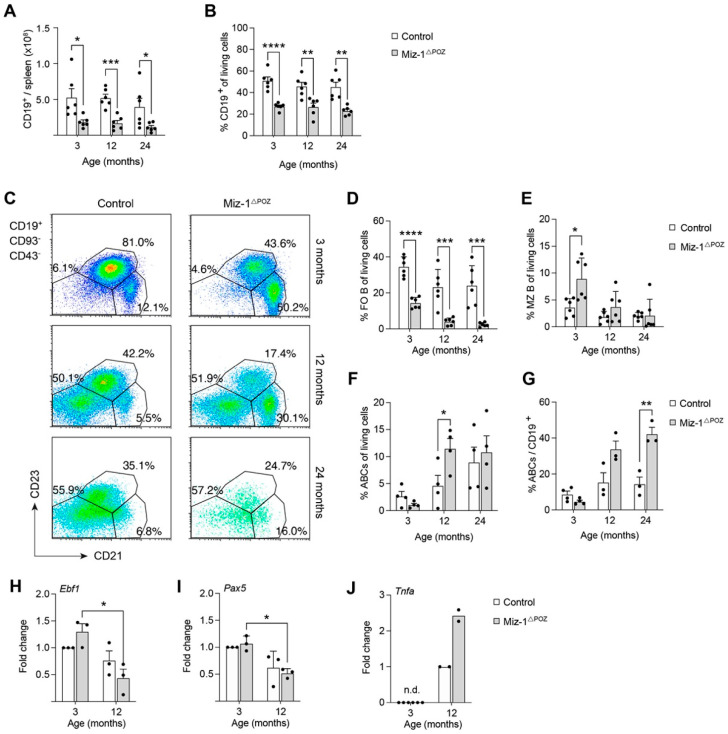
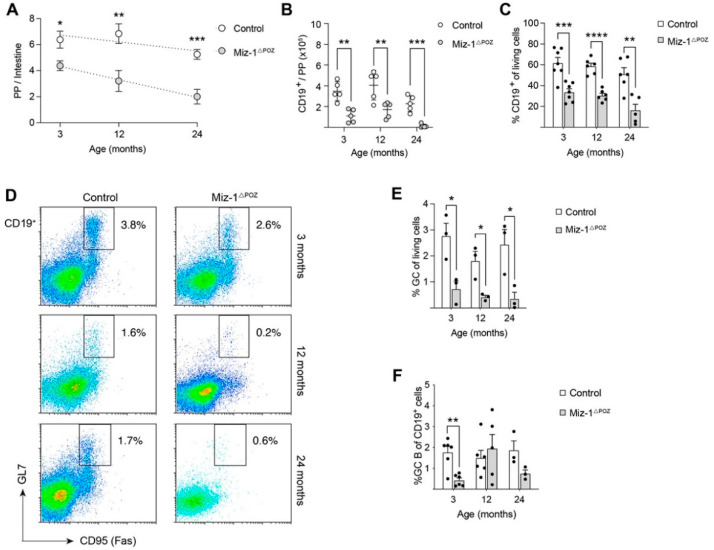
Aging of the immune system is described as a progressive loss of the ability to respond to immunologic stimuli and is commonly referred to as immunosenescence. B cell immunosenescence is characterized by a decreased differentiation rate in the bone marrow and accumulation of antigen-experienced and age-associated B cells in secondary lymphoid organs (SLOs). A specific deletion of the POZ-domain of the transcription factor Miz-1 in pro-B cells, which is known to be involved in bone marrow hematopoiesis, leads to premature aging of the B cell lineage. In mice, this causes a severe reduction in bone marrow-derived B cells with a drastic decrease from the pre-B cell stage on. Further, mature, naïve cells in SLOs are reduced at an early age, while post-activation-associated subpopulations increase prematurely. We propose that Miz-1 interferes at several key regulatory checkpoints, critical during B cell aging, and counteracts a premature loss of immunocompetence. This enables the use of our mouse model to gain further insights into mechanisms of B cell aging and it can significantly contribute to understand molecular causes of impaired adaptive immune responses to counteract loss of immunocompetence and restore a functional immune response in the elderly.
免疫系统的衰老被描述为对免疫刺激作出反应的能力逐渐丧失,通常被称为免疫衰老。B细胞免疫衰老的特征是骨髓中分化率降低,以及抗原接触过的和与年龄相关的B细胞在次级淋巴器官(SLO)中积累。已知参与骨髓造血的前B细胞中转录因子Miz-1的POZ结构域的特异性缺失会导致B细胞谱系过早衰老。在小鼠中,这会导致骨髓来源的B细胞严重减少,从前B细胞阶段开始就急剧下降。此外,SLO中的成熟幼稚细胞在早期就减少了,而激活后相关亚群则过早增加。我们认为Miz-1在B细胞衰老过程中的几个关键调控检查点发挥作用,并抵消免疫能力的过早丧失。这使得我们能够利用小鼠模型进一步深入了解B细胞衰老机制,并且它可以显著有助于理解适应性免疫反应受损的分子原因,以对抗免疫能力丧失并恢复老年人的功能性免疫反应。