Chen Chi-Chung, Lai Chih-Cheng, Huang Hui-Ling, Huang Wen-Yu, Toh Han-Siong, Weng Tzu-Chieh, Chuang Yin-Ching, Lu Ying-Chen, Tang Hung-Jen
Department of Medical Research, Chi Mei Medical Center, Tainan, Taiwan.
Department of Food Science, National Chiayi University, Chiayi, Taiwan.
Front Microbiol. 2019 Apr 18;10:789. doi: 10.3389/fmicb.2019.00789. eCollection 2019.
This study aims to identify suitable lactobacilli that have anti-carbapenem-resistant (CRE) activity with tolerance to pepsin and bile salts.
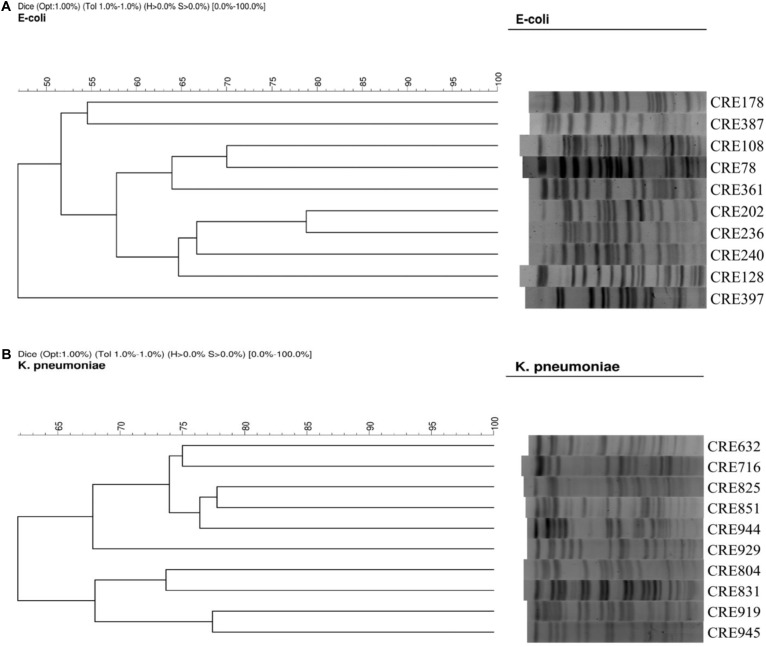
Fifty-seven spp. strains encompassing nine species were collected for investigation. Their viabilities in the presence of pepsin and bile salts were tested using tolerance tests. Their anti-CRE effects were assessed by agar well diffusion and broth microdilution assay, as well as time-kill test.
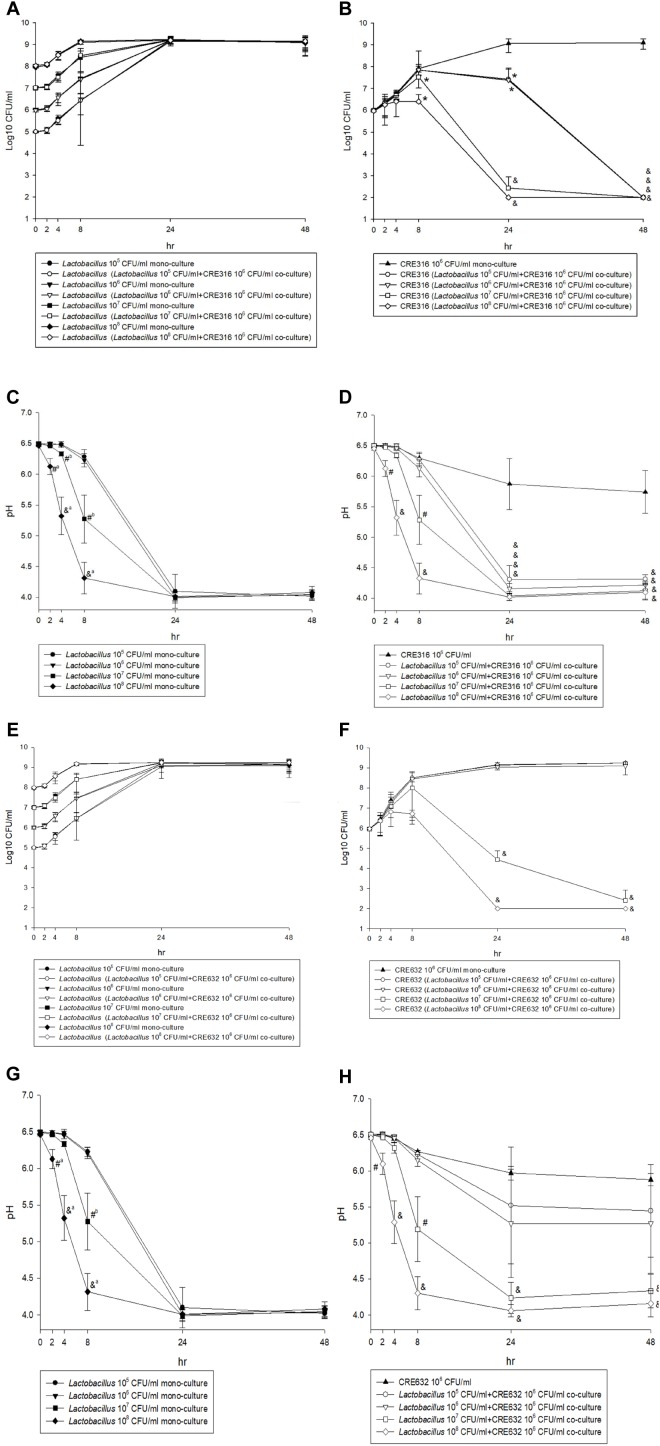
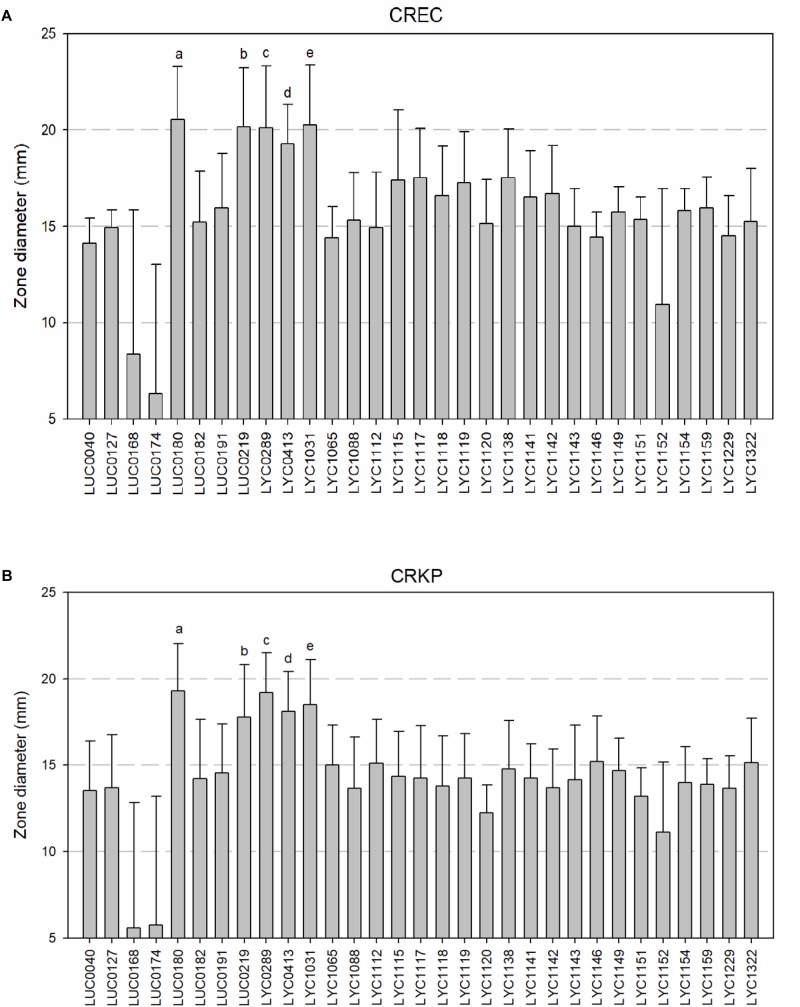
Of the 57 isolates collected, 31 had a less than 2-log reduction in their viability in both pepsin and bile salt tolerance tests. Of these 31 isolates, 5 (LUC0180, LUC0219, LYC0289, LYC0413, and LYC1031) displayed the greatest anti-CRE activity with a CRE zone of inhibition greater than 15 mm in agar well diffusion assays. The minimal inhibitory percentages of supernatants from these five strains against CREs ranged from 10 to 30%. With the exception of LUC0180, which had a minimal bactericidal percentage ≥ 40%, the bactericidal percentage of all the strains ranged from 20 to 40%. The inhibitory effect of the cell-free culture supernatants from these strains did not change after heating but was abolished as the pH changed to 7.0. After a 24-h incubation, five of the strains at a concentration of 10 CFU/ml totally inhibited the growth of carbapenem-resistant (CRE316) and (CRE632). After a 48-h incubation, the growth of CRE316 was completely inhibited under each concentration of lactobacilli based on time-kill test. Furthermore, when the concentration of lactobacilli was at 10 CFU/ml, the decline in pH was faster than at other concentrations.
Some strains exhibit anti-CRE activity, which suggests potential applications for controlling or preventing CRE colonization or infection.
本研究旨在鉴定出对胃蛋白酶和胆盐具有耐受性且具有抗碳青霉烯类耐药菌(CRE)活性的合适乳酸杆菌。
收集了涵盖9个物种的57株菌株进行研究。通过耐受性试验检测它们在胃蛋白酶和胆盐存在下的活力。通过琼脂孔扩散法、肉汤微量稀释法以及时间杀菌试验评估它们的抗CRE效果。
在收集的57株分离株中,31株在胃蛋白酶和胆盐耐受性试验中的活力降低小于2个对数。在这31株分离株中,5株(LUC0180、LUC0219、LYC0289、LYC0413和LYC1031)表现出最强的抗CRE活性,在琼脂孔扩散试验中对CRE的抑菌圈大于15毫米。这五株菌株的上清液对CRE的最小抑菌百分比范围为10%至30%。除LUC0180的最小杀菌百分比≥40%外,所有菌株的杀菌百分比范围为20%至40%。这些菌株的无细胞培养上清液的抑制作用在加热后未改变,但当pH值变为7.0时被消除。经过24小时培养,5株浓度为10⁸CFU/ml的菌株完全抑制了碳青霉烯类耐药菌(CRE316)和(CRE632)的生长。根据时间杀菌试验,经过48小时培养后,在每种乳酸杆菌浓度下,CRE316的生长均被完全抑制。此外,当乳酸杆菌浓度为10⁸CFU/ml时,pH值下降速度比其他浓度更快。
一些乳酸杆菌菌株表现出抗CRE活性,这表明在控制或预防CRE定植或感染方面具有潜在应用价值。