Renal, Vascular and Diabetes Research Laboratory. Fundacion Jimenez Diaz University Hospital-Health Research Institute (FIIS-FJD), Autonoma University of Madrid (UAM), 28040 Madrid, Spain.
Department of Cell Biology, Physiology, and Immunology, Maimonides Biomedical Research Institute of Cordoba (IMIBIC), University of Cordoba, 14014 Cordoba, Spain.
Int J Mol Sci. 2019 May 5;20(9):2205. doi: 10.3390/ijms20092205.
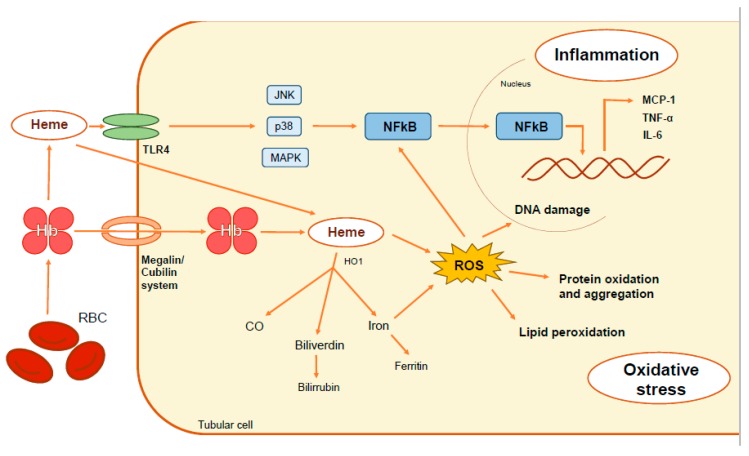
Glomerular hematuria is a cardinal symptom of renal disease. Glomerular hematuria may be classified as microhematuria or macrohematuria according to the number of red blood cells in urine. Recent evidence suggests a pathological role of persistent glomerular microhematuria in the progression of renal disease. Moreover, gross hematuria, or macrohematuria, promotes acute kidney injury (AKI), with subsequent impairment of renal function in a high proportion of patients. In this pathological context, hemoglobin, heme, or iron released from red blood cells in the urinary space may cause direct tubular cell injury, oxidative stress, pro-inflammatory cytokine production, and further monocyte/macrophage recruitment. The aim of this manuscript is to review the role of glomerular hematuria in kidney injury, the role of inflammation as cause and consequence of glomerular hematuria, and to discuss novel therapies to combat hematuria.
肾小球性血尿是肾脏病的一个主要症状。根据尿液中红细胞的数量,肾小球性血尿可分为镜下血尿或肉眼血尿。最近的证据表明,持续性肾小球性镜下血尿在肾脏病的进展中起病理作用。此外,肉眼血尿或肉眼血尿会导致急性肾损伤(AKI),随后相当一部分患者的肾功能受损。在这种病理情况下,从尿空间中的红细胞中释放的血红蛋白、血红素或铁可能会导致直接的肾小管细胞损伤、氧化应激、促炎细胞因子的产生,并进一步招募单核细胞/巨噬细胞。本文的目的是综述肾小球性血尿在肾损伤中的作用、炎症作为肾小球性血尿的原因和结果的作用,并讨论针对血尿的新型治疗方法。