Department of Clinical Psychology, Central Institute of Mental Health, Medical Faculty Mannheim, University Heidelberg, J5, 68159, Mannheim, Germany.
Department of Psychiatry and Psychotherapy, Central Institute of Mental Health, Medical Faculty Mannheim, University Heidelberg, J5, 68159, Mannheim, Germany.
BMC Psychiatry. 2019 May 7;19(1):138. doi: 10.1186/s12888-019-2123-6.
Stigmatization of people with mental illness is still a significant problem even in Western society. Media is an important vector for public messaging that may lead to stigma (and potentially counteract it). There is an ongoing debate about the impact of news with potentially stigmatizing content on people with depression. This experimental study aimed at investigating the direct effects media reporting could have on people with depression, namely, higher levels of stigma attitudes and negative affect, as well as lower levels of self-esteem and positive affect.
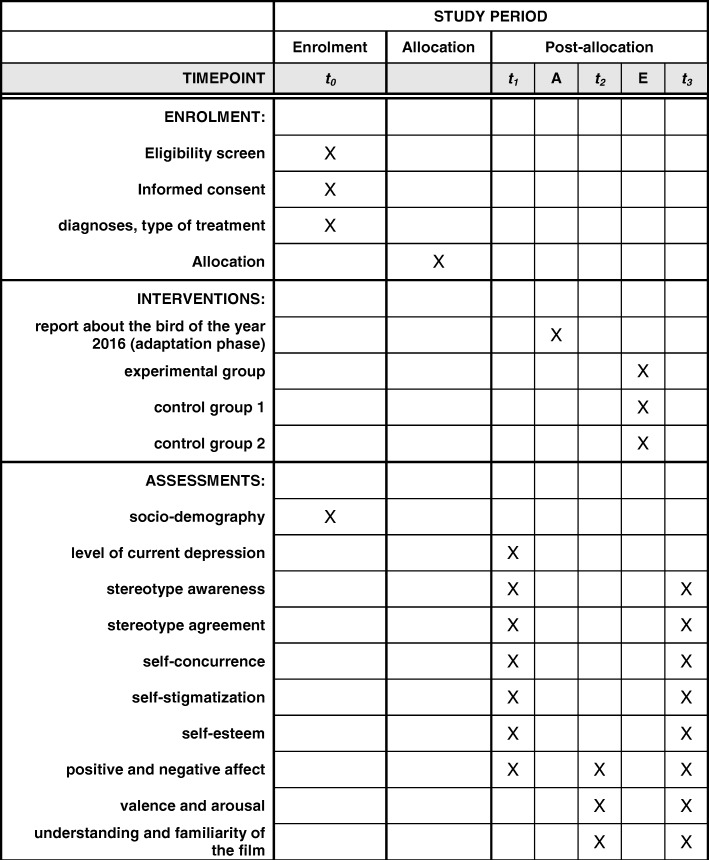
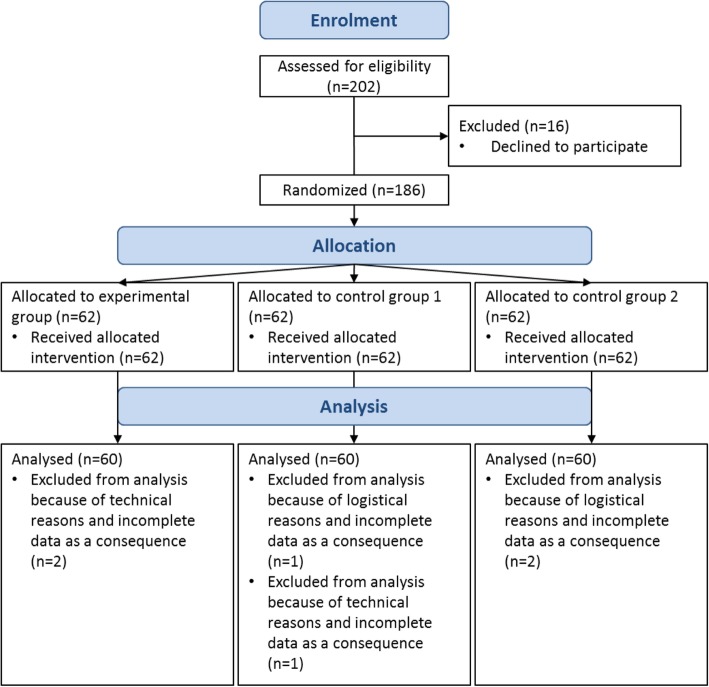
Experimental study; target sample size n = 180 patients; eligibility criteria: clinical diagnosis of depressive episode or dysthymia, aged 18-70 years, sufficient cognitive abilities and German language skills; exclusion criteria: acute psychotic, manic or hypomanic episode, addiction symptoms, or suicidal ideation; parallel assignment to one of three arms (each n = 60): watching a short film about a negative event relating to depression (experimental group), about a negative event without relation to depression (control group 1), or about a neutral event relating to depression (control group 2); primary outcomes: degrees of stigma attitudes (stereotype awareness, stereotype agreement, self-concurrence, and self-stigmatization); secondary outcomes: degrees of self-esteem, positive and negative affect; statistical analyses: general linear models with repeated-measures; one-way ANOVAs of the change in scores, followed by Bonferroni-adjusted pairwise comparisons; IBM SPSS Statistics 24.0.
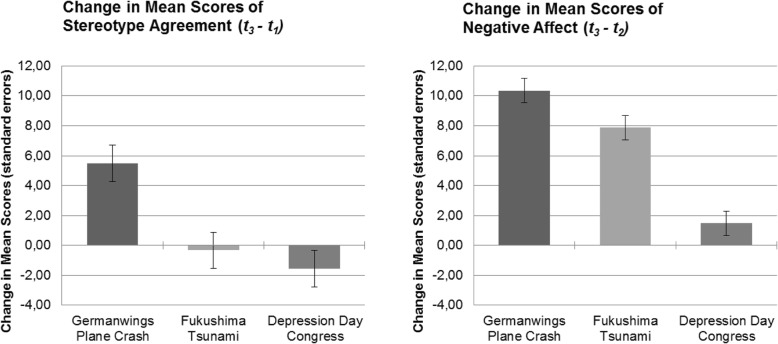
Significant group × time interactions in stereotype agreement (medium effect: η = 0.10) and negative affect (large effect: η = 0.26); the level of stereotype agreement increased significantly more in the experimental group than in control groups 1 and 2. The level of negative affect increased significantly more in the experimental group and in control group 1 than in control group 2. All other interaction effects were non-significant.
The present study allows statements about the direct effects of potentially stigmatizing media reporting on carriers of the stigmatized attribute, i.e., depression: Even single film presentations of familiar events that contain potentially stigmatizing content have an impact on stereotype agreement and negative affect. The impact of long-term exposure and change in other stigma-measures require a deeper understanding of stigma-processes. Potential explanations and implications for practice and future research are discussed.
Deutsche Register Klinischer Studien, Trial registration: DRKS00011855 . Registered 23 June 2017, retrospectively registered; for details see Additional file 1.
即使在西方社会,对精神疾病患者的污名化仍然是一个严重的问题。媒体是传递公众信息的重要载体,可能导致污名化(并可能对此产生反作用)。关于具有潜在污名化内容的新闻对抑郁症患者的影响,一直存在争议。这项实验研究旨在调查媒体报道可能对抑郁症患者产生的直接影响,即更高水平的污名化态度和负面情绪,以及更低水平的自尊和积极情绪。
实验研究;目标样本量 n = 180 名患者;纳入标准:临床诊断为抑郁发作或心境恶劣,年龄 18-70 岁,认知能力和德语语言技能足够;排除标准:急性精神病、躁狂或轻躁狂发作、成瘾症状或自杀意念;平行分配到三个组之一(每组 n = 60):观看关于与抑郁相关的负面事件的短片(实验组)、关于与抑郁无关的负面事件的短片(对照组 1)或关于与抑郁相关的中性事件的短片(对照组 2);主要结局:污名化态度程度(刻板印象意识、刻板印象认同、自我一致性和自我污名化);次要结局:自尊、积极和消极情绪程度;统计分析:重复测量的一般线性模型;组间时间交互作用的单向方差分析,随后进行 Bonferroni 校正后的两两比较;IBM SPSS Statistics 24.0。
在刻板印象认同方面,组间时间交互作用具有统计学意义(中等效应:η = 0.10)和负面情绪(大效应:η = 0.26);实验组的刻板印象认同水平显著高于对照组 1 和对照组 2。实验组和对照组 1 的负面情绪水平显著高于对照组 2。其他交互作用效应均无统计学意义。
本研究允许对潜在污名化媒体报道对被污名化特征携带者的直接影响做出陈述,即抑郁症:即使是熟悉的包含潜在污名化内容的单一事件的电影呈现也会对刻板印象认同和负面情绪产生影响。长期暴露和其他污名化测量变化的影响需要更深入地了解污名化过程。对实践和未来研究的潜在解释和影响进行了讨论。
德国临床研究注册处,试验注册:DRKS00011855。2017 年 6 月 23 日注册,回溯性注册;详情见附加文件 1。