Université Côte d'Azur, Inserm U1065, C3M, France.
Biomedical Department, Centre Scientifique de Monaco, Principality of Monaco.
Cancer Res. 2019 Jul 1;79(13):3268-3280. doi: 10.1158/0008-5472.CAN-18-2043. Epub 2019 May 7.
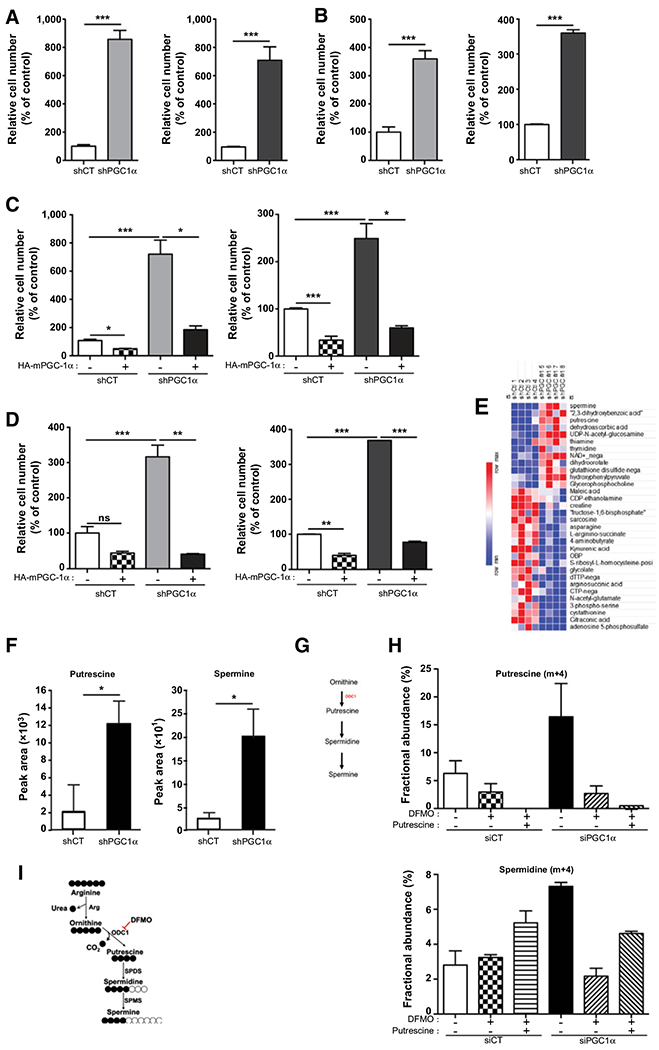
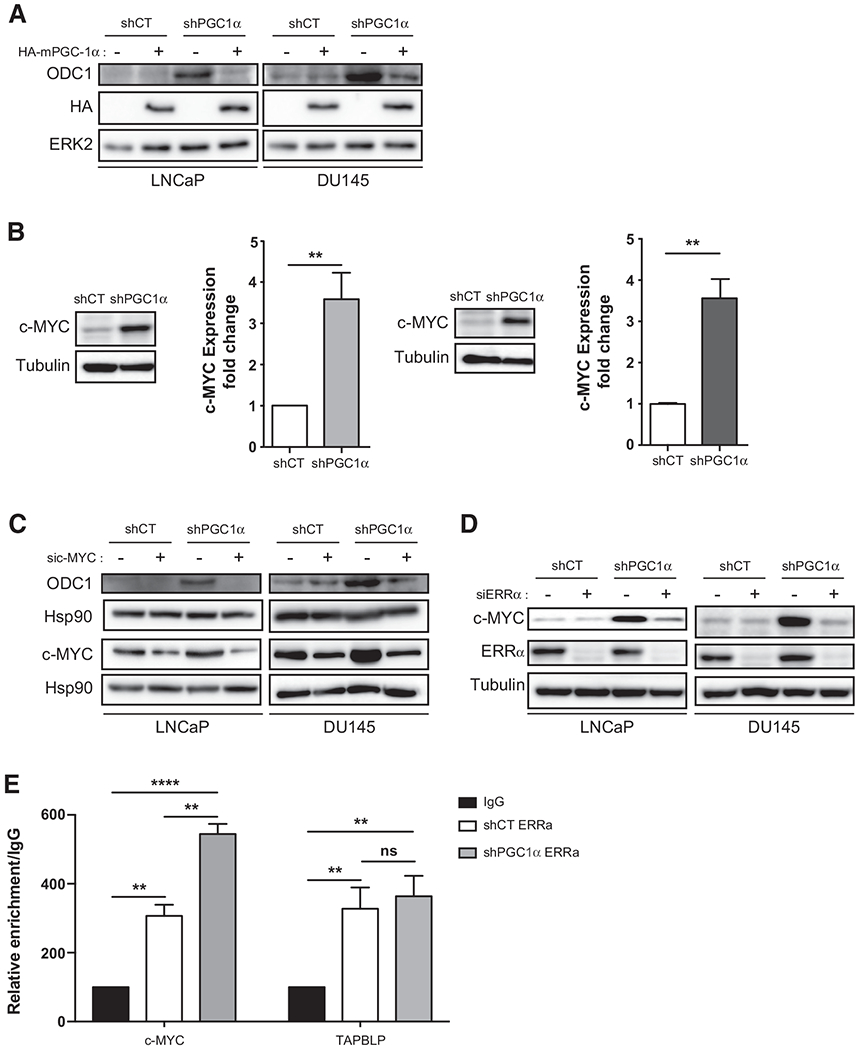
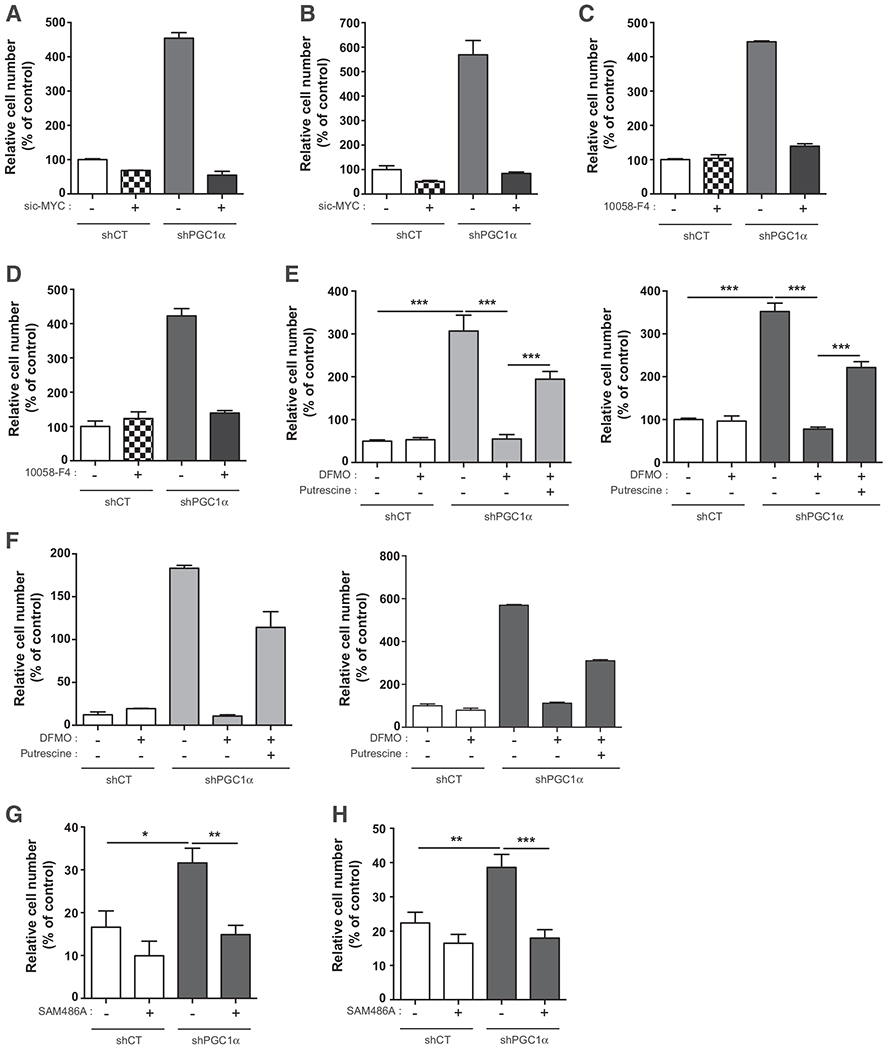
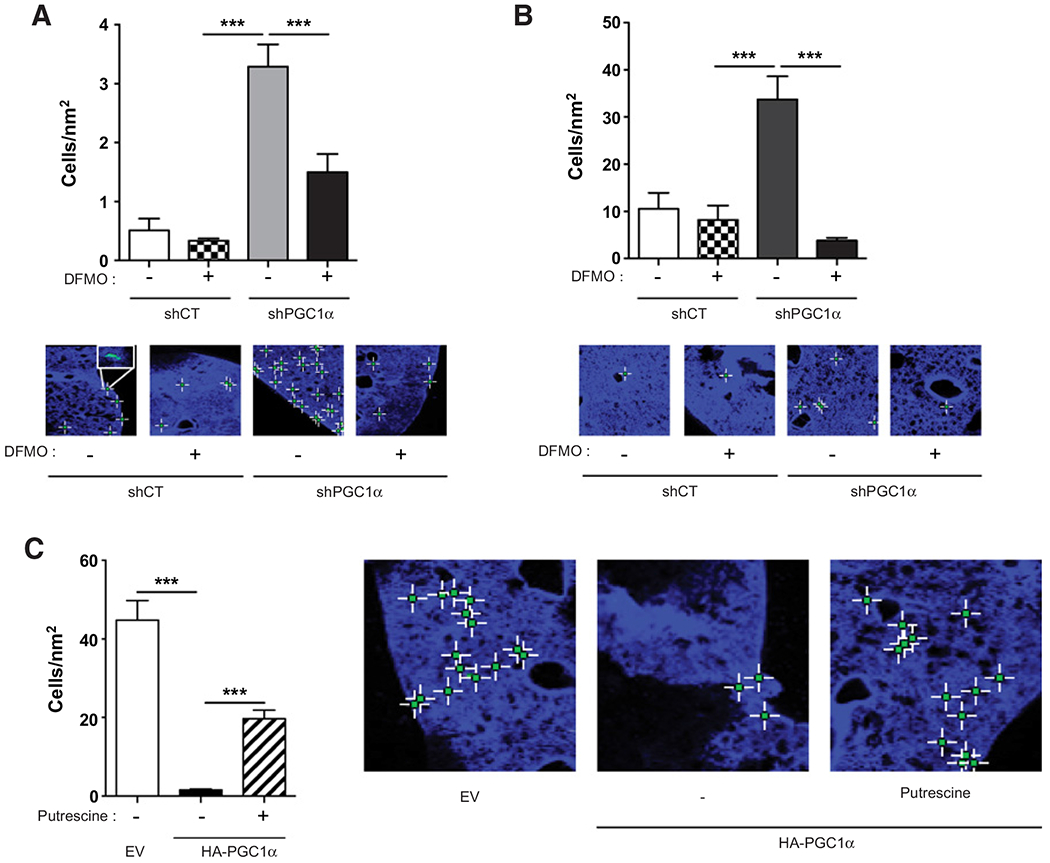
Although tumorigenesis is dependent on the reprogramming of cellular metabolism, the metabolic pathways engaged in the formation of metastases remain largely unknown. The transcriptional coactivator peroxisome proliferator-activated receptor gamma coactivator 1-alpha (PGC1α) plays a pleiotropic role in the control of cancer cell metabolism and has been associated with a good prognosis in prostate cancer. Here, we show that PGC1α represses the metastatic properties of prostate cancer cells via modulation of the polyamine biosynthesis pathway. Mechanistically, PGC1α inhibits the expression of c-MYC and ornithine decarboxylase 1 (ODC1), the rate-limiting enzyme for polyamine synthesis. Analysis of metastases and clinical data from patients with prostate cancer support the proposition that the PGC1α/c-MYC/ODC1 axis regulates polyamine biosynthesis and prostate cancer aggressiveness. In conclusion, downregulation of PGC1α renders prostate cancer cells dependent on polyamine to promote metastasis. SIGNIFICANCE: These findings show that a major regulator of mitochondrial metabolism controls polyamine synthesis and prostate cancer aggressiveness, with potential applications in therapy and identification of new biomarkers.
虽然肿瘤发生依赖于细胞代谢的重编程,但转移形成中涉及的代谢途径在很大程度上仍然未知。转录共激活因子过氧化物酶体增殖物激活受体 γ 共激活因子 1-α(PGC1α)在控制癌细胞代谢中发挥着多效作用,并与前列腺癌的良好预后相关。在这里,我们表明 PGC1α 通过调节多胺生物合成途径来抑制前列腺癌细胞的转移特性。在机制上,PGC1α 抑制 c-MYC 和鸟氨酸脱羧酶 1(ODC1)的表达,ODC1 是多胺合成的限速酶。对来自前列腺癌患者的转移和临床数据的分析支持这样的假设,即 PGC1α/c-MYC/ODC1 轴调节多胺生物合成和前列腺癌侵袭性。总之,PGC1α 的下调使前列腺癌细胞依赖多胺来促进转移。意义:这些发现表明,线粒体代谢的主要调节剂控制多胺合成和前列腺癌侵袭性,具有在治疗和鉴定新的生物标志物方面的潜在应用。