Key Discipline of Integrated Chinese and Western Medicine, Second Clinical College, Guangzhou University of Chinese Medicine, Guangzhou, China.
Cardiovascular Institute, Stanford University School of Medicine, Stanford, CA.
J Cell Mol Med. 2019 Jul;23(7):4592-4600. doi: 10.1111/jcmm.14306. Epub 2019 May 8.
The aims of this study were to evaluate the effects of sodium tanshinone IIA sulfonate (STS) on left ventricular (LV) remodelling after for ST-elevated myocardial infarction (STEMI).
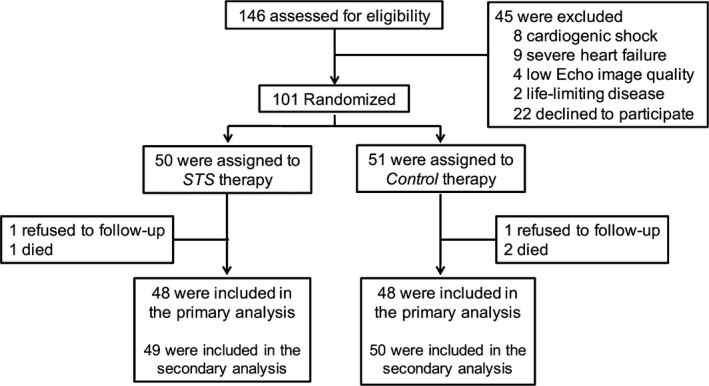
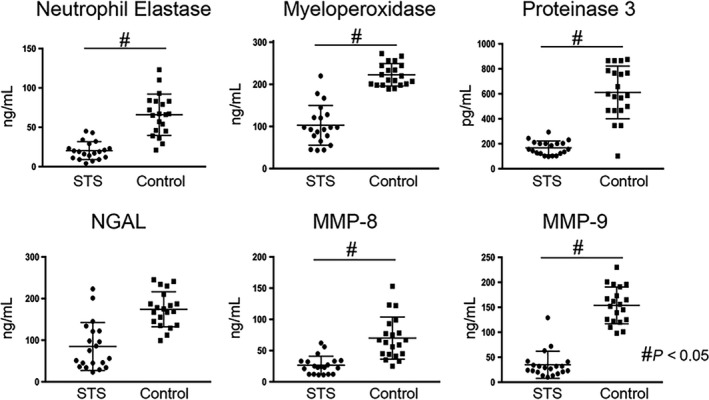
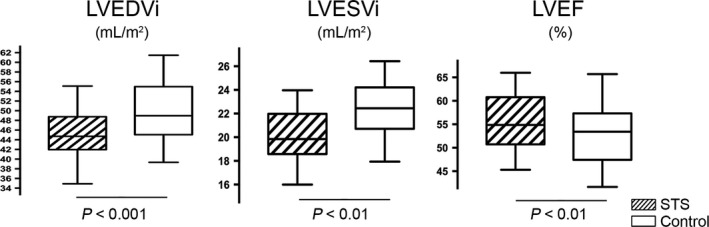
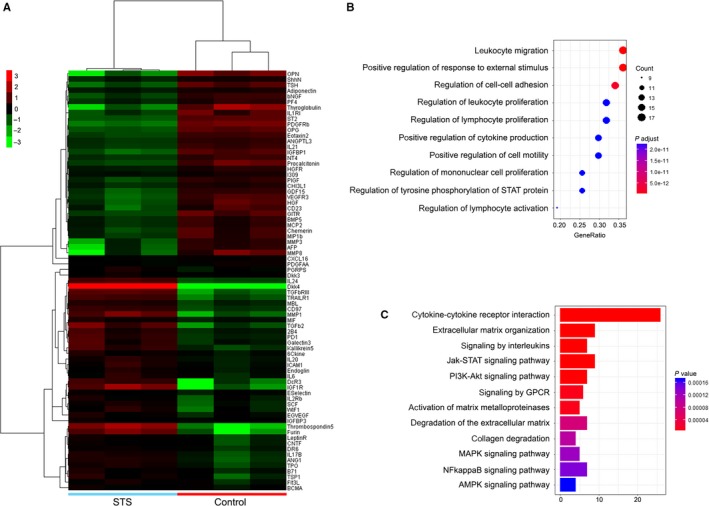
In this prospective, randomized clinical trial, 101 patients with the ST-elevated MI (STEMI) and a successful reperfusion were immediately randomized to receive STS (80 mg qd for 7 days) or saline control, along with standard therapy. The primary effectiveness endpoint is the % change in LV end diastolic volumes index (%∆ LVEDVi) as measured by echocardiography from baseline to 6 months. Secondary effectiveness endpoints include 6-month period for major adverse cardiac events (MACE), including the occurrence of recurrent myocardial infarction, death, hospitalization for heart failure and malignant arrhythmia. The 6-month changes in %∆ LVEDVi were significantly smaller in the STS group than in the control group [-5.05% vs 3.32%; P < 0.001]. With respect to MACE, there was a significant difference between those who received STS (8.16%) and those patients on control (26.00%) (P = 0.019). Meaningfully, results of parallel tests aimed at mechanistic explanation of the reported clinical effects, revealed a significantly reduced levels of neutrophils-derived granule components in the blood of STS treated patients.
We found that short-term treatment with STS reduced progressive left ventricular remodelling and subsequent better clinical outcome that could be mechanistically linked to the inhibition of the ultimate damage of infarcted myocardium by infiltrating neutrophils.
本研究旨在评估丹参酮ⅡA 磺酸钠(STS)对 ST 段抬高型心肌梗死(STEMI)后左心室(LV)重构的影响。
在这项前瞻性、随机临床试验中,101 例 ST 段抬高型心肌梗死(STEMI)患者成功再灌注后,立即随机接受 STS(80mg qd,共 7 天)或生理盐水对照治疗,同时给予标准治疗。主要有效性终点是超声心动图测量的 LV 舒张末期容积指数(%∆LVEDVi)从基线到 6 个月的变化。次要有效性终点包括 6 个月时主要不良心脏事件(MACE)的发生,包括复发性心肌梗死、死亡、心力衰竭住院和恶性心律失常。STS 组的 LVEDVi 变化百分比(%∆LVEDVi)明显小于对照组[-5.05%比 3.32%;P<0.001]。关于 MACE,STS 组(8.16%)和对照组(26.00%)之间有显著差异(P=0.019)。值得注意的是,旨在解释报告的临床效果的机制的平行试验结果显示,STS 治疗患者的血液中中性粒细胞衍生颗粒成分水平显著降低。
我们发现,短期使用 STS 可减少左心室进行性重构,随后临床转归更好,这可能与抑制浸润中性粒细胞对梗死心肌的最终损伤有关。