Li Yuanyuan Jamie, Lu Su, Lan Junmei, Jiang Feng
Department of Marketing and E-Commerce, Nanjing University, Nanjing, China.
Department of Human Resource Management and Organizational Behavior, University of International Business and Economics, Beijing, China.
Front Psychol. 2019 Apr 24;10:874. doi: 10.3389/fpsyg.2019.00874. eCollection 2019.
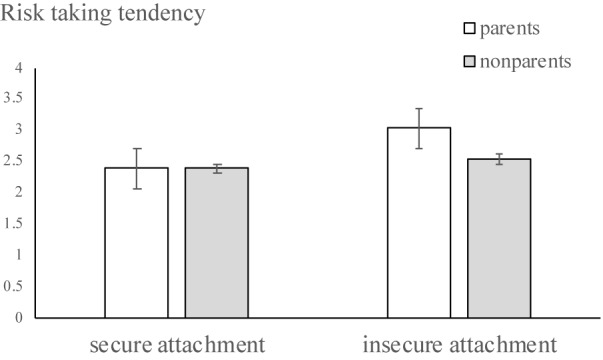
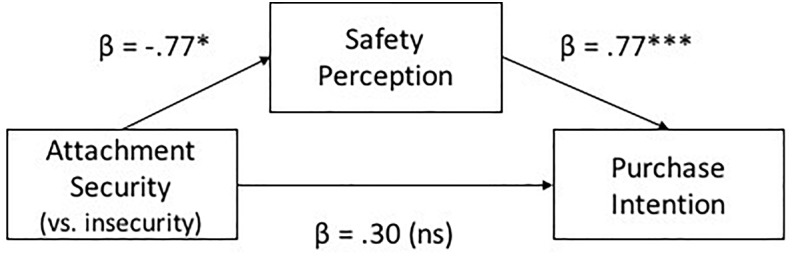
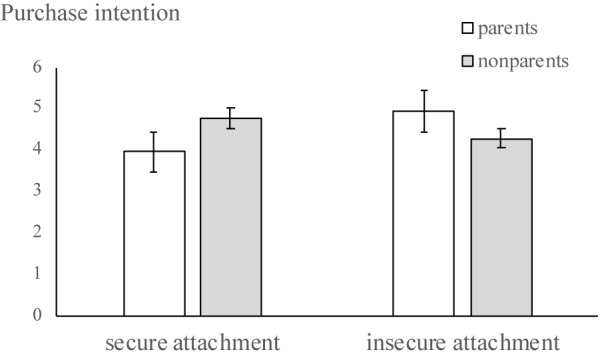
Attachment styles, originated from early childhood experience, have been documented to influence human behaviors among adults. Drawing on life history theory, we examined whether or not, and how, attachment styles impact risk-taking behaviors beyond evolutionary valid domains, and explored the moderation role of parental status. In the consumer behavior context, three correlational studies provide convergent evidence that insecurely attached (vs. securely attached) consumers are more risk-taking in consumption situations like dining in a toilet-themed restaurant or buying genetically modified products. Specifically, insecurely attached consumers were more likely to take risks in two experiential purchase scenarios (Study 1) and this effect was not domain-specific (Study 2). In Study 3, we showed that safety perception mediated the relationship between attachment insecurity and risk-taking, which was manifested by purchase intentions toward genetically modified products. Specifically, insecurely attached individuals perceived genetically modified products to be safer and were more willing to make a purchase. Additionally, parental status moderates the relationship (Studies 2 and 3). We conclude with a discussion on the implications of attachment theory on consumer risk-taking behaviors from a life history perspective.
依恋风格起源于童年早期经历,已有文献证明其会影响成年人的行为。基于生命史理论,我们研究了依恋风格是否以及如何影响进化有效领域之外的冒险行为,并探讨了父母身份的调节作用。在消费者行为背景下,三项相关性研究提供了趋同证据,表明不安全依恋(相对于安全依恋)的消费者在诸如在主题为厕所的餐厅用餐或购买转基因产品等消费情境中更倾向于冒险。具体而言,不安全依恋的消费者在两种体验式购买场景中更有可能冒险(研究1),且这种效应并非特定领域的(研究2)。在研究3中,我们表明安全感知介导了依恋不安全感与冒险行为之间的关系,这体现在对转基因产品的购买意愿上。具体来说,不安全依恋的个体认为转基因产品更安全,因此更愿意购买。此外,父母身份调节了这种关系(研究2和3)。我们从生命史角度讨论了依恋理论对消费者冒险行为的影响并得出结论。