Greco Emanuela A, Pietschmann Peter, Migliaccio Silvia
Section of Medical Pathophysiology, Endocrinology and Food Science, Department of Experimental Medicine, University of Rome Sapienza, Rome, Italy.
Department of Pathophysiology and Allergy Research, Center of Pathophysiology, Infectiology, and Immunology, Medical University of Vienna, Vienna, Austria.
Front Endocrinol (Lausanne). 2019 Apr 24;10:255. doi: 10.3389/fendo.2019.00255. eCollection 2019.
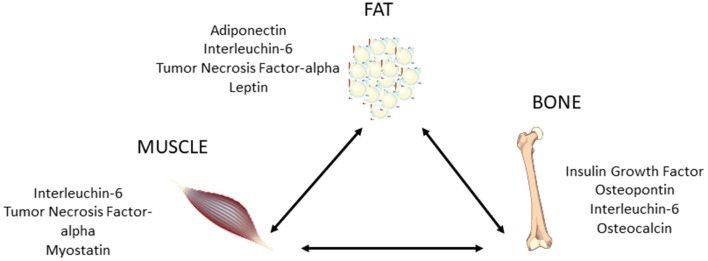
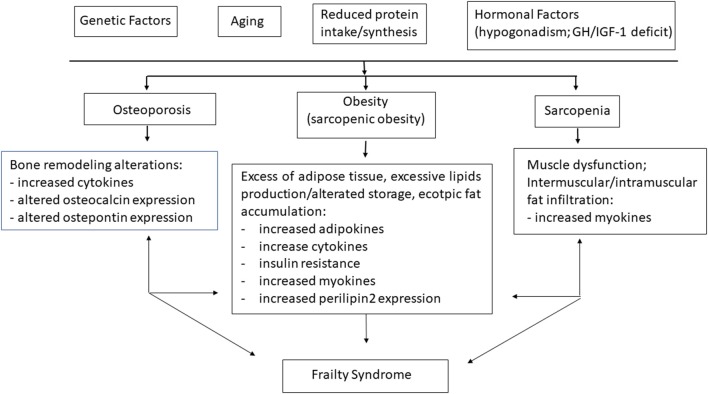
Musculoskeletal aging is a major public health interesting and strain due to the significant demographic modifications in the population, and it is linked to high risk of falls, loss of autonomy in elderly individuals and institutionalization with small health outcomes. Thus, this pathological status is related to high morbidity and health care rates. Bone mass and muscle mass and strength increase during late adolescence and early adulthood but start to reduce noticeably from the fifth decade of life and are closely linked. Bone and muscle tissues were increasingly recognized, as endocrine target organs and endocrine organs themselves, interacting through paracrine and endocrine signals. During growth, bone mineral content closely correlates with muscle mass, and several evidences suggest that osteoporosis and sarcopenia present common pathophysiological factors and show the correlation between low bone mineral density and sarcopenia in both men and women. Then, sarcopenia and osteoporosis, typical features of aging, are often associated with each other and with the frailty syndrome. In particular, sarcopenia and osteoporosis are major contributors to disability and frailty and the common denominators are age-related chronic inflammation, changes in body composition and hormonal imbalance. Frailty syndrome is characterized by a reduced response to stress, triggering the decline of the physiological functioning of the various systems. Frailty syndrome, typical of the older people, is frequently associated with a reduction in the quality of life and mobility. Falls often are the basis of reduced mobility and ability to perform the common functions of daily life and the increase in the number of institutionalizations. Moreover, the reduction of muscle mass, associated with altered muscle composition, fat and fibrous infiltration and alterations in innervations, and the increase in fat mass, have a synergistic effect on the increase in cardiovascular risk. The aim of this review is to analyze the pathophysiological mechanisms underlying the frailty syndrome and its association with sarcopenia and osteoporosis, and investigate possible intervention measures.
由于人口结构的显著变化,肌肉骨骼老化是一个重大的公共卫生关注点和负担,它与老年人跌倒风险高、自主性丧失以及入住机构且健康结局不佳有关。因此,这种病理状态与高发病率和高医疗保健率相关。骨量、肌肉量和力量在青春期后期和成年早期增加,但从生命的第五个十年开始明显减少,且二者密切相关。骨组织和肌肉组织越来越被认为是内分泌靶器官以及内分泌器官本身,它们通过旁分泌和内分泌信号相互作用。在生长过程中,骨矿物质含量与肌肉量密切相关,有多项证据表明骨质疏松症和肌肉减少症存在共同的病理生理因素,并且显示出男性和女性低骨密度与肌肉减少症之间的相关性。然后,肌肉减少症和骨质疏松症作为衰老的典型特征,常常相互关联,并且与衰弱综合征相关。特别是,肌肉减少症和骨质疏松症是导致残疾和衰弱的主要因素,共同特征是与年龄相关的慢性炎症、身体成分变化和激素失衡。衰弱综合征的特征是对应激的反应降低,引发各个系统生理功能的衰退。衰弱综合征是老年人的典型特征,常常与生活质量下降和活动能力降低相关。跌倒往往是活动能力下降和日常生活常见功能执行能力下降以及入住机构人数增加的基础。此外,肌肉量减少与肌肉成分改变、脂肪和纤维浸润以及神经支配改变相关,而脂肪量增加,对心血管风险增加具有协同作用。本综述的目的是分析衰弱综合征及其与肌肉减少症和骨质疏松症关联的病理生理机制,并研究可能的干预措施。