Guardiola-Serrano Francisca, Beteta-Göbel Roberto, Rodríguez-Lorca Raquel, Ibarguren Maitane, López David J, Terés Silvia, Alonso-Sande María, Higuera Mónica, Torres Manuel, Busquets Xavier, Escribá Pablo V
Laboratory of Molecular Cell Biomedicine, Department of Biology, University of the Balearic Islands, E-07122 Palma, Balearic Islands, Spain.
Oncotarget. 2019 Apr 2;10(26):2486-2507. doi: 10.18632/oncotarget.26824.
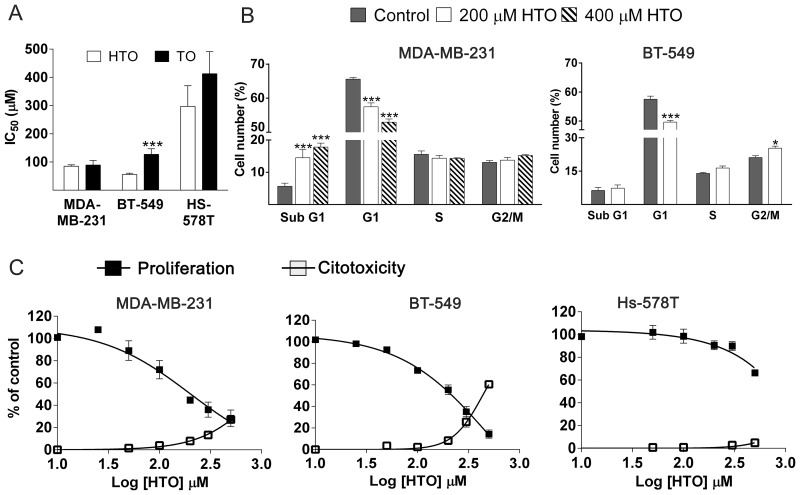
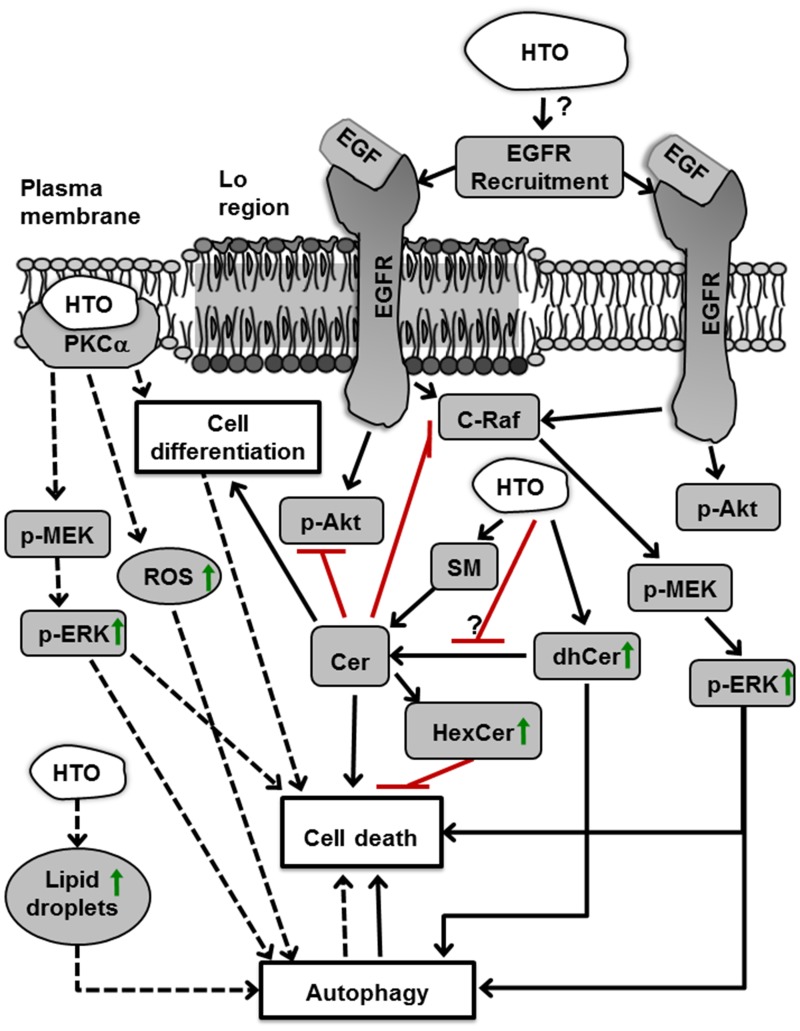
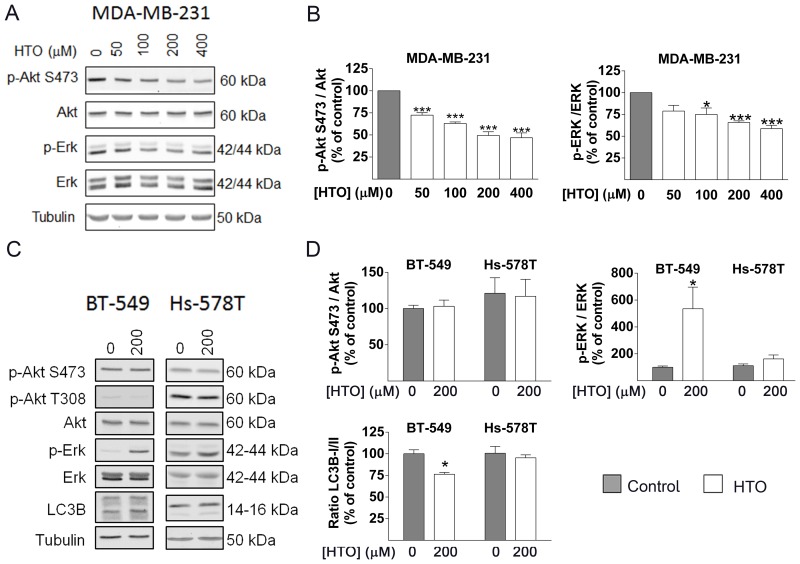
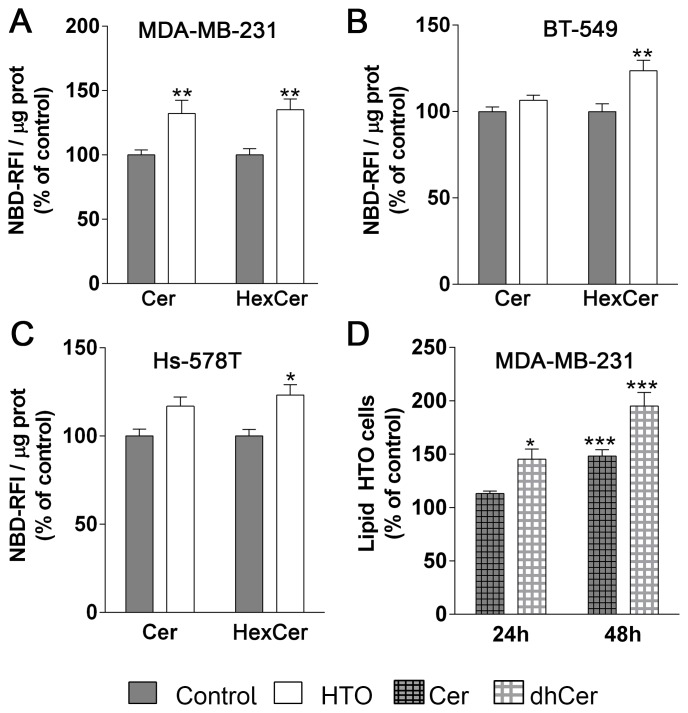
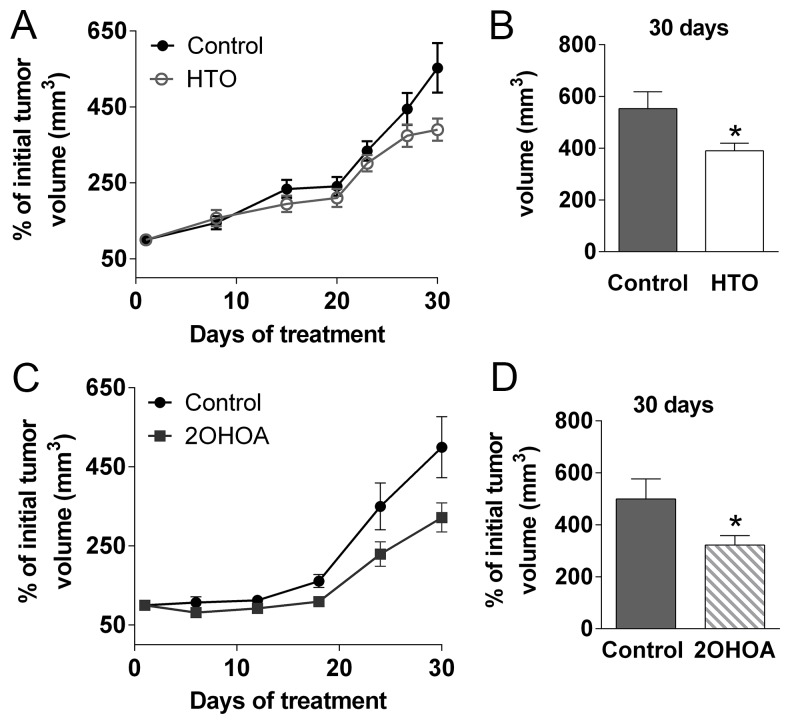
The plasma membrane is an attractive target for new anticancer drugs, not least because regulating its lipid structure can control multiple signaling pathways involved in cancer cell proliferation, differentiation and survival. Accordingly, the novel anticancer drug hydroxytriolein (HTO) was designed to interact with and regulate the composition and structure of the membrane, which in turn controls the interaction of amphitropic signaling membrane proteins with the lipid bilayer. Changes in signaling provoked by HTO impair the growth of triple negative breast cancer (TNBC) cells, aggressive breast tumor cells that have a worse prognosis than other types of breast cancers and for which there is as yet no effective targeted therapy. HTO alters the lipid composition and structure of cancer cell membranes, inhibiting the growth of MDA-MB-231 and BT-549 TNBC cells . Depending on the cellular context, HTO could regulate two pathways involved in TNBC cell proliferation. On the one hand, HTO might stimulate ERK signaling and induce TNBC cell autophagy, while on the other, it could increase dihydroceramide and ceramide production, which would inhibit Akt independently of EGFR activation and provoke cell death. studies using a model of human TNBC show that HTO and its fatty acid constituent (2-hydroxyoleic acid) impair tumor growth, with no undesired side effects. For these reasons, HTO appears to be a promising anticancer molecule that targets the lipid bilayer (membrane-lipid therapy). By regulating membrane lipids, HTO controls important signaling pathways involved in cancer cell growth, the basis of its pharmacological efficacy and safety.
质膜是新型抗癌药物的一个有吸引力的靶点,尤其是因为调节其脂质结构可以控制参与癌细胞增殖、分化和存活的多种信号通路。因此,新型抗癌药物羟基三油精(HTO)被设计用于与膜的组成和结构相互作用并进行调节,进而控制两性信号膜蛋白与脂质双层的相互作用。HTO引发的信号变化会损害三阴性乳腺癌(TNBC)细胞的生长,这类侵袭性乳腺肿瘤细胞的预后比其他类型的乳腺癌更差,且目前尚无有效的靶向治疗方法。HTO改变癌细胞膜的脂质组成和结构,抑制MDA-MB-231和BT-549 TNBC细胞的生长。根据细胞环境的不同,HTO可以调节参与TNBC细胞增殖的两条途径。一方面,HTO可能刺激ERK信号传导并诱导TNBC细胞自噬,而另一方面,它可以增加二氢神经酰胺和神经酰胺的产生,这将独立于EGFR激活而抑制Akt并引发细胞死亡。使用人TNBC模型的研究表明,HTO及其脂肪酸成分(2-羟基油酸)会损害肿瘤生长,且没有不良副作用。基于这些原因,HTO似乎是一种有前景的靶向脂质双层的抗癌分子(膜脂质疗法)。通过调节膜脂质,HTO控制参与癌细胞生长的重要信号通路,这是其药理功效和安全性的基础。