Mills Richard J, Hudson James E
QIMR Berghofer Medical Research Institute, Brisbane, Queensland 4006, Australia.
APL Bioeng. 2019 Mar 14;3(1):010901. doi: 10.1063/1.5070106. eCollection 2019 Mar.
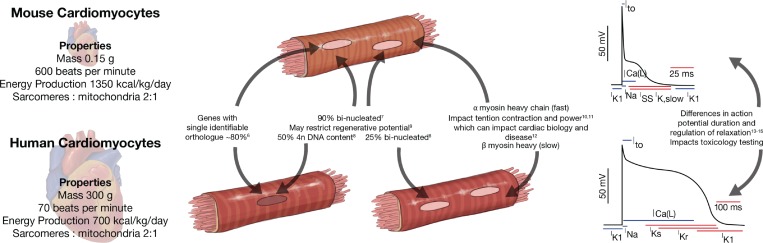
Human pluripotent stem cells (hPSCs) have extensive applications in fundamental biology, regenerative medicine, disease modelling, and drug discovery/toxicology. Whilst large numbers of cardiomyocytes can be generated from hPSCs, extensive characterization has revealed that they have immature cardiac properties. This has raised potential concerns over their usefulness for many applications and has led to the pursuit of driving maturation of hPSC-cardiomyocytes. Currently, the best approach for driving maturity is the use of tissue engineering to generate highly functional three-dimensional heart tissue. Although we have made significant progress in this area, we have still not generated heart tissue that fully recapitulates all the properties of an adult heart. Deciphering the processes driving cardiomyocyte maturation will be instrumental in uncovering the mechanisms that govern optimal heart function and identifying new therapeutic targets for heart disease.
人类多能干细胞(hPSCs)在基础生物学、再生医学、疾病建模以及药物发现/毒理学等领域有着广泛应用。虽然可以从hPSCs中生成大量心肌细胞,但广泛的表征显示它们具有不成熟的心脏特性。这引发了人们对其在许多应用中的实用性的潜在担忧,并促使人们寻求推动hPSC衍生心肌细胞成熟的方法。目前,促进成熟的最佳方法是利用组织工程来生成具有高度功能的三维心脏组织。尽管我们在这一领域已取得重大进展,但仍未生成能完全重现成年心脏所有特性的心脏组织。解读驱动心肌细胞成熟的过程将有助于揭示控制心脏最佳功能的机制,并确定心脏病的新治疗靶点。